


Engraved Silver Fish Server
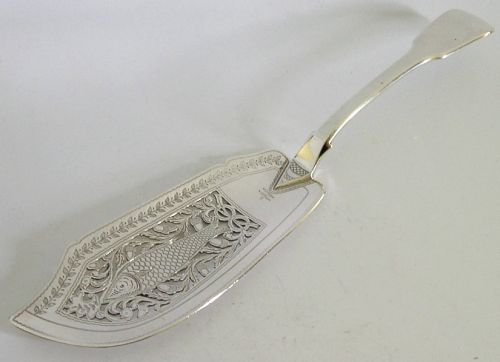
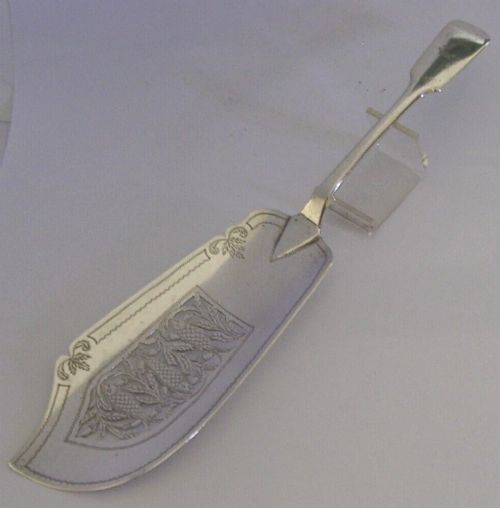
An engraved silver fish server brings nineteenth-century dining elegance to the table, featuring intricate blade piercing and period handle materials.
Engraved Silver Fish Server
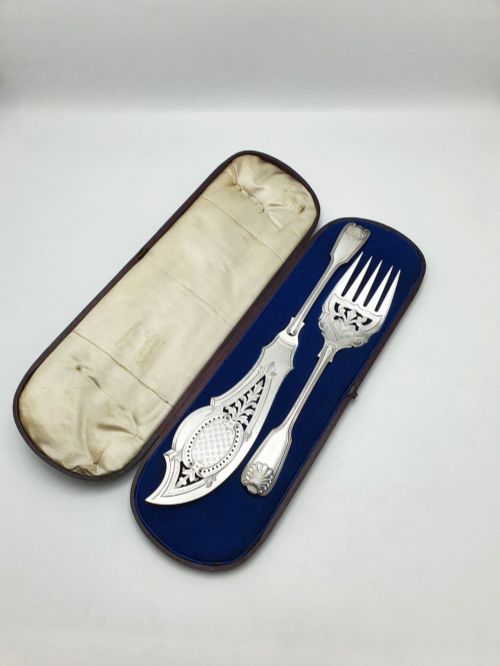
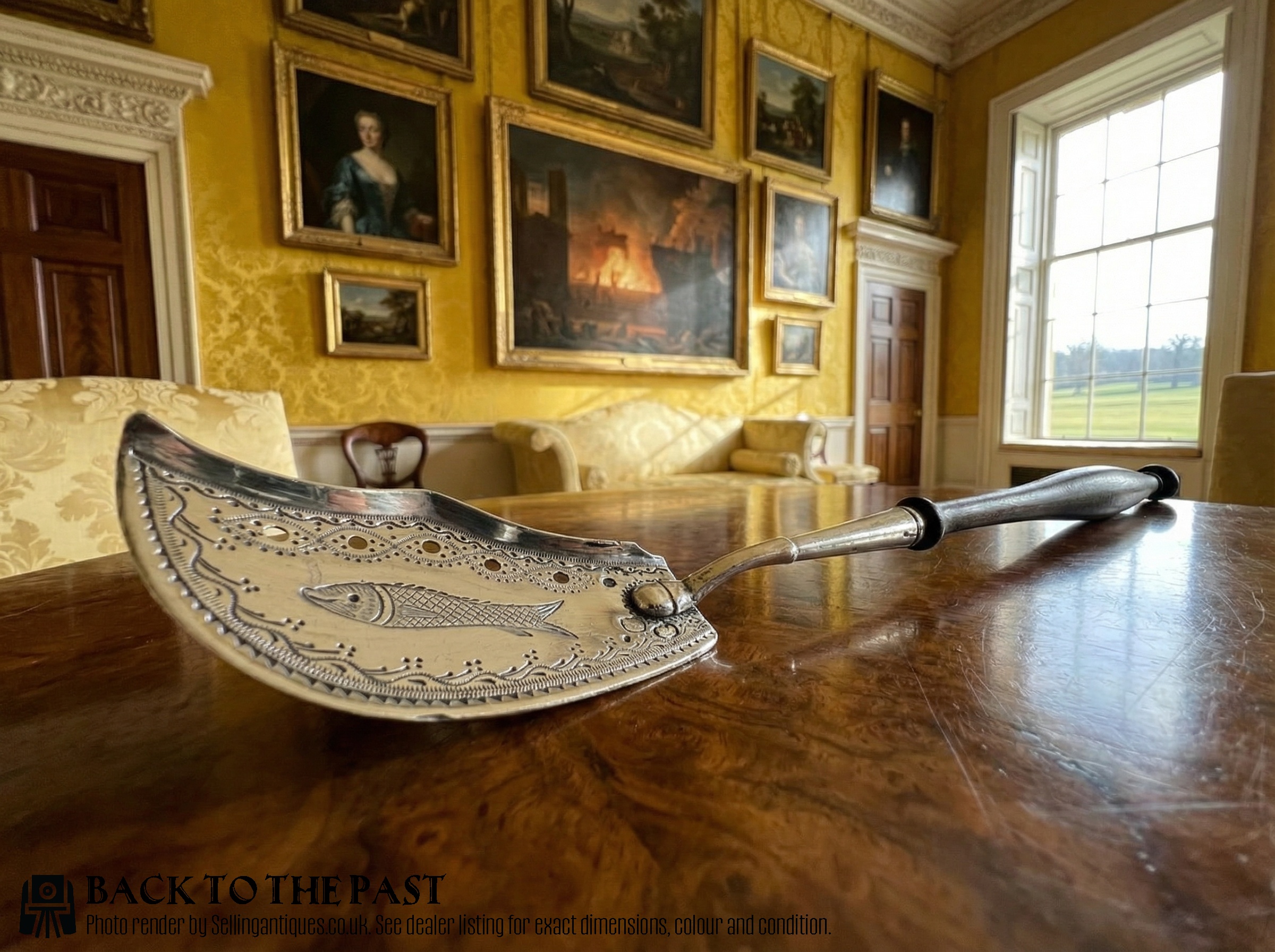
An engraved silver fish server is a specialised flatware piece designed for portioning and presenting fish at formal meals, appearing frequently in George IV and Victorian forms across the listings. These implements take the shape of a wide, flat slice or knife, often accompanied by a matching fork in fitted presentation cases.
The selection ranges from solo Georgian sterling slices to cased Victorian pairs, offering collectors a variety of historical styles from George III to late Victorian periods. Most examples present broad blades decorated with chased or pierced motifs, attached to handles shaped from bone, mother-of-pearl, wood, horn, or precious metal.
Materials and construction
Silversmiths utilised sterling silver or silver plate for the blades, employing hand-piercing techniques to cut out scrolling foliage, fish, and geometric patterns before engraving fine details by hand. The metal is shaped into broad slices or knife forms capable of supporting delicate portions without breaking the flesh.
Handles require contrasting natural materials such as bone, mother-of-pearl, wood, horn, or antler, secured to the metal tang with pins. Fitted velvet or silk-lined presentation boxes preserve these cased sets, protecting the organic handle elements and delicate silver plate from wear.
The documented items include both individual serving slices and cased pairs accompanied by matching forks.
Assessing quality and craftsmanship
The depth and clarity of the hand engraving distinguish finer pieces from standard production, particularly where marine motifs, family crests, or hunting scenes are depicted with precision. Piercing work also varies, with superior examples showing crisp, symmetrical apertures rather than simple stamped openings.
The choice of handle material and the integrity of the join to the blade influence the overall character of the piece. Matching boxed sets complete with original lining represent a higher tier of preservation compared to individual surviving slices.
Thomas Daniell·Charles Boyton
The Engraved Silver Fish Server Glossary
- Sterling silver
- A silver alloy containing 92.5 percent pure silver by mass, with the remainder composed of other metals, usually copper, ensuring structural durability for cutlery.
- Silver plate
- A base metal substrate coated with a thin layer of pure silver, providing the appearance of solid silver at a different cost level. This technique became widespread during the Victorian period.
- Piercing
- A metalworking technique where portions of the blade are cut away to form decorative patterns, balancing visual lightness with functional strength.
- Fiddle pattern
- A traditional nineteenth-century flatware handle design characterised by a narrow stem that broadens near the end into a shape resembling a violin.
Engraved Silver Fish Server: Frequently Asked Questions
What is a fish server used for?
A fish server is designed to portion and lift delicate fish at the dining table, preventing the flesh from breaking apart during serving. The wide blade supports the fish while any excess liquid drains through pierced apertures.
These utensils were essential components of formal nineteenth-century dining, often forming part of larger matched or cased flatware services. Today, they function both as decorative display items and as practical serving tools for formal meals.
How do I identify a Georgian fish server?
Georgian fish servers, dating from the eighteenth century up to the 1830s, typically display hand-pierced sterling silver blades with classical or naturalistic motifs. Makers' marks stamped into the metal help confirm the exact assay office and production year.
Unlike later Victorian examples, Georgian pieces frequently feature plain or reeded metal handles rather than organic materials like bone or antler. Their overall aesthetic reflects the neoclassical or George IV design preferences of the period.
What is the difference between solid silver and silver plate?
Solid silver pieces consist entirely of precious metal throughout the object, bearing hallmarks that indicate the standard of purity and the assay year. These items carry intrinsic metal value alongside their antique craftsmanship.
Silver plate involves a base metal core coated with a thin outer layer of pure silver. This method allowed nineteenth-century manufacturers to produce elaborately decorated serving sets at a more accessible cost.
How should I store cased fish servers?
Cased fish servers should remain inside their original velvet or silk-lined presentation boxes when not in use, protecting them from dust and accidental scratching. Keeping the case in a stable environment away from extreme humidity prevents the organic handle materials from shrinking or cracking.
Avoid wrapping the silver in ordinary rubber bands or certain paper products that can accelerate tarnishing. Regular, gentle cleaning with appropriate silver care products maintains the polished finish of the engraved blades.