


Sterling Silver Fish Slice
A sterling silver fish slice is a dining implement for serving fish, shaped to lift delicate portions without breaking them.
Sterling silver fish slice
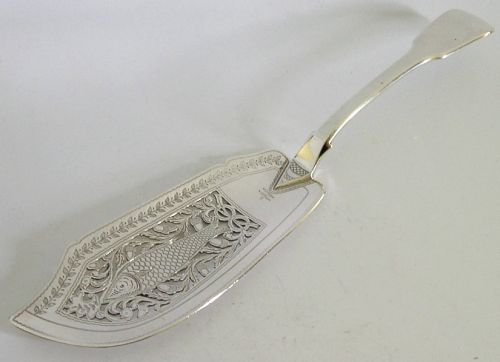
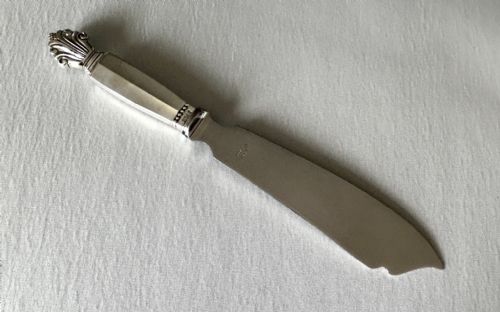
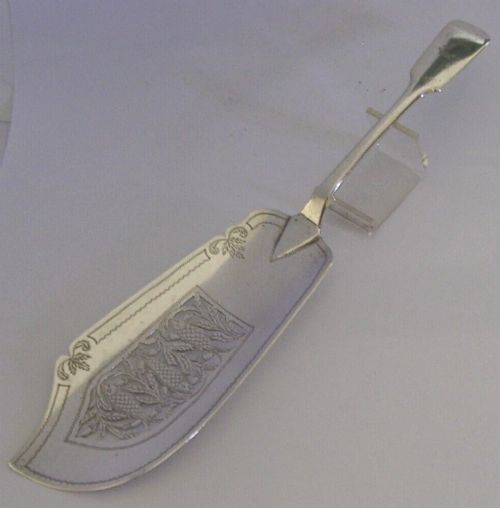
A sterling silver fish slice is a serving utensil designed for the dining table during the Georgian and Victorian periods. These pieces appear in flatware and cutlery categories, taking the form of a wide blade intended for fish courses.
The versions met on this page span the Georgian, William IV, and Victorian eras, originating from English and Irish makers. Examples range from plain utilitarian blades to pierced designs incorporating engraved or cast motifs.
Makers produced these implements in distinct patterns such as Fiddle and Kings, alongside specialised forms featuring animal and heraldic decoration. Each piece reflects the formal dining requirements of its respective nineteenth-century decade.
Materials and construction
Every piece is formed from solid sterling silver, utilising the metal's weight and malleability for durability at the table. Silversmiths hammered, shaped, and cast the material to create both the handle and the broad blade.
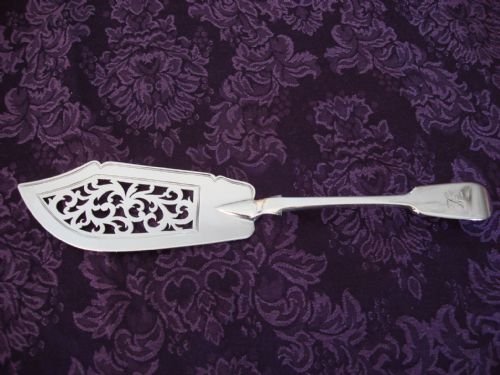
Blades frequently incorporate piercing work, where metal is cut away to form geometric patterns or thematic outlines around fish, birds, and botanical motifs. Handles often display cast decoration or traditional linear patterns such as Fiddle.
Retail Price Guide 2026
Typical UK retail prices for sterling silver fish slice, calculated from the Sellingantiques database of over a million retail prices indexed since 2003. This retail price guide relies exclusively on Sellingantiques data; no external sources or auction records are used, so the figures do not describe the wider market.
Listings feature sterling silver fish slices spanning the Georgian, William IV, and Victorian periods, including pieces from English and Irish makers.
Craftsmanship and distinction
Quality rests in the precision of the piercing and the sculptural detail of cast handles and blade motifs. Pieces featuring specialised designs like birds, swans, or mermans show higher artistic ambition than standard linear patterns.
The weight of the silver and the crispness of maker's marks and hallmarks dictate the standing of an individual piece. Substantial gram weights combined with clear provincial or metropolitan assay office stamps separate ordinary utility items from finer workshops.
Charles Boyton·George Adams·Elizabeth Eaton·Bateman
The Sterling Silver Fish Slice Glossary
- Sterling silver
- A silver alloy containing 92.5 percent pure silver by mass and 7.5 percent other metals, usually copper. This standard composition provides the durability required for functional cutlery.
- Pierced
- A technique where metal is cut through to create decorative openwork patterns across the blade. This reduces weight while forming intricate visual designs.
- Fiddle pattern
- A traditional nineteenth-century flatware handle design characterised by a narrow stem that expands into a broad, squared shoulder near the end. It remains a staple of Georgian and Victorian table silver.
- Kings pattern
- An ornate Victorian flatware design featuring shell and floral motifs along the shaped border of the handle. It denotes formal dining wares of high status.
- Assay office
- An official body that tests the purity of precious metals and stamps items with hallmarks. Marks indicate the town of testing, the standard of silver, and the date letter.
Frequently Asked Questions
What is a fish slice used for?
A sterling silver fish slice is a specialised serving utensil designed to lift delicate portions of fish at the dining table.
The wide, flat blade allows the server to slide underneath a whole fish or fillets without breaking the flesh during plating.
How do I identify the date of a fish slice?
Dating relies on the assay office hallmarks stamped directly onto the sterling silver, which include a specific date letter corresponding to the year of testing.
Stylistic indicators such as Fiddle or Kings patterns and Georgian or Victorian manufacturing details also help narrow down the period.
Are these pieces made of solid silver?
The listings consist entirely of solid sterling silver rather than plated alternatives. The weight is substantial, often exceeding one hundred grams per piece.
Assay marks verify the silver standard used by the workshop.
How should I care for antique silver?
Regular use and gentle washing in warm soapy water helps maintain the finish of sterling silver. Stored pieces benefit from anti-tarnish cloths and dry environments.
Harsh chemical dips should be avoided to preserve the original hallmarks and surface patina.