



Pierced Silver Fish Slice
A pierced silver fish slice is a dining implement made for serving fish, combining practical form with decorative metalwork.
Pierced Silver Fish Slice
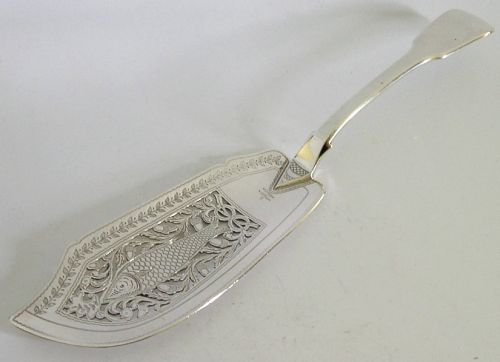
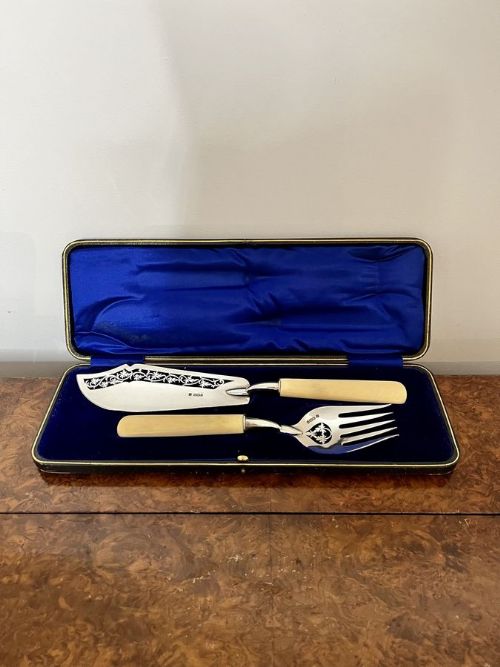
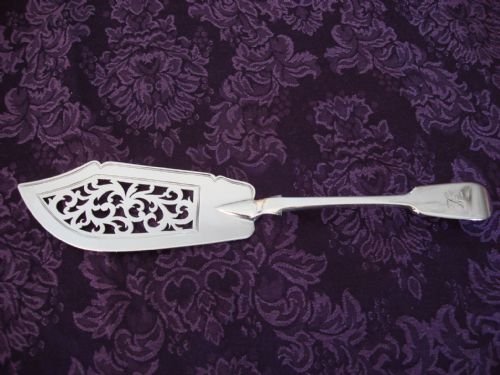
A pierced silver fish slice is an eating utensil designed to lift portions of fish at the dining table, appearing across periods from the eighteenth century into the twentieth century. When searching for a pierced silver fish slice, a buyer encounters forms ranging from single flatware items to paired serving sets housed in fitted cases lined with velvet and silk. Examples span Georgian, Victorian, and Edwardian eras, reflecting shifts in dining habits and table settings over generations.
The objects on this page include sterling silver, silver plate, and French silver with bone and ebony handles, alongside variants made for both home and formal use. Single fish slices sit alongside matched fish servers, while nineteenth century examples often display regional hallmarks from London and Dublin alongside continental French work.
Materials and construction
Construction relies primarily on sterling silver and silver plate, shaped into wide blades that are hand-pierced with scrollwork, geometric motifs, or fish designs to allow juices to drain away during serving. Handles utilise contrasting materials such as bone and ebony, screwed or pinned securely to the metal shafts.
Makers shaped the heavy metal plates using traditional silversmithing techniques, applying hand-engraving and piercing to create openwork patterns. Fitted presentation sets integrate textiles like velvet and silk within custom cases to protect the polished metal and organic handle components.
Pierced Silver Fish Slice Retail Price Guide 2026
Typical asking prices for pierced silver fish slice among the pieces listed under this phrase on Sellingantiques today, from the lower quarter to the upper quarter. They describe what is for sale here now, not the wider market.
Some nineteenth century fish servers arrived in velvet-lined boxes so grand they surely made the poached salmon feel like royalty.
Assessing the range
Quality separates through the crispness of the hand-pierced openwork on the blade and the structural integrity of the handle junction. Superior examples maintain deep, legible hallmarks and precise symmetry in their decorative patterns without excessive wear from past polishing.
Heavier gauge silver provides a rigid feel in the hand, whereas lighter items display more flex in the blade. The integration of organic handles like bone or ebony with the metal shank indicates the level of original craftsmanship.
Thomas Daniell·George Adams·Charles Boyton
The Pierced Silver Fish Slice Glossary
- Sterling silver
- A silver alloy containing 925 parts of pure silver per thousand, commonly used for British domestic silver.
- Hallmark
- A series of official marks stamped on precious metals indicating the standard of purity, the assay office, and the date letter.
- Piercing
- The decorative technique of cutting openwork designs through the metal blade of a server to drain liquid.
- Fiddle pattern
- A traditional nineteenth century flatware handle shape featuring a narrow stem that broadens near the end into a shoulder.
- Server
- A larger utensil designed for dish-to-table service, often paired in matched sets for fish courses.
Pierced Silver Fish Slice: Frequently Asked Questions
What is a pierced silver fish slice?
A pierced silver fish slice is a serving utensil with a flat, perforated blade designed specifically for lifting and draining fish at the table.
These pieces were produced by silversmiths primarily during the Georgian, Victorian, and Edwardian periods for formal dining.
How were fish servers used?
Fish servers were used by the host to portion and lift delicate fish dishes from a large platter to individual plates.
They often came as a matched pair with a matching fork or knife, sometimes housed in a velvet or silk-lined presentation case.
How do I date a silver fish slice?
Dating relies on reading the assay office hallmarks stamped into the metal, which include date letters corresponding to specific years.
Style indicators such as fiddle pattern handles or hand-pierced blade designs also help narrow down the period of manufacture.
Are handles made of bone or silver?
Many nineteenth century fish slices feature handles made from organic materials like bone or ebony attached to the metal blade.
Other examples are constructed entirely from solid sterling silver or silver plate from handle to tip.