



Victorian Silver Serving Fork
These Victorian silver serving fork pieces bring utility and period charm to the table, making them sought-after additions to traditional dining settings.
Victorian Silver Serving Fork
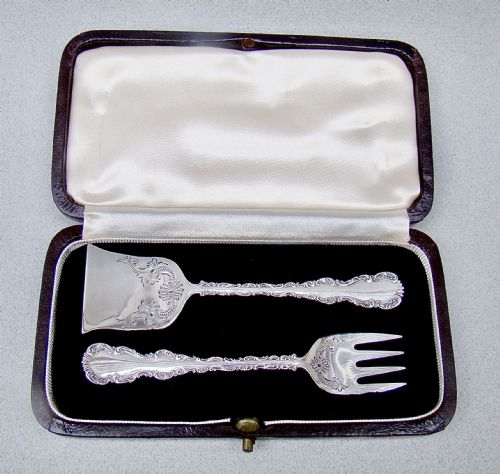
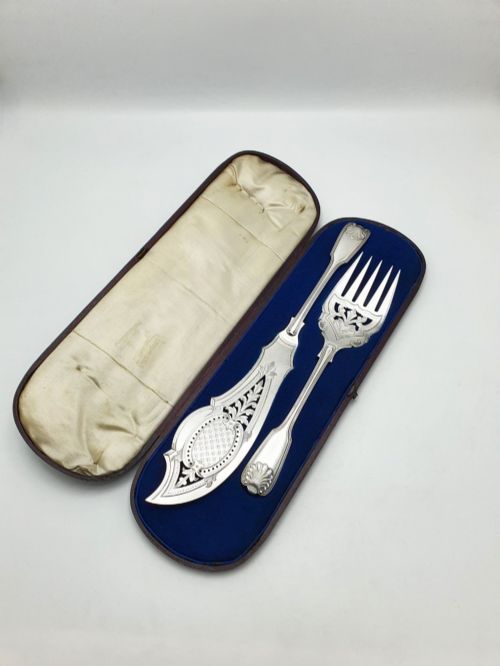
A victorian silver serving fork is a specialised piece of cutlery designed for transferring food at the dining table. The selection spans distinct forms including fish servers, salad servers, sardine servers, and cake forks, often found in fitted presentation cases.
Most examples originate from the nineteenth century, encompassing periods from the eighteen-seventies through to nineteen-hundred. Buyers frequently encounter single forks alongside paired serving knives, complete carving sets, and larger canteens of cutlery.
How They Were Made
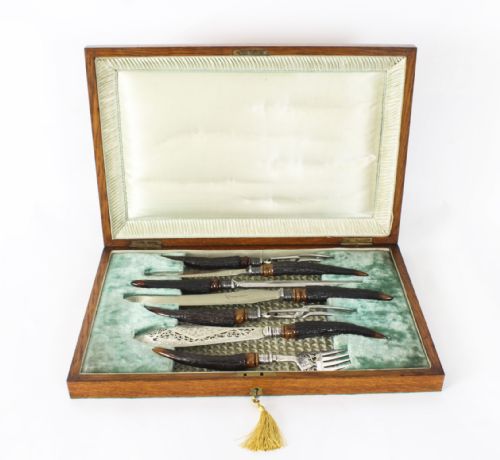
Manufacturing methods of the era relied heavily on sterling silver and silver plate, shaped alongside organic materials like horn and leather. Many handles incorporate natural antler or polished horn, secured to metal tines with Pins and ferrules.
Surface decoration frequently involved detailed hand engraving, chasing, and cloisonné enamel work, particularly on Russian and French examples. Cased sets often utilised interior linings of velvet, silk, and satin to protect the metal and fitted cutlery.
Victorian Silver Serving Fork Retail Price Guide 2026
Typical asking prices for victorian silver serving fork among the pieces listed under this phrase on Sellingantiques today, from the lower quarter to the upper quarter. They describe what is for sale here now, not the wider market.
What Varies in Quality
The distinction between ordinary and superior pieces rests on the weight of the metal and the crispness of the engraved or enamelled detail. Heavier gauge sterling silver provides a substantial feel in the hand compared to lighter silver-plated alternatives.
Quality also shows in the integration of natural materials like horn and antler handles, where seamless fitting and rich patination elevate the piece. Complete original fitted cases with intact velvet or silk linings add significantly to the integrity of the set.
Henry Wilkinson·Walter and John Barnard·Alvin
The Victorian Silver Serving Fork Glossary
- Sterling silver
- A silver alloy containing ninety-two point five percent pure silver by mass, standard for high-quality British plate and cutlery. This composition ensures durability while maintaining a bright finish.
- Silver plate
- A base metal coated with a thin layer of silver through electroplating or older manufacturing methods. It offered an accessible alternative to solid sterling during the nineteenth century.
- Cloisonné
- An ancient technique for decorating metalwork objects with colourful enamel compartments separated by strips of metal. This method appears on decorative nineteenth-century spoon and fork sets.
- Tines
- The pointed prongs at the end of a fork used for piercing or lifting food. On serving forks, these are often broader and more elaborately engraved than standard table forks.
- Canteen
- A fitted box, chest, or cabinet designed to house a complete set of cutlery. These containers often feature segmented velvet or satin-lined slots for individual pieces.
Victorian Silver Serving Fork: Frequently Asked Questions
What are victorian silver serving forks used for?
These forks were designed for serving specific dishes at the dining table, such as fish, salads, sardines, or cakes. Their larger size and broader tines distinguished them from standard individual place settings.
They formed part of elaborate dining rituals where hostesses served courses from platters. Today, collectors use them for similar serving purposes during formal meals.
How do I know if it is sterling silver or plated?
British pieces typically feature a series of hallmarks stamped directly into the metal, indicating the standard, assay office, and year of manufacture. Sterling marks include a lion passant or specific regional symbols.
Silver-plated items generally lack these official assay marks and may show base metal beneath worn areas. Examining the tines and edges under magnification helps clarify the underlying material.
Why do some serving forks have horn handles?
Natural materials like animal horn and antler provided a tactile, textured grip that contrasted with polished metal. These organic elements were particularly popular for hunting-themed or rustic cutlery sets.
Craftsmen shaped and polished the horn to fit securely against the silver or plated metal shafts. Over time, these handles develop a warm, distinct patination from handling.
How should I clean and store cased cutlery?
Silver requires gentle cleaning with a specialised non-abrasive polish to remove tarnish without damaging engraved details or enamel work. Avoid submerging pieces with organic handles like horn in water for extended periods.
Original fitted cases lined with velvet or satin provide the best protection against dust and atmospheric tarnish. Storing the set in a dry environment preserves both the metal surfaces and the integrity of the linings.