



Silver Plate Serving Fork
These silver plate serving fork examples bring robust Victorian and Edwardian utility and table presence to any formal or family dining room.
Silver Plate Serving Fork
A silver plate serving fork is a specialised piece of dining cutlery designed for presenting dishes such as fish, salad, meat or condiments at the table. These items emerge from the nineteenth and early twentieth centuries, spanning the Victorian and Edwardian eras, when matched or boxed serving sets formed an essential part of domestic hospitality.
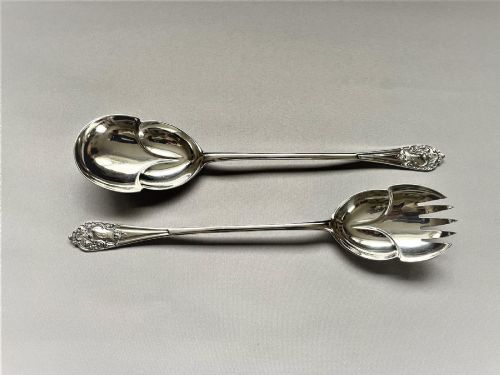
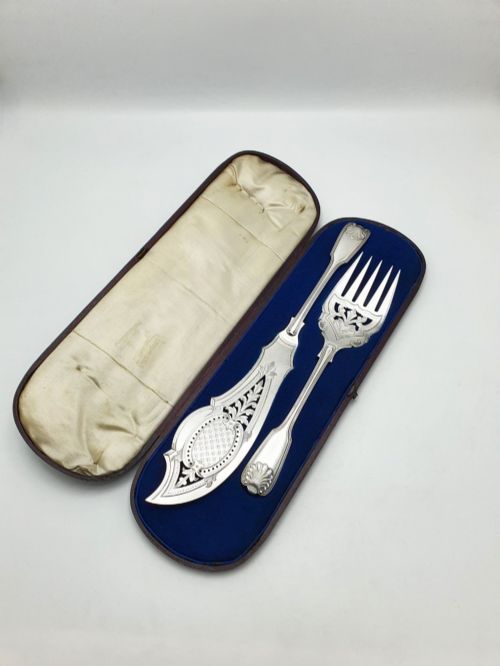
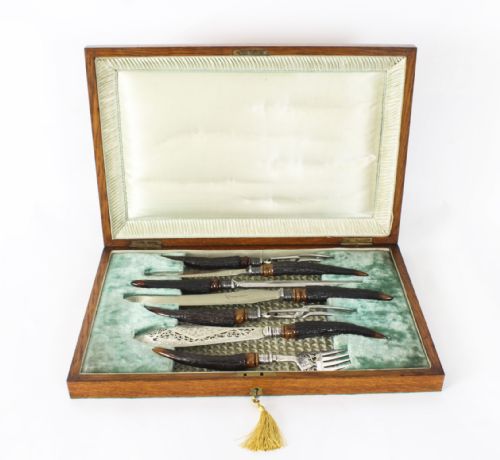
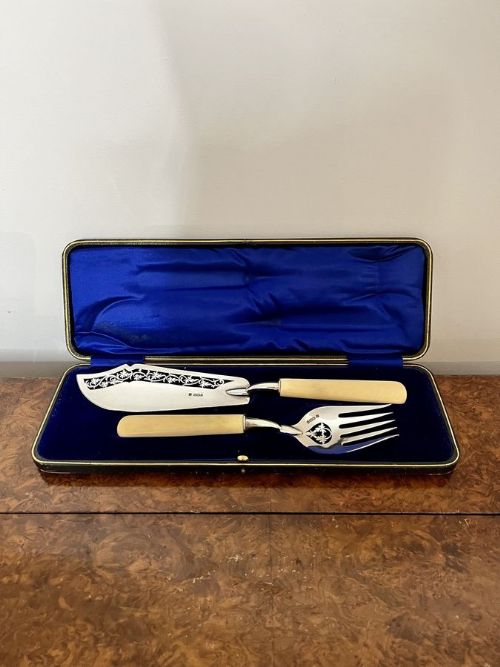
The versions most commonly met on this page include engraved fish servers, salad servers with paired forks and spoons, and carving sets featuring steel tines and blades. Materials extend beyond plated metal to incorporate natural elements like stag antler, horn, mother-of-pearl, wood and velvet lining within fitted boxes.
Object types range from single pickle forks and butter knives to substantial cased sets intended for specific culinary tasks. Origins are primarily English, reflecting the domestic manufacturing output of workshops operating between eighteen seventy and nineteen twenty.
How they were made
Manufacturing methods combine traditional metalwork with organic handle materials suited to daily handling at the dining table. Silver plating is applied over a base metal, frequently paired with forged steel for cutting edges and tines.
Handles require careful shaping and pinning, utilising stag antler, carved horn or mother-of-pearl secured to the metal tangs. Decoration relies heavily on hand engraving, featuring botanical motifs, hunting scenes or dog engravings, alongside specialised terminals such as thistles.
Silver Plate Serving Fork Retail Price Guide 2026
Typical asking prices for silver plate serving fork among the pieces listed under this phrase on Sellingantiques today, from the lower quarter to the upper quarter. They describe what is for sale here now, not the wider market.
The documented forms include fish servers, salad servers, carving sets, pickle forks and butter knives originating from English makers.
What varies in quality
Quality in a silver plate serving fork is determined by the crispness of the hand engraving and the integrity of the plating over the base metal. Finer examples maintain deep, clear chased or engraved designs across the blade and tines without thinning of the silver layer.
The choice and treatment of handle materials also distinguish higher grades of manufacture. Selected stag antler, unblemished mother-of-pearl and intact velvet-lined presentation boxes separate utilitarian kitchen implements from formal dining accessories meant for display.
The Silver Plate Serving Fork Glossary
- Silver plate
- A base metal coated with a layer of silver. This technique provided the appearance of solid silver at a lower cost for nineteenth-century dining services.
- Stag antler
- The shed horn of a deer used as a natural handle material. It offers a textured, robust grip favoured on Victorian carving and serving sets.
- Mother-of-pearl
- The iridescent inner layer of mollusc shell utilised for decorative handles. It brings a pale, shimmering quality to smaller serving forks and fruit sets.
- Fish servers
- A matched knife and fork combination specifically shaped for portioning fish. The wide blades often feature pierced or engraved decoration.
- Terminal
- The decorative end of a handle or stem. Designs can range from simple flattened shapes to sculpted motifs like thistles.
Silver Plate Serving Fork: Frequently Asked Questions
What is a silver plate serving fork used for?
These forks are designed for portioning and serving specific foods at the dining table rather than for individual eating. They are commonly found in sets intended for fish courses, salads, pickles or carving.
Larger versions assist with heavier dishes, while smaller specialised forks manage condiments, butter and jams during formal meals.
How do I date a Victorian serving fork?
Dating relies on stylistic clues, engravings, and occasionally hallmarks or registration marks stamped into the metal. Victorian pieces often display heavier ornamentation, floral engraving, or natural antler handles characteristic of the late nineteenth century.
Later Edwardian examples tend to feature lighter designs, simpler lines, or different handle materials reflecting changing dining fashions after nineteen hundred.
Are these forks made of solid silver?
Most pieces listed here are silver plated over a base metal rather than cast in solid sterling silver. Sterling silver is occasionally found in specific components, but plating was the standard method for durable tableware of the period.
The combination of a plated bowl or tines with steel or organic handles provided the necessary strength for serving food.
How should I care for antique serving forks?
Gentle cleaning with a non-abrasive silver cloth preserves the plated surface without wearing down the underlying metal. Avoid harsh chemical dips, especially on pieces with organic handles like mother-of-pearl or stag antler, which can be damaged by moisture and strong liquids.
Storing them in dry conditions or fitted boxes protects both the metal and the natural handle materials from unnecessary wear.