


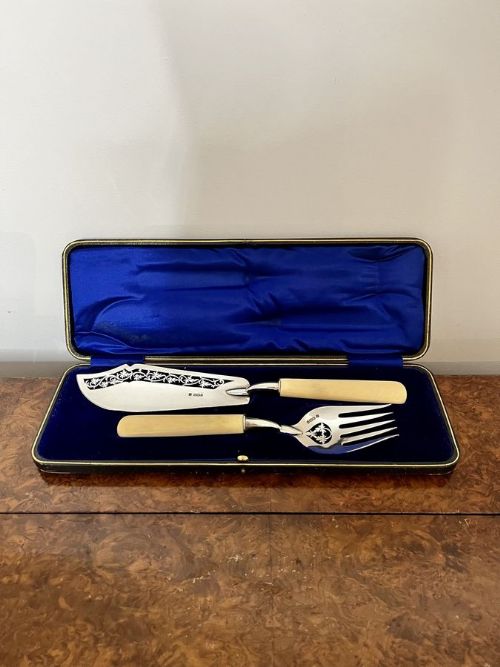

Antique Silver Fish Knife
An antique silver fish knife brings elegance to the dining table, combining specialised blades with fine handles from the nineteenth and twentieth centuries.
Antique Silver Fish Knife
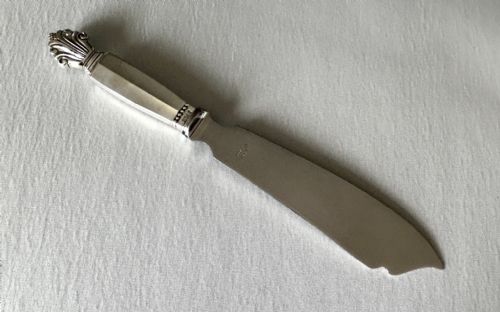
When you search for an antique silver fish knife, you find specialised flatware designed specifically to separate delicate fish flesh from bones without metal taste interference. The pieces on this page span the Victorian, Edwardian, and mid-century periods, appearing both as individual servers and within larger canteens or boxed sets.
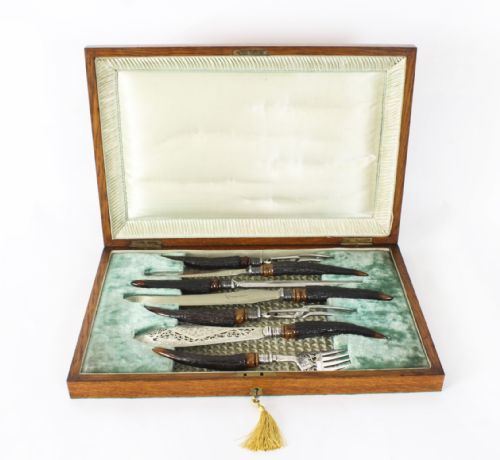
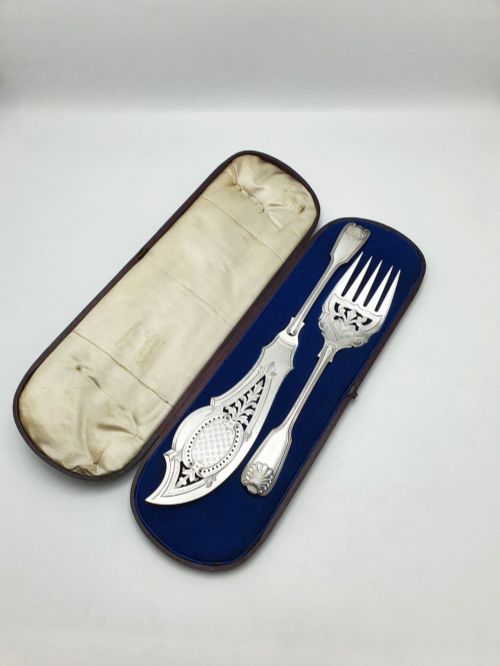
The forms range from pierced fish slices and serving knives to complete fish cutlery sets for multiple diners. You will encounter handles made from bone, mother-of-pearl, antler horn, and wood alongside blades fashioned from sterling silver and silver plate.
Materials and Craftsmanship
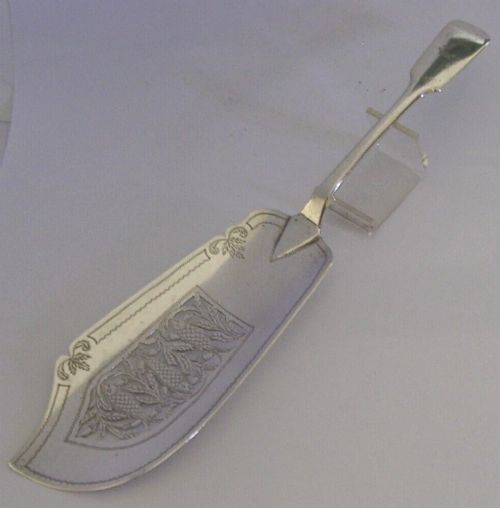
Blades are constructed from sterling silver or silver plate, often featuring intricate piercing, engraving, and hunting or dog motifs. These metallic surfaces are paired with organic handle materials such as mother-of-pearl, bone, and antler horn.
Cased sets frequently incorporate fitted wooden boxes lined with velvet to protect the polished metal and delicate handles. Silversmiths utilised traditional techniques like the Fiddle pattern and Queens pattern to shape the handles and collars.
Assessing Quality and Distinction
Quality rests in the crispness of the blade piercing and the depth of the hand-engraving on the silver surface. Pieces bearing clear hallmarks from recognised makers demonstrate superior provenance compared to unmarked silver-plated alternatives.
The choice of handle material and the presence of a fitted original presentation case elevate the desirability of a set. Exceptional examples feature integrated family crests or unusual forms like the French sardine server.
George Adams·Charles Boyton·Waring & Gillows·Georg Jensen
The Antique Silver Fish Knife Glossary
- Sterling silver
- A silver alloy containing 92.5 percent pure silver and 7.5 percent other metals, usually copper, ensuring durability for cutlery use.
- Silver plate
- A base metal such as copper or nickel silver covered with a thin layer of pure silver through electroplating or older manufacturing methods.
- Fish slice
- A broad, flat serving utensil with a pierced blade designed to lift portions of fish cleanly from a platter.
- Fiddle pattern
- A traditional nineteenth-century cutlery handle design characterised by a narrow stem that widens into a flattened, fiddle-like shape at the end.
- Queens pattern
- An ornate, heavily embossed nineteenth-century cutlery style featuring shell and scroll motifs along the borders.
Antique Silver Fish Knife: Frequently Asked Questions
What is an antique silver fish knife used for?
These specialised knives were designed during the nineteenth and twentieth centuries to navigate the bones and delicate flesh of fish courses without damaging the meat.
The wide, dull blade and often notched edge allowed diners to lift skin and separate fillets cleanly while avoiding chemical reactions that standard steel blades might cause with fish.
How do I identify a Victorian fish knife?
Victorian examples often display hallmarks indicating dates between 1837 and 1901, alongside characteristic decorative elements like hand-engraved foliage or animal motifs.
Many feature organic handles made from bone, mother-of-pearl, or antler horn, paired with sterling silver or silver-plated blades in patterns such as Fiddle or Queens.
Are fish knives made of solid silver?
Some pieces are fashioned entirely from solid sterling silver, while others utilise silver-plated base metals for the blades to ensure rigidity.
Handles frequently consist of alternative materials like wood, bone, or mother-of-pearl rather than solid metal, secured with silver ferrules.
How should I care for antique silver fish cutlery?
Gentle hand washing with warm water and mild soap is essential, followed by immediate drying with a soft cloth to prevent tarnishing and protect organic handles.
Harsh abrasive polishes should be avoided, and pieces stored in lined wooden boxes or anti-tarnish rolls will maintain their finish over time.