


Victorian Fish Slice
A victorian fish slice brings nineteenth-century dining elegance to the table, designed specifically to serve delicate courses with grace.
Victorian Fish Slice
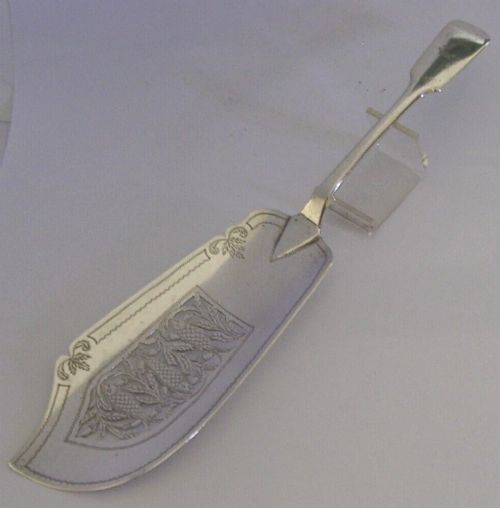
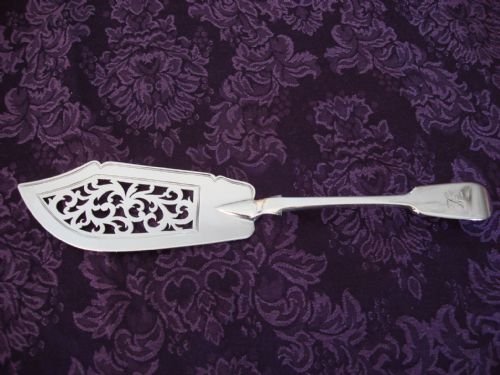
A victorian fish slice is a specialised serving utensil engineered for the formal dining habits of the nineteenth century. These pieces most commonly appear in solid sterling silver or silver plate, frequently accompanied by matching forks.
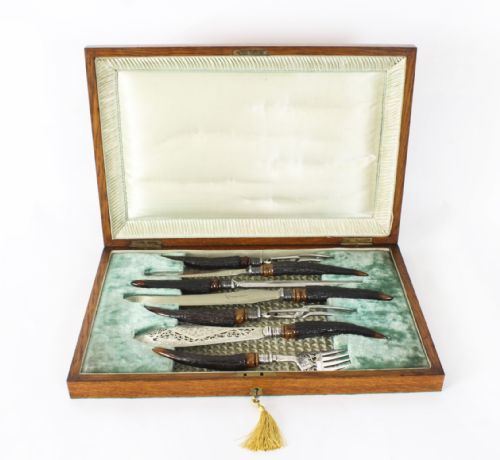
The form encompasses single servers as well as paired sets housed in fitted cases. Examples on this page span from the Georgian era through the Victorian period, including specific dates such as eighteen-hundred, eighteen-fifty, and eighteen-ninety.
Materials and Construction
Silversmiths utilised solid sterling silver and silver plate for the primary blades and servers, applying meticulous piercing techniques to create intricate patterns. Steel and bone also appear within these serving instruments.
Handles frequently incorporate organic materials such as stag antler, horn, and wood, secured to the metal shafts. Craftsmen finished many pieces with detailed hand engraving, depicting wildlife, hunting dogs, and heraldic crests.
Some nineteenth-century designers could not resist putting a running pheasant or a barking hound right on the fish blade.
Evaluating Quality and Craftsmanship
Quality rests upon the crispness of the blade piercing and the depth of the hand engraving. Heavy gauge silver provides a substantial feel in the hand compared to lighter plated alternatives.
The integration of natural handle materials like stag antler and horn dictates distinction. Intact original fitted cases and notable maker attributions elevate the standing of a piece.
George Adams·Charles Boyton·Elizabeth Eaton
The Victorian Fish Slice Glossary
- Pierced
- A technique where metal is cut through to form decorative patterns on the blade. This allows liquid to drain when serving fish.
- Fiddle Pattern
- A nineteenth-century flatware style featuring a narrow stem that widens into a shoulder near the terminal, resembling a fiddle.
- Kings Pattern
- An ornate nineteenth-century flatware design decorated with shell and scroll motifs along the borders.
- Cased Set
- A matching pair of serving implements housed in a fitted presentation box, often lined with velvet or silk.
Victorian Fish Slice: Frequently Asked Questions
What was a fish slice used for?
A fish slice served as a specialised implement at nineteenth-century dinner tables for portioning and lifting delicate fish courses.
The wide, flat blade ensured the fish remained intact while transferring it from a platter to individual plates.
How do I clean a silver fish slice?
Wash the piece gently in warm soapy water using a soft cloth, avoiding harsh abrasive materials that might scratch the metal.
Dry thoroughly immediately afterward and use a dedicated silver polish sparingly to maintain the natural shine.
Are these utensils safe for daily use?
While robustly constructed from solid silver or plate, these antique servers require careful handling to preserve their delicate engravings and pierced blades.
Hand washing is essential, as modern dishwashers can damage organic handle materials like horn and stag antler.
How do I identify the date of a piece?
Makers marked many nineteenth-century pieces with official hallmarks indicating the assay office, standard of metal, and date letter.
Design styles such as fiddle pattern or specific engraved motifs also help place the item within the Victorian era.