


Engraved Silver Slice
An engraved silver slice is a refined server designed for fish, pastry, or ceremony, prized for pierced blades and detailed decoration.
Engraved Silver Slice
An engraved silver slice encompasses serving utensils such as fish slices, pastry servers, and presentation trowels fashioned across several centuries. The pieces on this page span the Georgian, Victorian, and Edwardian eras, alongside select 18th-century French examples and mid-century items.
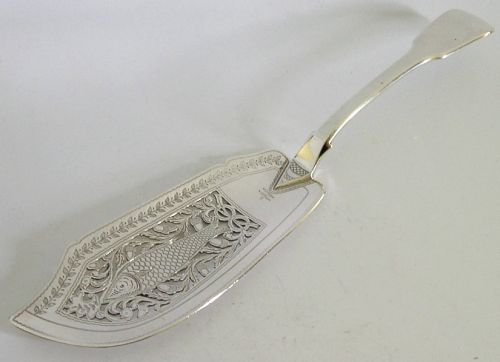
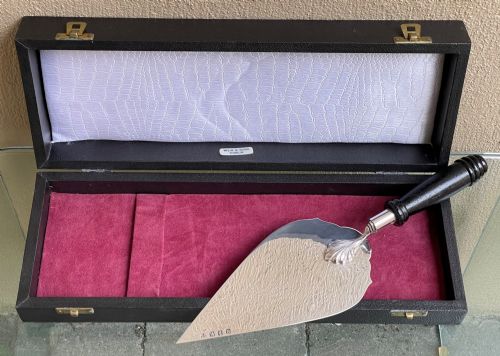
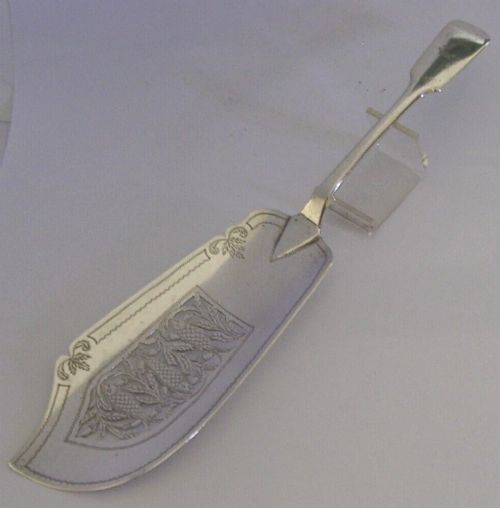
Most entries function as fish slices or fish servers, often featuring pierced blades adorned with delicate engravings. Alongside traditional fish servers appear specialised pastry servers and ceremonial presentation trowels, reflecting diverse uses at the dining table and in public commemoration.
Origins range from English and Irish workshops to French silversmiths, utilising sterling silver, silver plate, and 0.950 silver. Buyers encounter both single serving slices and paired sets accompanied by matching forks or carving implements.
How they were made
Silversmiths shaped solid sterling silver, silver plate, and high-purity French silver into wide blades, utilising piercing techniques to create intricate geometric or scroll patterns. Blades were then hand-engraved with crests, hunting scenes, or foliage.
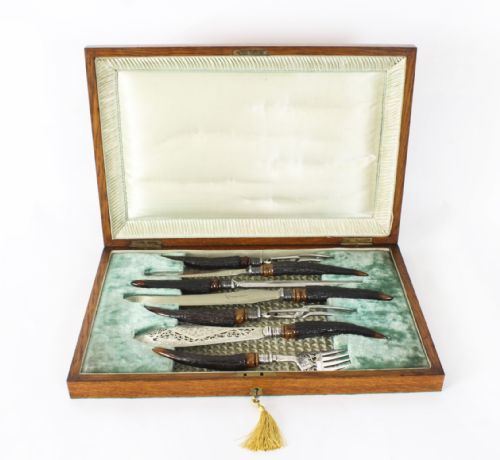
Handles introduce contrasting textures, incorporating materials such as ebony, bone, wood, stag antler, and horn. These natural elements were joined to metal shafts using pins, caps, or ferrules suited to each period style.
Periods represented span the 18th Century, Georgian era, Victorian period, and 1960, with specific dates reaching back to 1782.
What varies in quality
The crispness and depth of the hand-engraving dictate much of the visual merit, distinguishing superficial scratch-work from deeply incised botanical or heraldic motifs. Piercing work likewise ranges from simple slotted openings to elaborate fretted designs requiring high precision.
Material choice and handle integration set pieces apart, with substantial gauge sterling silver blades and well-fitted natural horn or antler handles representing superior craftsmanship compared to plated alternatives or loosely joined components.
Martin Hall & Co·Thomas Daniell·Charles Boyton
The Engraved Silver Slice Glossary
- Pierced blade
- A metal blade perforated with decorative cut-outs to allow liquid or crumbs to drain during serving. This technique appeared frequently on Georgian and 18th-century French fish slices.
- Presentation trowel
- A ceremonial trowel shaped like a building tool but finished with fine silver and engraving, often used for laying foundation stones. These items carry commemorative inscriptions rather than serving food.
- Fiddle pattern
- A traditional cutlery handle shape characterised by a narrow stem widening toward a flat, squared-off terminal with shoulder notches. It was especially popular on Irish and English silver during the George IV period.
- Silver plate
- A base metal substrate coated with a thin layer of silver through electroplating or older fusing methods. It offered a bright decorative finish for Victorian serving sets at a lower cost than solid silver.
Engraved Silver Slice: Frequently Asked Questions
What is an engraved silver slice used for?
These utensils served delicate foods at the dining table, most notably fish courses where wide blades supported flaky portions. Pastry servers and presentation trowels fulfilled similar decorative and functional roles for baked goods or ceremonies.
Over time, many pieces transitioned from active dining service to display items, appreciated for their intricate metalwork and historical associations.
How do I identify a Georgian silver slice?
Georgian examples often display characteristic hallmarks indicating London or regional assay offices, alongside period-specific shapes like fiddle pattern handles. Piercing on these older blades tends to feature hand-cut geometric or floral arrangements.
Examining the weight and the style of the engraving helps separate early 19th-century pieces from later Victorian or Edwardian reproductions and adaptations.
Are antler handles authentic to the Victorian period?
Stag antler and horn handles were widely utilised by Victorian silversmiths for carving sets and fish servers, reflecting a broader interest in natural materials. These handles provide a tactile contrast to the polished metal blades.
Care should be taken with organic handles, avoiding prolonged exposure to moisture or heat to preserve their natural texture and secure fit.