




Silver Fish Serving Knife
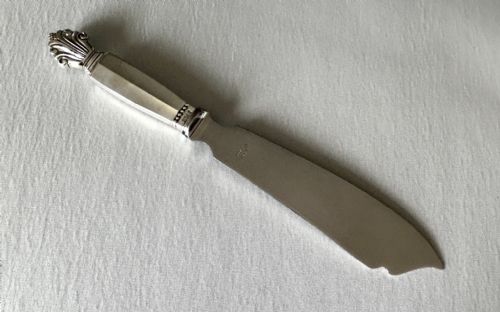
A silver fish serving knife is a specialist utensil designed for hosting, pairing silver blades with bone, antler or metal handles across several centuries.
Silver Fish Serving Knife
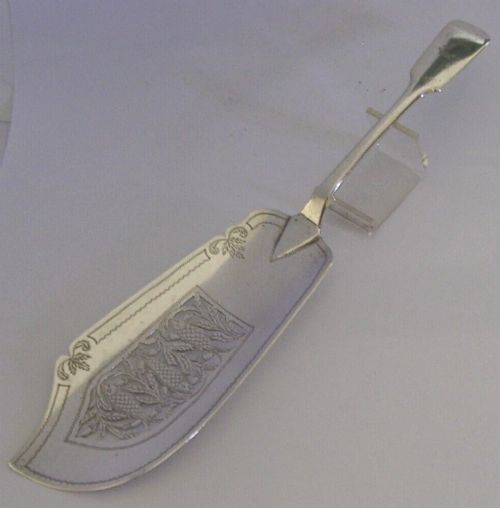
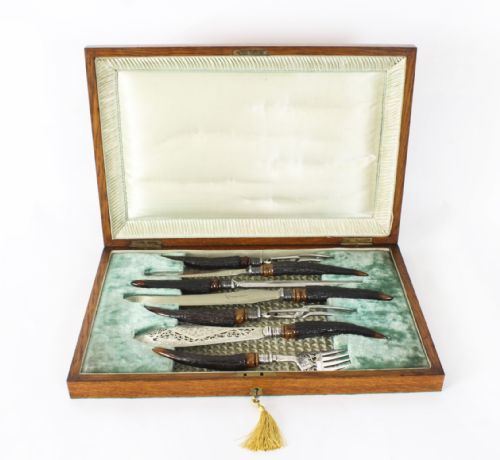
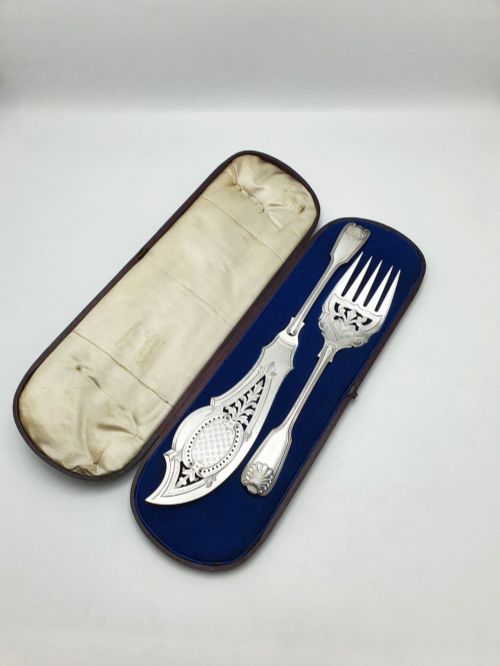
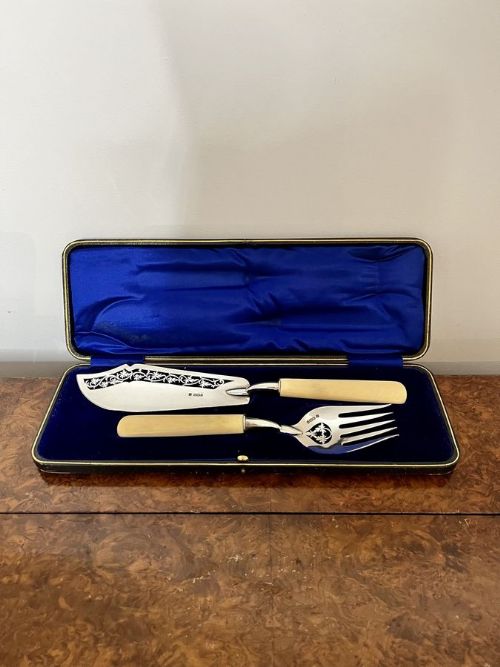
When you search for a silver fish serving knife, you encounter specialist serving cutlery from the George IV, Victorian, Edwardian and mid-century periods. These implements often appear as individual pieces or within cased sets alongside a matching fork.
The material composition spans solid sterling silver and silver plate, frequently featuring handles shaped from bone, horn or stag antler. Formats range from traditional pierced slices to sardine servers and broad-bladed serving knives.
Materials and construction
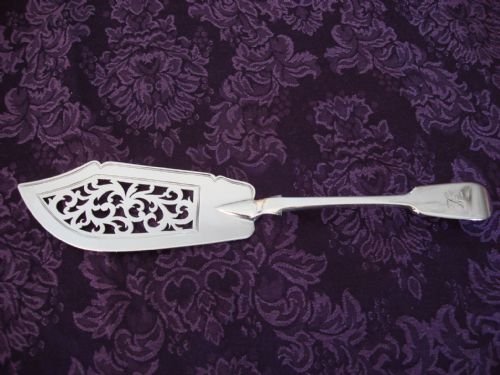
Silversmiths formed blades from sterling silver or applied silver plate over base metals, often utilising piercing techniques to create elaborate scrollwork or fish motifs. Handles required durable natural materials such as bone, horn, wood and stag antler to balance the weight of the metal blade.
Engraving remained a prominent method for decorating the flat surfaces, displaying family crests or hunting scenes alongside hallmarks denoting the year and city of manufacture.
Materials recorded on this page include sterling silver, silver plate, stag antler, bone, horn and stainless steel.
Distinguishing quality in service pieces
Superior examples demonstrate crisp piercing and deep, clear engraving on the blade rather than shallow stamp work. The seamless union between the metal blade and organic handle materials indicates superior manufacturing standards.
Makers known for exceptional flatware production employed heavier gauge silver, ensuring the slice resists bending during service while maintaining precise balance in the hand.
Georg Jensen·George Adams·Charles Boyton
The Silver Fish Serving Knife Glossary
- Sterling silver
- A silver alloy containing 92.5 percent pure silver by mass, standard for quality British tableware. This standard is verified by official assay office hallmarks.
- Silver plate
- A thin layer of silver applied to a base metal core such as copper or nickel brass. It offers the appearance of solid silver at a different cost point.
- Fiddle pattern
- A traditional 19th-century flatware handle design featuring a distinctive narrow stem that broadens sharply near the terminal. It remains common on George IV and Victorian silver.
- Pierced work
- Metal cutting technique where portions of the blade are removed to form decorative patterns. This reduces weight and allows steam to escape from beneath the fish.
Silver Fish Serving Knife: Frequently Asked Questions
What is a silver fish serving knife used for?
These implements were designed to portion and serve whole fish at the dining table during formal meals. The wide blade allows the user to lift delicate fillets cleanly without breaking the flesh.
Many examples arrive paired with a matching fork in a fitted presentation case, intended for hosting multi-course dinners.
How do I identify the date of a silver fish knife?
British pieces typically display a series of hallmarks stamped directly into the metal. These marks indicate the assay office, the maker's mark and a date letter corresponding to the exact year of production.
Stylistic cues such as 19th-century fiddle patterns or mid-century minimalist designs also help narrow down the period of manufacture.
Are handles made from bone or antler fragile?
Natural handle materials like stag antler, bone and horn are remarkably durable when properly cared for. They require hand washing rather than immersion in hot water or modern dishwashers to prevent drying and splitting.
Over decades, these organic materials develop a rich patina that enhances the character of the serving piece.
Can I use antique fish servers for everyday dining?
While robust enough for occasional modern hosting, these pieces benefit from gentle handling due to their age and delicate construction. Solid silver and silver-plated items require regular polishing with a suitable cloth to maintain their lustre.
Storing them in lined cases or anti-tarnish rolls protects the engraved blade and organic handle from unnecessary wear.