



Victorian Silver Fish Slice
These Victorian silver fish slice examples bring the elegance of nineteenth-century dining tables straight to modern hands.
Victorian Silver Fish Slice
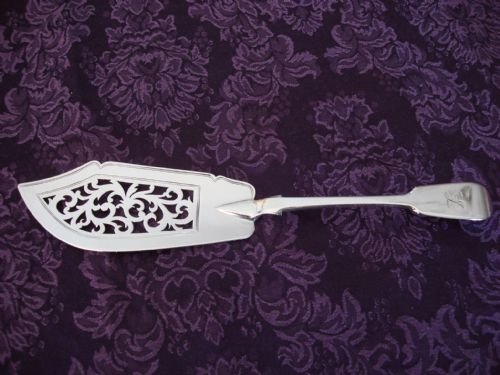
A Victorian silver fish slice is a specialised serving implement designed specifically for portioning and presenting fish courses at formal meals. These pieces typically take the form of a broad, pierced blade attached to a handle, often accompanied by a matching fork.
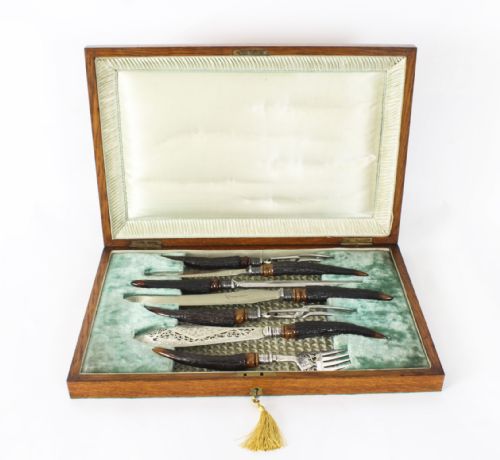
The versions most commonly met on this page span the nineteenth century, including specific dates from the eighteen-fifties and eighteen-nineties alongside broader Georgian and Victorian classifications. Makers utilised various forms such as solid sterling silver or silver plate, sometimes pairing them with organic handles.
Collectors encounter these utensils grouped under serving cutlery, flatware, and carving sets. They reflect the elaborate dining customs of the period, where individual courses required dedicated tools adorned with piercing, engraving, and family crests.
How they were made
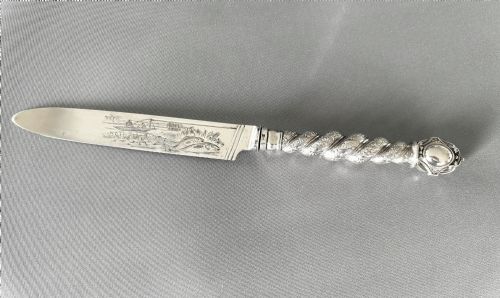
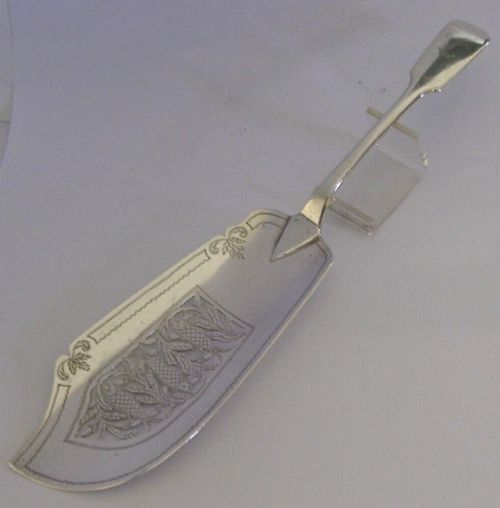
Silversmiths constructed the blades using solid sterling silver or base metals finished with silver plate, employing piercing techniques to create intricate openwork patterns that allowed juices to drain. These blades frequently feature detailed hunting or dog engravings across the surface.
Victorian Silver Fish Slice Retail Price Guide 2026
Typical asking prices for victorian silver fish slice among the pieces listed under this phrase on Sellingantiques today, from the lower quarter to the upper quarter. They describe what is for sale here now, not the wider market.
Several Victorian fish servers feature hunting and dog engravings, reminding us that nineteenth-century dining celebrated the outdoors right at the dinner table.
What varies in quality
The distinction between standard and superior pieces rests on the weight of the metal and the complexity of the piercing work on the blade. Heavier gauge sterling silver and deeply chiselled engravings indicate a higher grade of craftsmanship.
The choice and preservation of handle materials also influence the character of the piece, with well-matched stag antler or clean bone adding to the integrity of the design. Maker attribution, such as work originating from established London workshops, elevates the standing of the utensil.
GEORGE ADAMS·Charles Boyton
The Victorian Silver Fish Slice Glossary
- Piercing
- The technique of cutting decorative openwork designs through the metal blade. This method lightened the utensil while creating intricate geometric or floral patterns.
- Sterling silver
- An alloy consisting of pure silver and other metals, usually copper, standardised for durability and lustre. It forms the primary metal body for many high-grade nineteenth-century pieces.
- Silver plate
- A layer of silver bonded to a base metal core, offering the appearance of solid silver at a different cost. This material was widely utilised during the Victorian era.
- Crest
- An engraved family symbol or heraldic device personalising the silver. These markings indicate the original commissioning household.
Victorian Silver Fish Slice: Frequently Asked Questions
What is a Victorian silver fish slice used for?
These utensils were designed to serve delicate fish courses during formal Victorian dinners. The wide blade allowed the server to lift portions cleanly without breaking the flesh.
Today, they serve as decorative table accents or functional serving tools for modern dinner parties.
Are these pieces made of solid silver?
The listings include both solid sterling silver pieces and silver-plated items. Hallmarks on the metal help determine the exact composition and origin of the silver.
Plated versions offer a similar aesthetic while utilising a base metal core beneath the silver coating.
Why do some handles use antler or bone?
Natural materials provided a textured, secure grip during formal dining when hands might be greasy from food. Stag antler and bone also added a rustic contrast to the polished silver blades.
Victorian makers favoured these materials for their durability and distinctive appearance.