



Victorian Fish Server Knife
These Victorian fish server knife examples are sterling silver and silver-plated utensils designed for formal dining.
Victorian Fish Server Knife
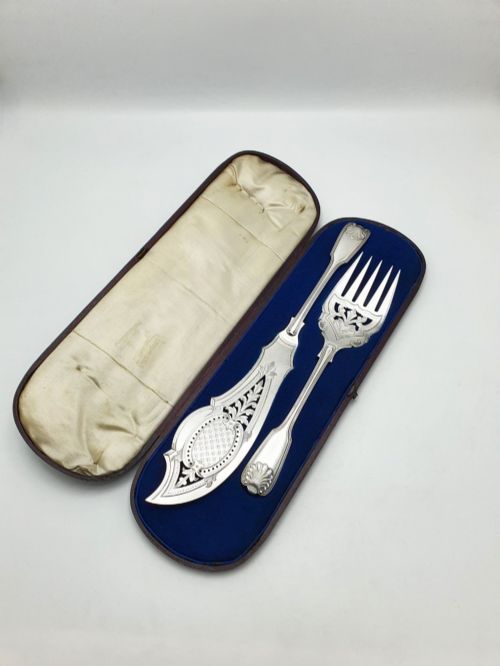
A Victorian fish server knife is a specialised piece of flatware created to serve fish courses during large nineteenth century dinners. You will find single serving knives, complete sets with matching forks, and boxed presentation cases among the current listings.
The objects span the Victorian era, with dates appearing from the middle to the late decades of the nineteenth century. Forms range from solid silver pierced slices to engraved silver-plated blades paired with organic handles.
Origin points include London assay offices alongside provincial makers, reflecting the high domestic demand for specialised dining implements. Many survive today housed in their original fitted presentation cases.
Construction and materials
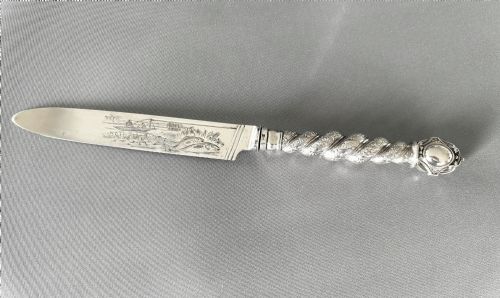
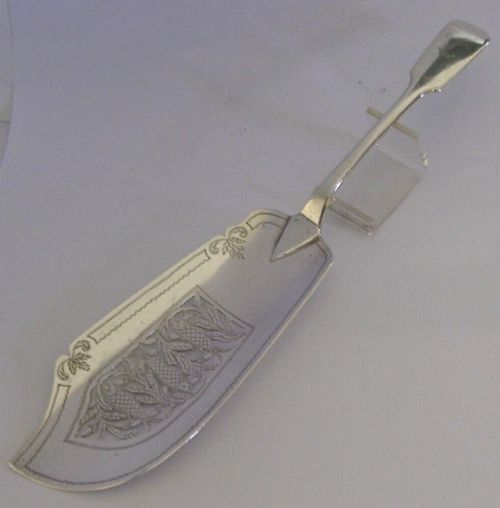
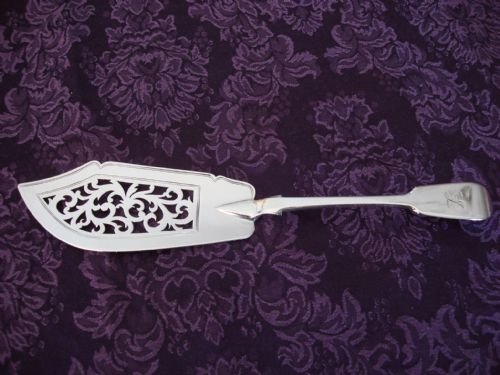
Craftsmen utilised sterling silver and silver-plate for the broad blades, frequently applying intricate pierced openwork and hand-engraved hunting or dog motifs. These metal surfaces catch the light and display detailed decorative patterning.
Handles were fashioned from natural materials including mother-of-pearl, bone, horn, and antler, secured firmly to the metal shanks. Velvet and silk linings inside fitted cases provided protective storage for these delicate dining tools.
Victorian Fish Server Knife Retail Price Guide 2026
Typical asking prices for victorian fish server knife among the pieces listed under this phrase on Sellingantiques today, from the lower quarter to the upper quarter. They describe what is for sale here now, not the wider market.
Some Victorian fish servers feature delightful hand-engraved hunting and dog scenes galloping across the flat blade.
Assessing quality and craftsmanship
Quality rests upon the weight of the metal and the precision of the piercing and engraving across the blade surface. Superior examples exhibit deep, crisp hand-chased ornamentation rather than shallow stamped impressions.
The choice and execution of the handle material also divide standard utility items from luxury presentation pieces. Natural organic handles with rich grain and secure mounts elevate the overall distinction of the cutlery.
GEORGE ADAMS·Charles Boyton
The Victorian Fish Server Knife Glossary
- Fish slice
- A broad, flat serving knife specifically shaped for portioning delicate fish at the table. This term often appears interchangeably with fish server.
- Pierced work
- Metal cut through in decorative patterns to lighten the blade and create ornamental designs. Piercing required considerable skill from the silversmith to maintain structural integrity.
- Sterling silver
- A silver alloy containing a specific high proportion of pure metal by weight, bearing official hallmarks. These assay marks indicate the year of manufacture and the city of testing.
- Silver-plate
- A base metal foundation coated with a thin layer of silver through electroplating or older fusion methods. This technique offered an accessible alternative to solid silver dining wares.
- Queens pattern
- A traditional decorative flatware style featuring shell and scroll motifs along the handle edges. This ornate pattern was popular throughout the nineteenth century.
Victorian Fish Server Knife: Frequently Asked Questions
How were fish servers used?
These implements were employed at the dining table to portion and lift whole fish or large fillets without breaking the flesh. The broad blade supported the weight of the food while the pierced design allowed juices to drain.
They belonged to expansive dining services where specialised cutlery for every course was standard practice.
How do I care for silver fish servers?
Maintain these pieces by washing them by hand in warm soapy water and drying them immediately with a soft cloth. Avoid abrasive cleaners that might damage engraved details or delicate handle materials.
Store them in dry conditions, preferably within lined boxes, to prevent tarnishing and protect organic handle components.
How can I date a fish server?
Dating relies heavily on official hallmarks stamped onto solid silver pieces, which indicate the assay office and year of production. Stylistic clues such as handle materials and engraving motifs also point toward specific decades within the Victorian period.
Boxed sets and accompanying documentation can provide further context regarding the manufacturing era.