





Vintage Silver Fish Server
A vintage silver fish server brings formal nineteenth and twentieth-century dining habits back to the table with pierced blades and carved handles.
Vintage Silver Fish Server
A vintage silver fish server is an elegant utensil designed specifically for portioning and serving delicate courses at formal meals. When you search for a vintage silver fish server, you encounter specialised flatware spanning the Georgian, Victorian, and Edwardian eras, alongside mid-century interpretations.
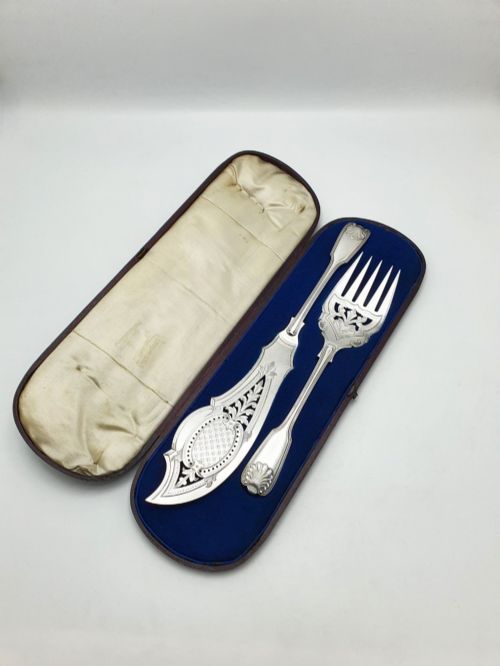
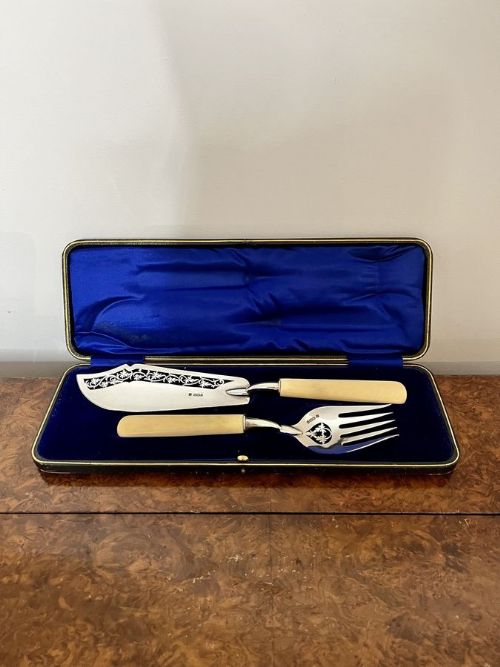
The pieces on this page appear in various forms, including single serving slices and matched knife and fork sets. Originating from distinct periods, these implements range from silver-plated nineteenth-century sets to sterling silver items and modern designs.
You are most likely to meet Victorian and Edwardian examples featuring detailed engravings and natural handles. These utensils reflect the elaborate dining customs of their respective periods, combining utility with decorative craftsmanship.
Materials and construction
These servers combine precious metals with organic and durable materials for their handles and blades. Makers utilised sterling silver and silver plate for the primary utensils, pairing them with natural substances such as mother-of-pearl, horn, antler, and velvet.
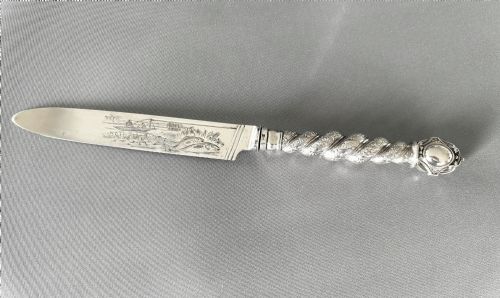
Blades and tines often display intricate piercing and hand engraving depicting natural motifs and hunting scenes. Handles are securely fitted using traditional fastening methods to withstand the weight of larger serving portions.
Vintage Silver Fish Server Retail Price Guide 2026
Typical asking prices for vintage silver fish server among the pieces listed under this phrase on Sellingantiques today, from the lower quarter to the upper quarter. They describe what is for sale here now, not the wider market.
Some nineteenth-century sets feature charming hunting and dog engravings on the blade, reminding diners of sporting traditions at the dinner table.
Qualities that set pieces apart
The distinction between standard utility items and superior examples lies in the depth of engraving and the choice of handle material. Finely detailed piercing on the blade and crispness in the engraved patterns elevate the aesthetic value of a piece.
The integrity of the construction and the selection of premium handle components, such as genuine antler or mother-of-pearl, separate mass-produced items from high-grade workshop creations. Complete boxed sets maintain a higher level of historical preservation.
Georg Jensen·Waring & Gillows·Alvin
The Vintage Silver Fish Server Glossary
- Sterling silver
- An alloy containing a high proportion of pure silver combined with other metals for durability. This standard is frequently hallmarked on quality flatware.
- Silver plate
- A base metal coated with a thin layer of silver through electroplating or older manufacturing methods. This technique allowed makers to produce accessible tableware with the appearance of solid silver.
- Antler handle
- A grip fashioned from natural deer or stag horn, shaped and polished to fit the hand. These handles provide a tactile, textured contrast to smooth metal blades.
Vintage Silver Fish Server: Frequently Asked Questions
How do I use a fish server today?
These utensils serve whole baked fish, tarts, and similar delicate dishes at the dining table. Their broad blades support the food without breaking the portions.
Modern dining can easily incorporate these historical pieces for dinner parties and celebratory meals. They add practical elegance to serving fish courses.
Were these always sold in pairs?
Many sets comprise a matching knife and fork designed to work together for serving. The knife steadies the portion while the wide slice lifts it.
Single servers also exist, particularly among Georgian slices and mid-century pieces. Both paired and single formats fulfilled specific roles in formal dining.
How do I care for antique silver servers?
Gentle hand washing in warm soapy water preserves the metal and organic handles. Avoid abrasive cleaners that can damage fine engravings and plated surfaces.
Storing pieces in protective rolls or lined boxes prevents unnecessary tarnishing. Regular, careful polishing maintains the lustre of the silver.
What period do antler handles belong to?
Antler handles appear frequently on Victorian and Edwardian serving sets. They reflect a nineteenth-century preference for natural materials in domestic tableware.
Craftsmen shaped the horn to fit the hand comfortably while retaining its organic texture. These handles contrast with smooth sterling silver blades.