


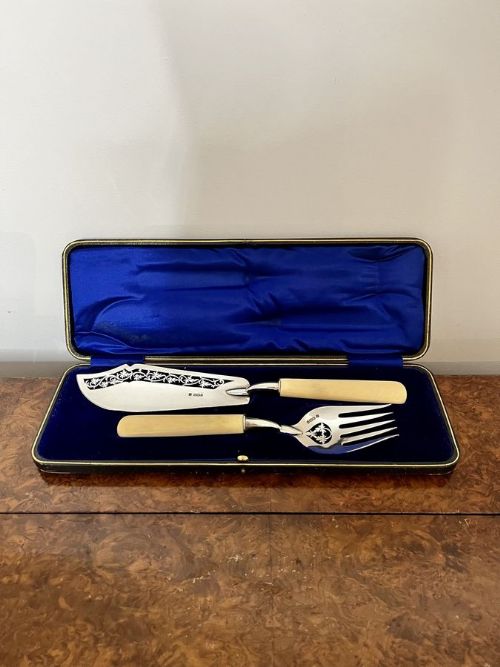


Silver Fish Serving Fork
A silver fish serving fork brings the polished precision of Victorian and Edwardian dining tables to your home.
Silver Fish Serving Fork
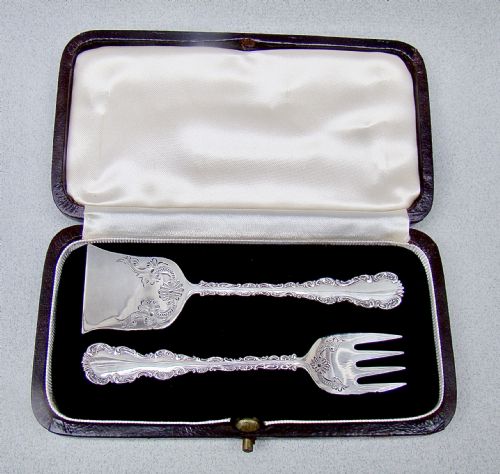
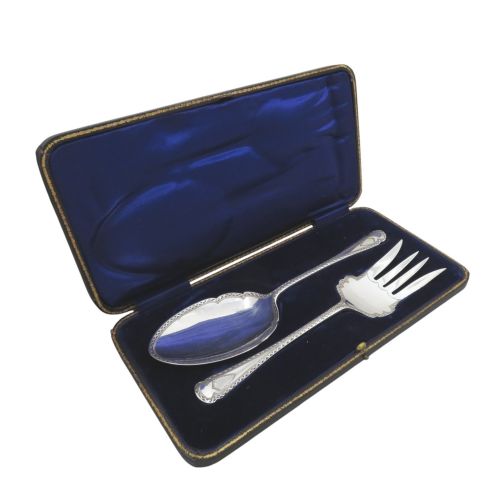
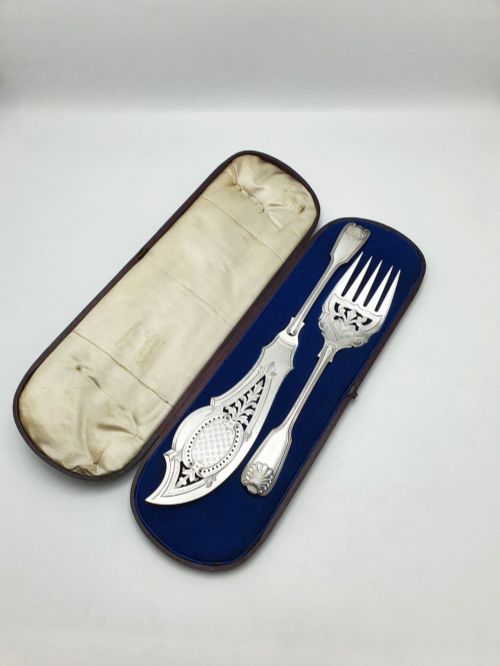
These utensils appear in various forms, including cased pairs, boxed serving sets, and individual forks featuring ornate engraving, dog motifs, or hunting scenes. Many examples originate from English workshops and utilise sterling silver or silver plate.
The assortment on this page highlights the prevalence of cased sets from the 1880s and 1890s, alongside Edwardian variations. Collectors often find these implements accompanied by fitted boxes lined in velvet, satin, leather, or leatherette.
Materials and Construction
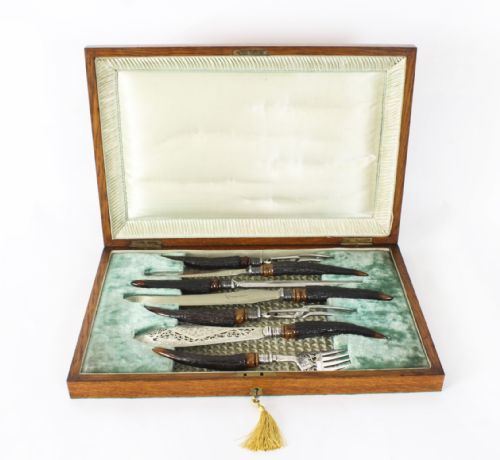
Makers fashioned the tines and blades of these servers using sterling silver or silver plate, often applying detailed hand engraving to the metal surface. The natural materials used for handles include bone, horn, and antler, reflecting the utilitarian and decorative tastes of the era.
Fitted presentation cases lined with velvet, satin, leather, or leatherette protected these delicate items when not in use. Metalwork techniques combined traditional silversmithing with specialised piercing and engraving to create intricate patterns such as the Old Orange Blossom design.
Listings feature sterling silver and silver plate alongside handle materials including bone, horn, and antler across Victorian and Edwardian periods.
Assessing Quality and Craftsmanship
Quality in a silver fish serving fork rests upon the crispness of the engraving and the integrity of the handle materials. Pieces featuring deep, clear hunting scenes or floral patterns demonstrate superior handwork compared to simpler, lightly stamped versions.
The presence of a fitted presentation case lined in materials like velvet or satin often indicates a higher grade of production, especially when the case remains intact and well-preserved. Furthermore, the weight and balance of the sterling silver or silver plate dictate the enduring utility of the fork.
Henry Wilkinson·Alvin
The Silver Fish Serving Fork Glossary
- Sterling Silver
- A silver alloy containing 92.5 percent pure silver by mass, widely utilised in British flatware production.
- Silver Plate
- A base metal coated with a thin layer of pure silver, offering the appearance of solid silver at a different cost point.
- Flatware
- Table cutlery used for dining, encompassing forks, spoons, and related serving implements.
- Antler Horn
- A natural material sourced from deer antlers, frequently shaped and fitted to the handles of nineteenth-century serving sets.
Silver Fish Serving Fork: Frequently Asked Questions
What is a silver fish serving fork used for?
These forks were specifically designed to serve portions of fish at formal nineteenth and early twentieth-century dining tables. They allowed hosts to elegantly transfer delicate fish fillets without breaking them.
They frequently appeared as part of a matched pair with a specialised fish knife, housed within a fitted presentation box for formal dinners.
Are these forks made of solid silver?
The pieces listed across this page encompass both solid sterling silver and silver-plated varieties. Hallmarks typically indicate sterling silver items, while plated versions use a base metal underneath a silver coating.
Handles also vary, incorporating natural materials like bone, horn, and antler alongside metal components.
How should I store my fish serving fork?
Many of these utensils come in their original fitted cases lined with velvet, satin, leather, or leatherette. Storing the fork within its dedicated box helps protect the metal and handle materials from unnecessary wear.
Keep the case in a stable environment away from extreme humidity and direct sunlight to preserve the lining and the silver finish.
How do I identify a Victorian fish fork?
Victorian examples often feature distinctive design characteristics such as elaborate floral engraving, hunting scenes, or dog motifs. Many date from the 1880s and 1890s, frequently accompanying matching servers in velvet-lined boxes.
Examining any stamped hallmarks or registration marks will also help confirm the exact period of manufacture.