
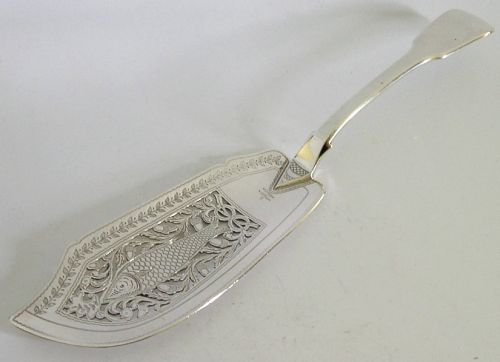


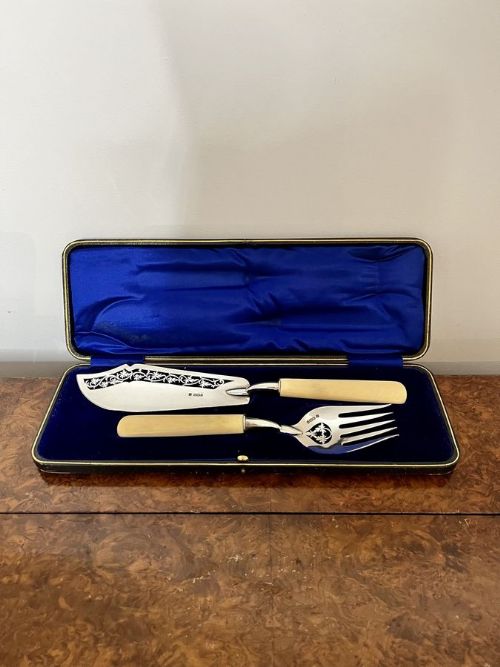

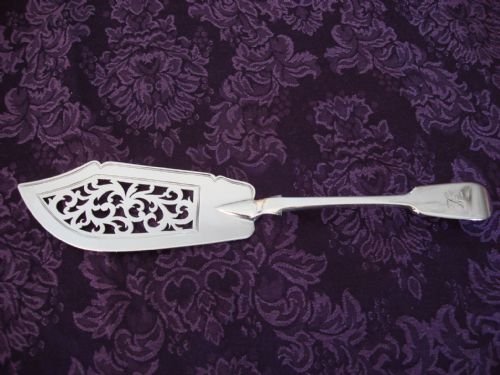
Pierced Silver Slice
A pierced silver slice is a specialist server designed for lifting delicate portions at table, combining functional metallurgy with intricate openwork design.
Pierced Silver Slice
When you search for a pierced silver slice, you encounter formal serving utensils primarily fashioned for fish or cake service across the Georgian, Victorian, and Edwardian eras. These pieces appear singly or as matched sets complete with matching forks, sometimes resting in velvet or silk lined presentation cases.
The forms span domestic English and Irish flatware alongside continental European examples, notably French and Dutch variants. Most instances on this page present as solid sterling silver or silver plate, featuring broad, perforated blades designed to drain liquid or oil during service.
The lineage stretches from the late eighteenth century into the opening decades of the twentieth century, taking in George III, George IV, and early Victorian stylistic shifts. Handles alternate between matching silver metalwork and contrasting organic materials such as bone and ebony.
Materials and construction
Silversmiths utilised sterling silver and higher purity continental silver, alongside silver plate for later nineteenth century production. Handles incorporate natural elements like bone and ebony, providing a tactile contrast to the cold metal blades.
Blades feature piercing and engraving executed by hand, creating openwork patterns that lighten the tool while maintaining structural rigidity for lifting food. Presentation storage incorporates fitted wooden boxes lined with velvet and silk.
The documented periods range from the eighteenth century through to Edwardian and Victorian times.
Evaluating craftsmanship and distinction
Quality rests in the precision and complexity of the blade piercing, where crisp apertures and detailed engraving demonstrate superior silversmithing skill over simpler stamped designs. The weight of the metal and the balance of the handle against the broad blade dictate the utility and tactile feel of the utensil.
The presence of original fitted presentation cases and matched fork sets elevates a piece from a utilitarian implement to a cohesive dining service. Maker marks and clear hallmarks also contribute significantly to the standing of individual pieces.
Thomas Daniell·GEORGE ADAMS·Charles Boyton·Elkington
The Pierced Silver Slice Glossary
- Sterling silver
- A silver alloy containing 92.5 percent pure silver and 7.5 percent other metals, usually copper. This standard composition provides the durability required for functional serving flatware.
- Fish slice
- A large serving utensil with a wide, flat blade specifically shaped for portioning and lifting fish at the dining table. Many examples feature elaborate piercing to allow juices to drain.
- Fiddle pattern
- A traditional nineteenth century flatware handle design characterised by a narrow stem that widens abruptly near the end into a flattened, shoulder-shaped terminal.
- Silver plate
- A base metal substrate coated with a thin layer of pure silver through electroplating or older techniques. This method allowed larger production volumes during the Victorian period.
- Hallmark
- An official stamp applied to precious metal items to guarantee the metal standard, the assay office, and the year of manufacture. These marks offer precise dating for pieces from London and other assay centres.
Pierced Silver Slice: Frequently Asked Questions
What is a pierced silver slice used for?
These utensils were created to serve fish, cake, and sardines at formal dining tables, where the wide blade supported delicate portions.
The piercing allowed excess butter, oil, or sauce to drain away through the blade before the food reached the plate.
How do I date a silver slice?
Dating relies heavily on the assay office hallmarks stamped directly onto the silver metal, which indicate specific years of manufacture.
Stylistic markers such as handle shape, engraving style, and the presence of fiddle patterns also point to Georgian, Victorian, or Edwardian periods.
Are these servers made of solid silver?
The listings include both solid sterling silver pieces and silver plate examples produced by prominent nineteenth century manufacturers.
Hands-on inspection of hallmarks reveals whether the metal is solid sterling or plated over a base metal.
How should I clean antique silver?
Maintenance requires gentle washing with mild soap and warm water followed by thorough drying with a soft cloth to protect the metal.
Harsh abrasive cleaners and excessive polishing must be avoided to preserve the original engraving and hallmarks on the blade.