




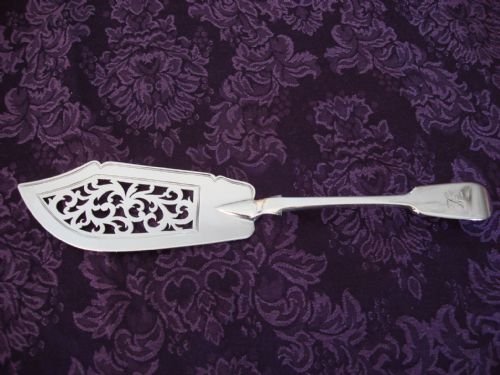
Silver Fish Knife Server
These silver fish knife server pieces combine practical dining utility with intricate period craftsmanship, offering collectors tactile links to nineteenth and twentieth century dining traditions.
Silver Fish Knife Server
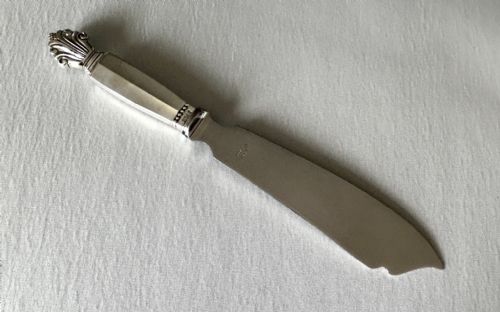
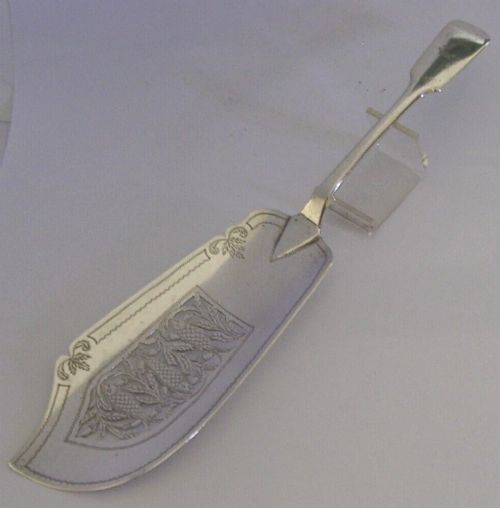
The silver fish knife server category encompasses specialised cutlery items designed for the formal serving of fish, spanning single slices to matched pairs. Buyers encountering this selection will frequently find Victorian sterling silver pieces alongside silver-plated variants from the nineteenth century.
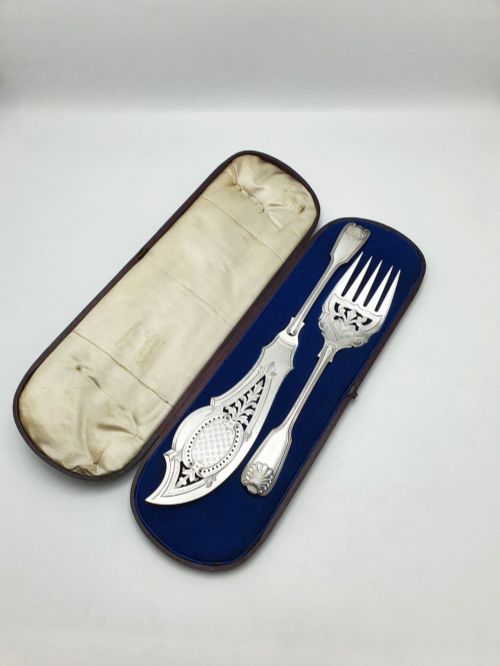
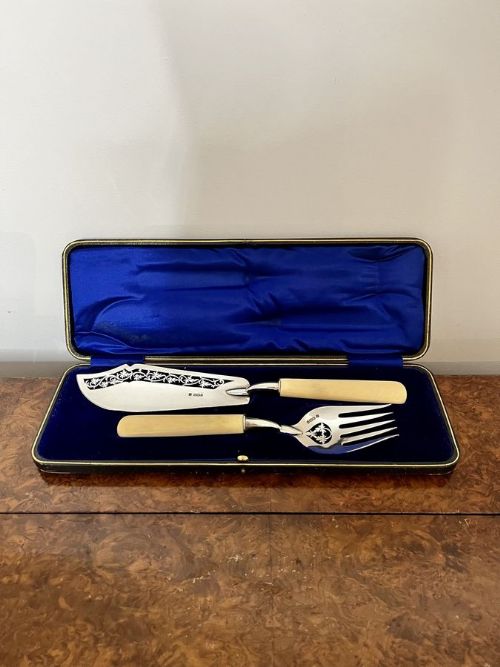
The objects take various forms, including pierced fish slices, sardine servers, and boxed sets equipped with matching knives and forks. Stylistic expressions range from the ornate engraving of the Victorian era to cleaner mid-century modern interpretations.
Origins stretch across British workshops, Irish silversmiths, and French makers, incorporating regional patterns such as the Fiddle pattern and the Queens pattern. These dining implements reflect the evolving culinary habits and formal table settings of past centuries.
Assessing quality in silver fish knife servers
Quality separates through the weight of the metal, the crispness of the blade piercing, and the refinement of any hand-engraved heraldry or ornamentation. Superior pieces demonstrate balanced proportions between the handle and the serving surface.
The choice and preservation of handle materials dictate much of the tactile appeal, where unblemished mother-of-pearl, polished horn, or intact antler command greater appreciation. Maker marks and clear hallmarks further elevate an item by confirming its origin and metallic standard.
Certain Victorian servers feature finely engraved hunting dogs bounding across the blade, ready to retrieve your dinner before it even reaches the porcelain.
Georg Jensen·Waring & Gillows·George Adams·Charles Boyton·Mappin & Webb
The Silver Fish Knife Server Glossary
- Sterling silver
- An alloy containing a high proportion of pure silver combined with other metals to ensure structural durability in flatware. This standard is frequently verified by hallmarks stamped directly onto the metal.
- Silver plate
- A base metal substrate coated with a thin layer of pure silver through electroplating or older techniques. This method provided the visual appeal of solid silver at a different cost point.
- Pierced slice
- A wide flat blade cut through with decorative apertures to allow liquid to drain from the fish. These cutouts often formed floral or geometric motifs characteristic of their period.
- Fiddle pattern
- A traditional cutlery handle shape featuring a narrow stem that broadens smoothly towards the end with distinct shoulders. It gained widespread popularity during the nineteenth century.
- Queens pattern
- An ornate, heavily embossed flatware design decorated with shells and floral scrolls along the border. It represents the more decorative end of formal dining aesthetics.
Silver Fish Knife Server: Frequently Asked Questions
What is a silver fish knife server used for?
These utensils were designed specifically for serving fish courses at formal dining tables, where the broad blade helped lift delicate flesh without breaking it. The paired knife assisted in separating portions cleanly.
Over time, such implements became standard components of large Victorian and Edwardian cutlery services, reflecting elaborate dining customs.
How do I identify a Victorian fish server?
Victorian examples often feature deep hand-engraving depicting hunting scenes, fish, or foliage, alongside distinct hallmarking that indicates the assay office and year of production. The presence of handles made from natural materials like bone or antler is also common.
Matching sets frequently arrive in fitted velvet-lined boxes typical of nineteenth-century presentation standards.
Are silver plate and sterling silver marked differently?
Sterling silver typically bears official assay office marks, including a lion passant in British pieces, denoting the metal standard. Silver-plated items generally use manufacturer marks or acronyms indicating electroplating processes rather than solid precious metal.
Examining the edges and high-wear points can also reveal if the underlying base metal is showing through a worn plate.
How should I care for antique fish servers?
Maintenance requires gentle cleaning with appropriate silver polishes to preserve engravings without removing the metal plating or thin sterling surfaces. Organic handle materials like horn, ivory, or wood should be kept dry and away from harsh heat sources.
Storing pieces in lined boxes or anti-tarnish rolls helps protect both the metal and the fitted handles from environmental wear.