


Victorian Silver Serving Knife
A victorian silver serving knife brings heavy sterling blades and engraved detail to the dining table.
Victorian Silver Serving Knife
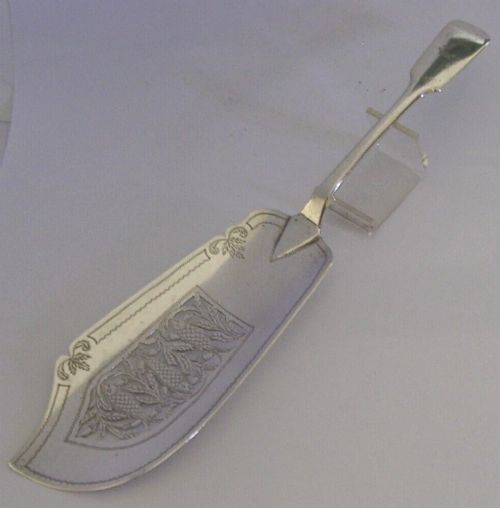
When you search for a victorian silver serving knife, you encounter specialised implements designed for fish, fruit, cake, or general serving tasks. These pieces frequently appear singly or within cased sets alongside matching forks, often bearing elaborate decoration from the nineteenth century.
The selections on this page span the Victorian era, reaching from the mid-nineteenth century into the eighteen-nineties. Forms include solid sterling items, silver-plated variations, and composite designs featuring handles made from natural materials.
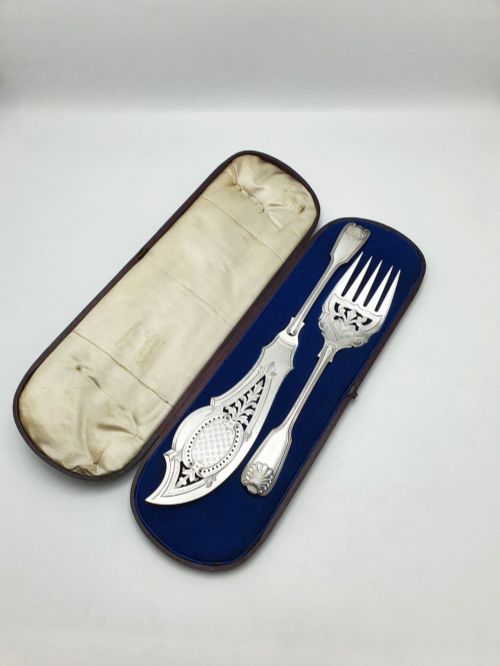
Fish servers and engraved slices dominate the recorded items, reflecting the formal dining habits of the period. Buyers find both standalone knives and paired sets housed in fitted presentation boxes.
How they were made
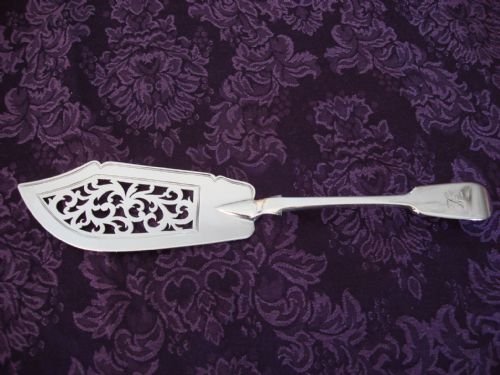
Silversmiths utilised sterling silver or applied silver plate over base metals, shaping blades through cutting and piercing techniques. Pierced fish slices show intricate scrollwork or hunting scenes etched directly into the metal surface.
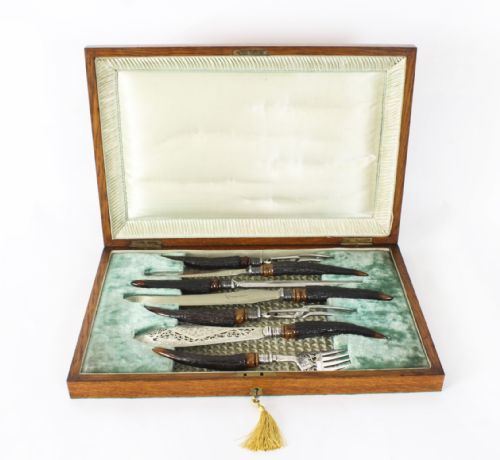
Handles required alternative materials such as stag antler, mother of pearl, horn, and wood to provide a secure grip and a contrasting texture. Rivets and caps secure these organic handles firmly to the metal tangs.
Listings feature items spanning from 1850 through the 1920s, incorporating materials such as stag antler, mother of pearl, and velvet.
What varies in quality
The distinction between standard items and superior pieces rests upon the crispness of the engraving and the depth of the piercing on the blade. Hand-cut detail and signed maker marks elevate the stature of an individual knife.
The condition and selection of handle materials also dictate the overall grade. Matched sets complete with original fitted presentation boxes command greater attention than solitary, worn utensils.
GEORGE ADAMS·Charles Boyton
The Victorian Silver Serving Knife Glossary
- Sterling Silver
- A silver alloy containing 925 parts of pure silver per thousand, standard for quality British plate and cutlery. This material provides durability and a bright finish.
- Silver Plate
- A thin layer of silver bonded to a base metal core such as nickel silver or copper. This technique offered an affordable alternative to solid sterling during the nineteenth century.
- Fish Slice
- A wide, flat serving knife specifically shaped for portioning and lifting fish at the table. These blades are frequently pierced with decorative patterns.
- Tang
- The continuation of the metal blade that extends into or through the handle. A secure tang ensures stability during use.
- Cased Set
- A collection of cutlery housed in a fitted, lined box designed for storage and presentation. These boxes often feature velvet interiors.
Victorian Silver Serving Knife: Frequently Asked Questions
How do I clean a silver serving knife?
Use a soft cloth and a specialised silver polish to remove tarnish gently without damaging engraved details or organic handles. Avoid harsh scrubbing that might wear down thin silver plate.
Store the utensil in a dry environment, preferably within a lined case or roll, to slow the accumulation of future tarnish.
Were these knives used only for fish?
While many nineteenth-century serving knives feature wide, pierced blades specifically intended for fish courses, other variations served fruit, cake, or general meats. Specialised carving sets and fruit knives catered to different dining requirements.
Examining the shape and piercing of the blade reveals its original culinary purpose.
Are original presentation cases common?
Many Victorian serving sets survive alongside their original fitted boxes, which typically feature velvet or silk linings. These cases protect the cutlery from damage and indicate a higher tier of original manufacture.
Standalone pieces frequently appear without boxes, having been separated from their original canteens over time.
How can I tell solid silver from silver plate?
Solid sterling items generally bear British hallmarks indicating the assay office, standard, and date letter. Silver-plated pieces typically show maker marks that denote electroplate rather than solid metal standards.
Close inspection of worn areas may also reveal the underlying base metal on plated examples.