




Pierced Silver Fish Server
A pierced silver fish server brings elegance to the dining table with finely worked blades designed for serving delicate courses.
Pierced Silver Fish Server
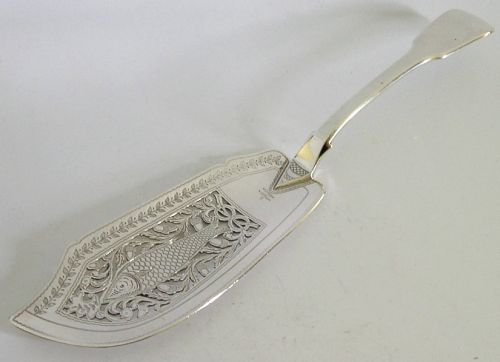
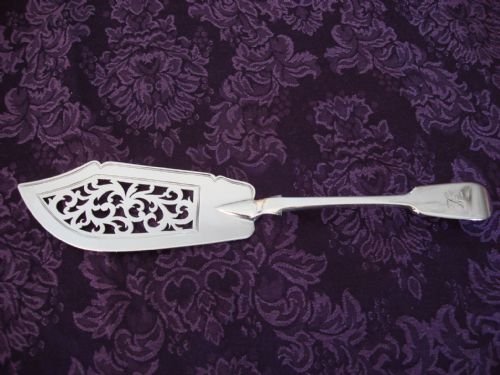
A pierced silver fish server is a specialised utensil created for lifting and serving fish at the table, encompassing forms from single slices to matched pairs. You are most likely to meet solid sterling silver and silver-plated examples spanning the Georgian, Victorian, and Edwardian periods.
The objects take the form of flatware, serving cutlery, and dedicated fish slices, often featuring elaborate piercing across the blade. These pieces originate from English workshops as well as French makers, reflecting the dining customs of the eighteenth and nineteenth centuries.
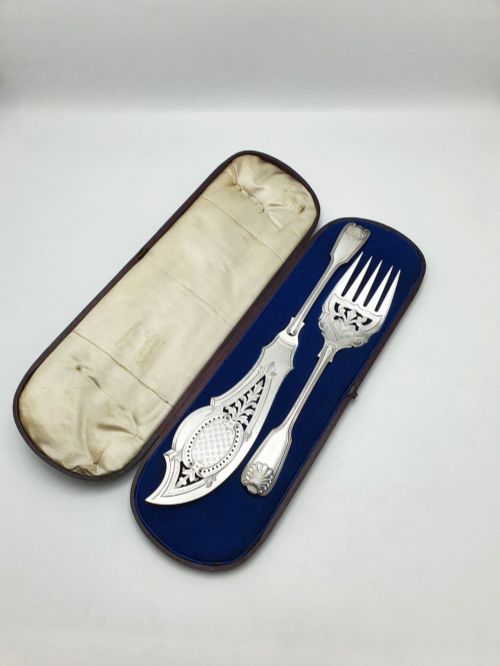
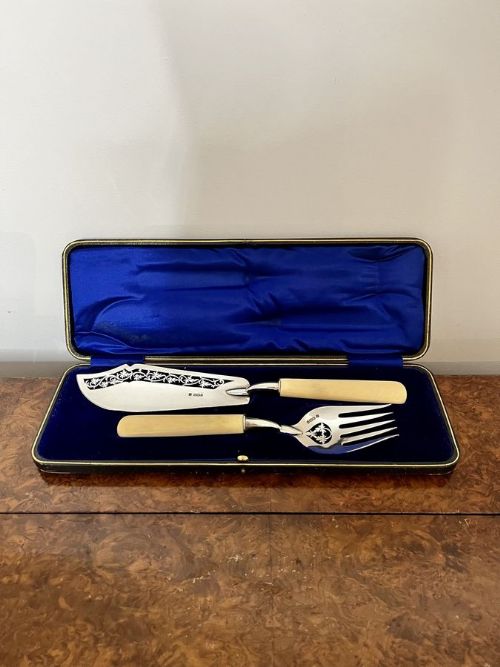
Many items appear individually, while others survive within fitted cases lined with materials such as velvet and silk. The selection ranges from unrecorded makers to pieces bearing hallmarks from London and Paris.
How they were made
Silversmiths constructed these utensils using sterling silver, silver plate, and finer continental standards like 0.950 silver, shaping the metal into broad blades. Craftsmen pierced the surface by hand or with early mechanical aids to create openwork designs that allowed cooking juices to drain away.
Handles required distinct materials to balance the weight of the wide metal blade, incorporating sterling silver, bone, ebony, or specialised patterns. Engraving and chased details frequently complemented the pierced motifs, finishing the face of the slice or serving fork.
Listings feature items from the Georgian, Victorian, and Edwardian eras, utilising materials like sterling silver, bone, and ebony.
What varies in quality
Quality rests upon the crispness of the hand-pierced work and the thickness of the silver gauge used for the blade. Better examples maintain structural rigidity across wide slices without bending under the weight of a serving.
The harmony between the handle material and the blade elevates a piece, particularly when fitted into an original velvet or silk-lined case. Maker attribution and clear hallmarks further distinguish standard production from exceptional silversmithing.
Thomas Daniell·George Adams·Charles Boyton·Martin Hall And Co·Alvin
The Pierced Silver Fish Server Glossary
- Pierced
- Work where metal is cut through to form a pattern or decorative motif. This technique reduced the weight of the utensil and drained liquid from the food.
- Sterling silver
- An alloy consisting of 92.5 percent silver by weight, combined with other metals for durability. British pieces typically display standard assay marks.
- Fiddle pattern
- A traditional flatware style featuring a narrow stem that broadens into a shoulder before spreading at the terminal. It was widely used during the Georgian and Victorian eras.
Pierced Silver Fish Server: Frequently Asked Questions
What was a pierced silver fish server used for?
These utensils were designed to serve delicate fish courses at formal dining tables, where the broad blade supported the flesh while liquid drained through the pierced apertures.
The openwork design prevented the fish from breaking apart during transfer from a large platter to individual plates.
How do I care for antique silver servers?
Keep the silver clean by washing it by hand in warm soapy water and drying it immediately with a soft cloth. Avoid abrasive cleaners that wear away the engraved and pierced details.
Store cased sets away from direct sunlight and damp environments to protect the internal velvet and silk linings.
Can I use these for serving other foods?
While originally made for fish, many broad slices function well for serving cakes, pastries, or tarts at modern gatherings. The sturdy construction handles baked goods just as effectively as seafood.
Ensure that silver-plated versions receive gentle handling if used frequently for acidic foods.
How do I identify the period of a piece?
Look for hallmarks stamped onto the metal, which indicate the assay office, the year of production, and the silversmith's mark. Stylistic clues such as handle materials and engraving patterns also point to Georgian, Victorian, or Edwardian origins.
Fitted boxes and original cases help preserve the history and context of the set.