


Antique Sterling Fish Slice
An antique sterling fish slice brings nineteenth-century dining elegance to the table, designed specifically to lift delicate portions of fish without breaking them.
Antique Sterling Fish Slice
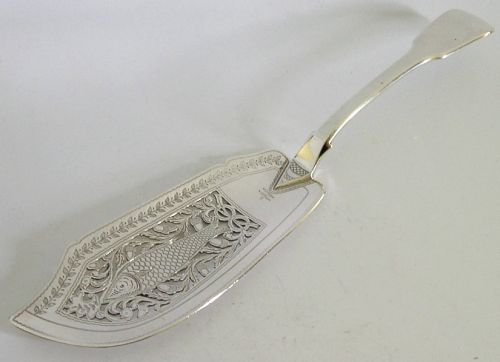
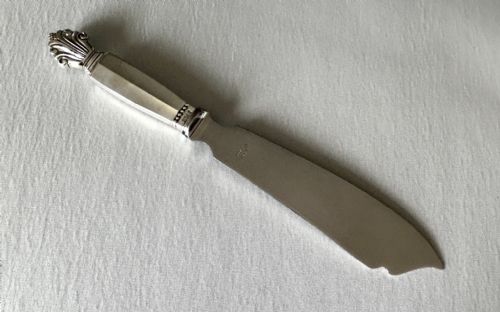
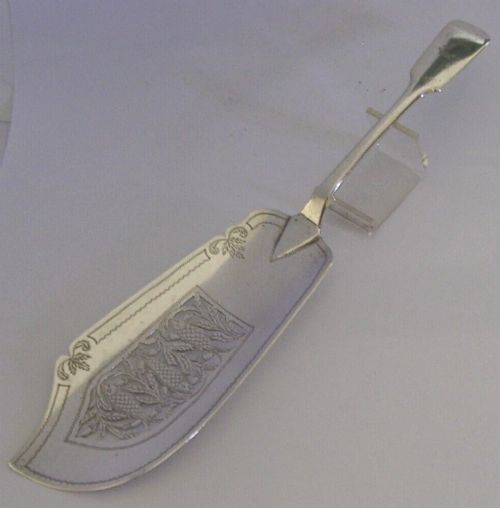
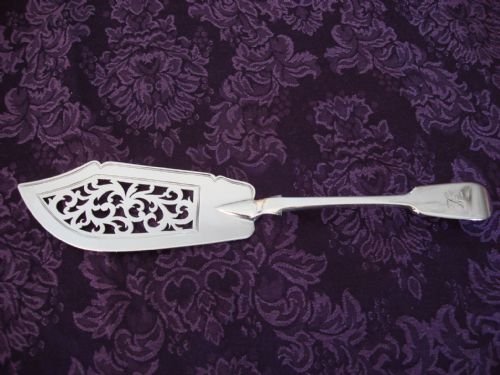
An antique sterling fish slice is a specialised serving utensil designed to lift portions of fish at the dining table, appearing frequently in Georgian and Victorian forms across the evidence. These pieces range from plain fiddle pattern designs to heavily pierced and engraved blades depicting natural motifs.
Materials and construction
The primary material is sterling silver or high-purity silver, shaped and forged to create a wide, flat blade suitable for supporting fish. Piercing and chasing techniques form intricate openwork patterns on the metal surfaces, allowing juices to drain away during serving.
Handles introduce contrasting textures through materials such as bone, ebony, and silver, joined securely to the metal blade. Makers utilised traditional silversmithing methods, often incorporating family crests, animal motifs, or regional hallmarks directly onto the handle or reverse of the blade.
Listings feature sterling silver, bone, ebony, and silk across Georgian, Victorian, and mid-century periods.
Distinctions in quality
Quality rests upon the crispness of the blade piercing, the weight of the sterling silver, and the balance of the utensil in the hand. Finer examples display detailed hand-engraving or cast figural elements, such as fish, birds, or mythological creatures, rather than simpler pressed decoration.
The integrity of the join between the blade and the handle also marks the tier of a piece, alongside clear, legible hallmarks from known silversmiths. Substantial metal weight and well-preserved decorative motifs separate standard utilitarian servers from exceptional collector pieces.
Thomas Daniell·GEORGE ADAMS·Charles Boyton·Georg Jensen
The Antique Sterling Fish Slice Glossary
- Sterling silver
- A silver alloy containing 925 parts of pure silver per thousand, providing the durable standard for British and Irish cutlery.
- Piercing
- The technique of cutting decorative openings through the metal blade of a server, combining lightness with ornamental design.
- Fiddle pattern
- A nineteenth-century flatware handle style featuring a narrow stem that broadens near the end into a shape resembling a violin.
- Hallmark
- A series of stamped marks on precious metals indicating the maker, assay office, and year of manufacture.
- Server
- A broader term encompassing both the fish slice and accompanying forks used together as a matched set.
Antique Sterling Fish Slice: Frequently Asked Questions
What is a fish slice used for?
A fish slice serves as a wide spatula designed to lift and transfer portions of fish at the dinner table without breaking the delicate flesh.
During the eighteenth and nineteenth centuries, specialised flatware became essential for formal dining, matching the specific courses served during large meals.
How do I date an antique silver fish slice?
Dating relies primarily on the assay hallmarks stamped into the metal, which indicate the exact year of manufacture and the city of origin.
Stylistic markers, such as the handle shape and the complexity of the blade piercing, also help assign pieces to the Georgian or Victorian eras.
Are fish slices made entirely of silver?
Many examples feature solid sterling silver blades and handles, though some incorporate alternative materials like bone, ebony, or stainless steel.
Matched pairs often combine silver blades with specialised handles designed to offer a secure grip during use.
What are fish servers?
Fish servers consist of a matched pair of utensils, usually comprising a wide fish slice and a companion fork, used together for serving.
These sets frequently survive housed in fitted presentation cases lined with silk or velvet, reflecting their status as valuable dining accessories.