



Silver Plated Fish Cutlery
Silver plated fish cutlery brings elegance to the dining table, offering specialised service for seafood courses with traditional style.
Silver Plated Fish Cutlery
Silver plated fish cutlery encompasses specialised servers, carving sets, and matching flatware designed specifically for dining on seafood. These items emerge across the late nineteenth and early twentieth centuries, spanning Victorian, Edwardian, and Art Deco periods.
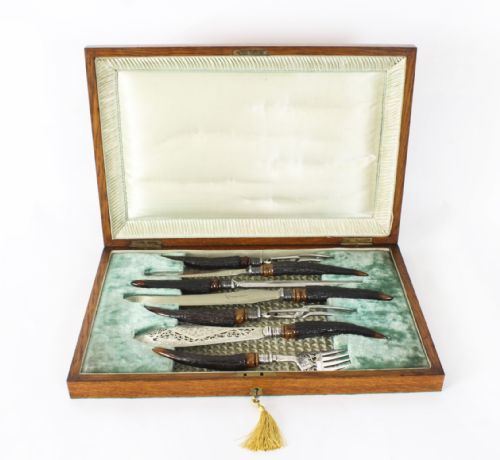
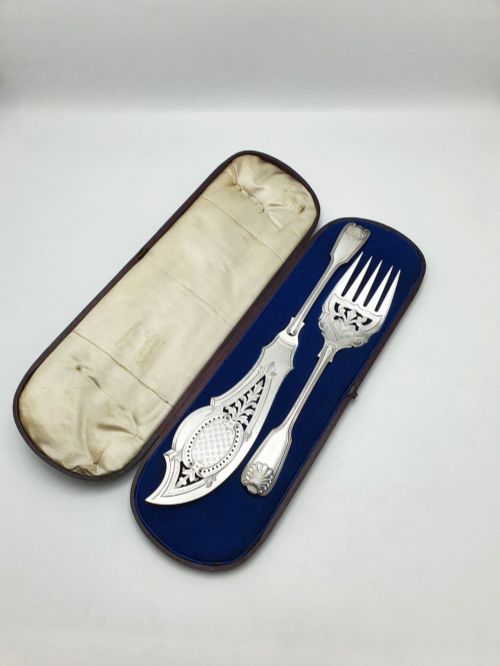
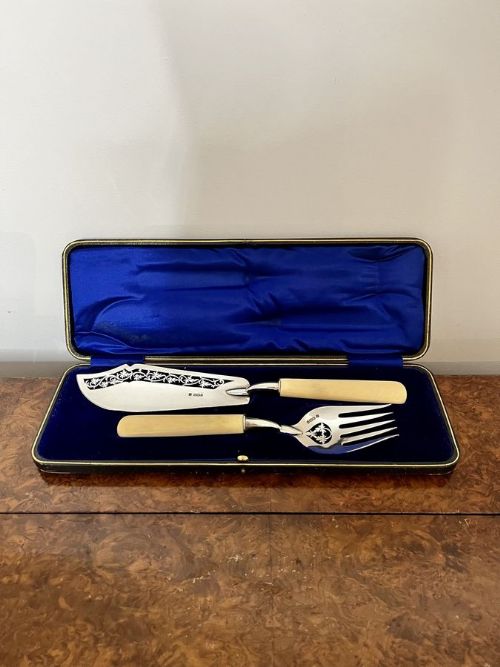
Buyers frequently encounter cased sets housed in mahogany or oak boxes, alongside individual serving knives and forks. The configurations range from modest seafood picks to extensive thirty-six piece dining sets.
Origins trace back to British workshops and makers, utilising durable base metals coated with a layer of silver. Each piece reflects the formal dining customs of its respective era, combining practical utility with ornate decoration.
Materials and construction
Manufacturers form the blades and tines from steel or silver plate, frequently applying detailed engravings of fish, foliage, or hunting scenes onto the metal surfaces. Handles are fashioned from natural materials such as mother of pearl, stag antler, and horn, secured firmly to the metal shafts.
Cased sets rely on fitted wooden boxes constructed from oak or mahogany, often lined with velvet or silk interiors to protect the metal and handles during storage. Specialised items like lobster and seafood picks demonstrate precision shaping to handle delicate shell anatomy.
The listings demonstrate a strong presence of natural handle materials including mother of pearl, stag antler, and horn paired with silver plate.
Assessing quality and craftsmanship
Quality reveals itself in the depth and clarity of the blade engravings, where crisp details indicate skilled handwork rather than simple stamping. The selection and finish of handle materials also set finer examples apart, particularly well-matched stag antler or luminous mother of pearl.
The integrity of the original presentation case contributes significantly to the overall standard of a set. Fitted boxes with sound wooden construction and intact silk or velvet linings reflect superior original production values.
Suckling Ltd.·Waring & Gillows·Mappin & Webb
The Silver Plated Fish Cutlery Glossary
- Silver Plate
- A thin layer of silver bonded to a base metal core. This technique provided the appearance and lustre of solid silver at a more accessible cost for nineteenth-century households.
- Mother of Pearl
- The iridescent internal layer of certain mollusc shells, utilised extensively for knife and fork handles. It offers a smooth tactile surface and a subtle play of light.
- Stag Antler
- The shed horn of a deer, shaped and polished to form textured, durable cutlery handles. This material imparts a rustic yet refined aesthetic.
- Canteen
- A fitted box or chest designed specifically to store a complete set of cutlery. These containers often feature multiple interior tiers lined with soft fabrics.
- Seafood Picks
- Slender, specialised utensils engineered to extract meat from narrow shellfish cavities. They form part of broader dining services intended for formal seafood courses.
Silver Plated Fish Cutlery: Frequently Asked Questions
What is silver plated fish cutlery used for?
These specialised utensils were designed specifically for serving and consuming fish and seafood courses during formal Victorian and Edwardian meals. The wide blades and notched forks helped separate delicate fish flesh from bones without damaging the presentation.
Today, they are utilised for dinner parties or collected as historical examples of nineteenth and twentieth-century dining culture.
How do I identify Victorian fish sets?
Victorian examples often display heavy ornamentation, including detailed engravings of fish, hunting motifs, or floral patterns on the silver plated blades. The handles frequently feature natural materials like stag antler, horn, or mother of pearl.
Many of these sets come housed in original fitted wooden canteens lined with silk or velvet, reflecting the formal presentation standards of the period.
Are Edwardian sets different from Victorian ones?
Edwardian cutlery generally adopts slightly lighter proportions and refined detailing compared to earlier Victorian pieces. The designs align with the changing aesthetic tastes of the early twentieth century while maintaining functional utility.
Both periods utilise similar base materials such as silver plate, wood, and natural handle components.
How should I store cased fish cutlery?
Keeping the pieces inside their original fitted oak or mahogany cases helps protect the metal from excessive atmospheric exposure and tarnishing. The interior velvet or silk linings cushion the handles and prevent scratching.
Store the boxes in stable environmental conditions away from direct heat sources and high humidity to preserve both the wood and the silver plate.