


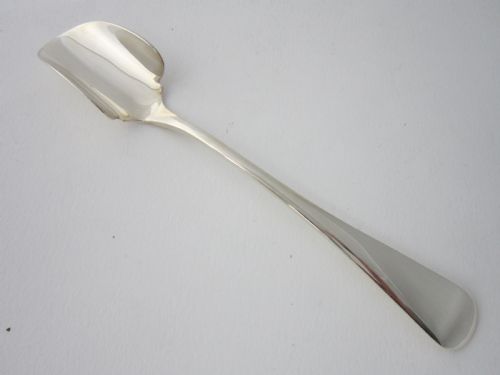


Vintage Silver Dining Flatware
These vintage silver dining flatware pieces bring genuine tactile pleasure to the table, whether you need a single marrow scoop or a complete canteen.
Vintage Silver Dining Flatware
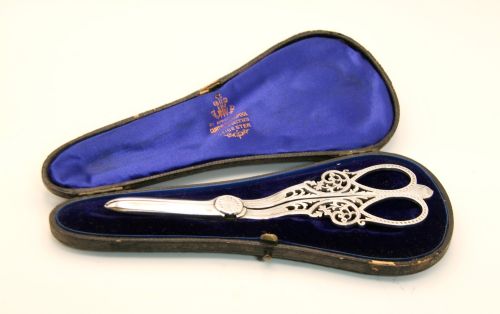
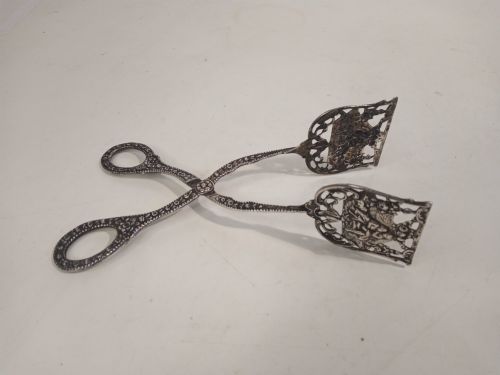
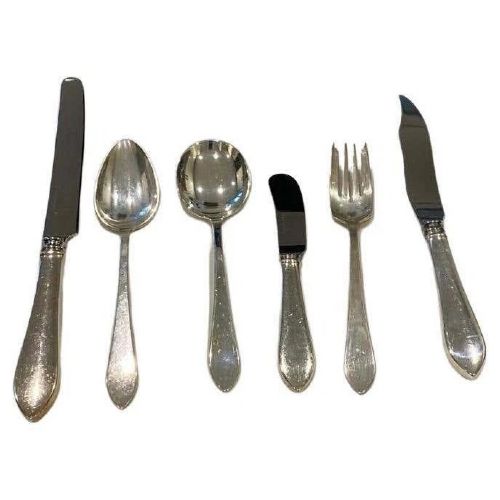
When you search for vintage silver dining flatware, you encounter a broad spectrum of dining implements spanning from the Georgian era through the Art Deco period and into the mid-twentieth century. The selection ranges from specialised single serving pieces like marrow scoops, cheese scoops, grape scissors, and asparagus tongs to large canteens of cutlery for twelve persons.
You are most likely to meet silver-plated or sterling silver settings, cased cutlery sets, and occasional individual serving tools on this page. These objects reflect the formal dining customs of Victorian, Edwardian, and Georgian households, alongside twentieth-century manufacturing.
The assortment bridges utilitarian kitchen tools and ornate table service, encompassing everyday dining cutlery alongside decorative implements designed for specific foods. Each piece demonstrates the changing domestic requirements of nineteenth- and twentieth-century dining rooms.
What varies in quality
Quality rests upon the weight of the metal, the crispness of pierced or engraved ornamentation, and the integrity of the joins between handles and working ends. Sterling silver pieces hold intrinsic metal value, whereas plated items depend on the thickness of the silver deposition over the underlying metal.
The presence of original fitted cases, complete sets of multiple pieces, and documented maker marks elevate the standing of an item. Superior examples maintain balanced proportions, clear hallmarks, and handles free from splits or looseness.
Materials recorded on this page include sterling silver, silver plate, stainless steel, mother-of-pearl, velvet, leatherette, and natural antler.
Tiffany·Jonathan Hayne·Charles Reily & George Storer·Christofle·Garrard & Co.
The Vintage Silver Dining Flatware Glossary
- Sterling silver
- A silver alloy containing 92.5 percent pure silver and 7.5 percent other metals, usually copper, ensuring structural durability for daily use.
- Silver plate
- A base metal substrate coated with a thin layer of pure silver through electroplating or older manufacturing techniques.
- Canteen
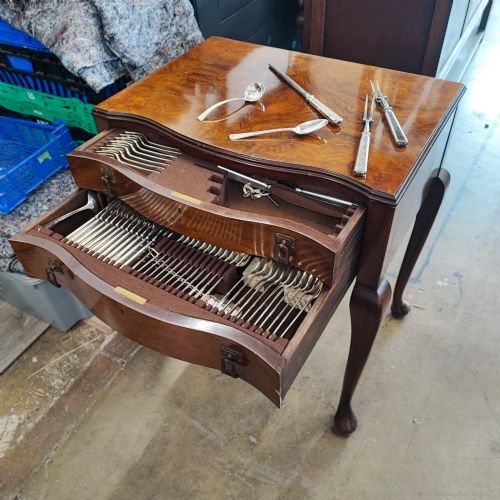
- A fitted wooden box or chest designed to store a matched set of cutlery securely within slotted trays or compartments.
- Marrow scoop
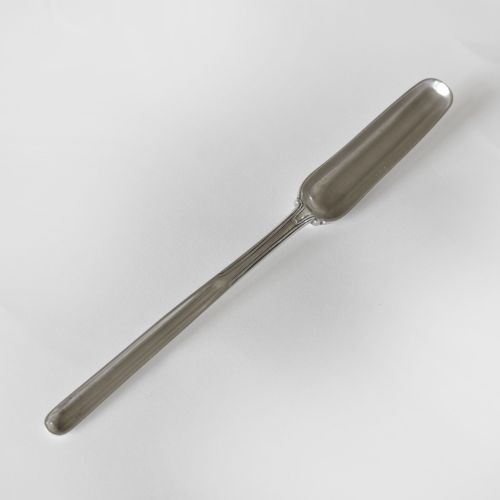
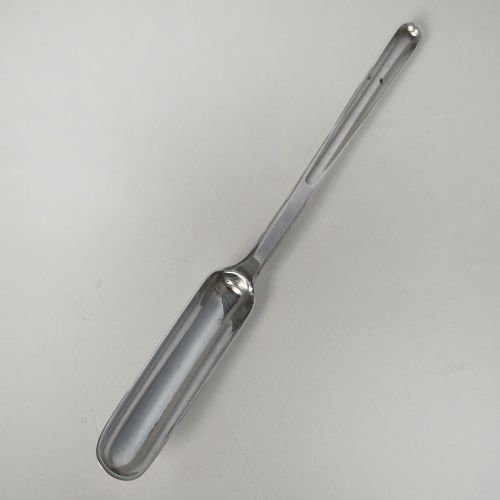
- A narrow, elongated dining implement featuring small trough-like bowls at each end, historically used for extracting bone marrow.
- Game skewer
- A long, pointed metal pin used to secure poultry or game meats during preparation and serving at the dining table.
Vintage Silver Dining Flatware: Frequently Asked Questions
What is vintage silver dining flatware?
Vintage silver dining flatware encompasses everything from large canteens of cutlery for twelve persons down to individual serving implements like marrow scoops, grape scissors, and asparagus tongs.
These pieces originate from periods including the Georgian era, the Victorian age, and the Art Deco twentieth century, utilising sterling silver and silver plate.
How do I care for silver flatware?
Regular use helps maintain a natural sheen on silver and silver-plate surfaces, while proper hand washing prevents damage to organic handles made of mother-of-pearl or antler.
Store complete sets in dry environments, preferably within lined canteens or anti-tarnish rolls to protect the metal from atmospheric oxidation.
What is the difference between sterling and plate?
Sterling silver consists of a regulated high purity alloy throughout the entire object, bearing official hallmarks that verify its metal standard and origin.
Silver plate utilises a base metal core coated with a superficial layer of pure silver, often identified by manufacturer marks indicating the plating process used.
How are cased sets organised?
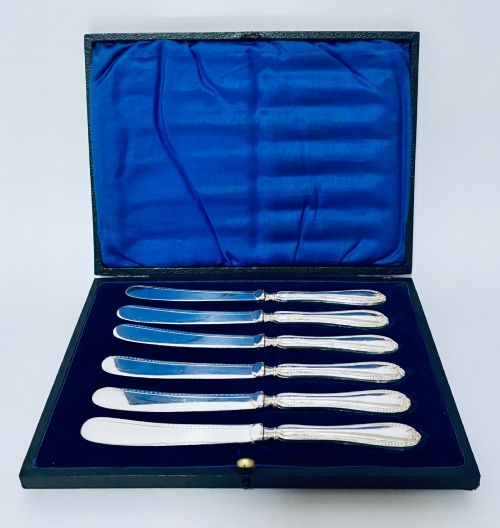
Fitted canteens and boxes contain internal slots, velvet linings, and leatherette exteriors designed to hold specific quantities of knives, forks, and serving pieces securely in place.
This fitted storage prevents items from rubbing together during transport or storage, preserving the engraved details and polished finishes.