



Silver Fish Knife Fork
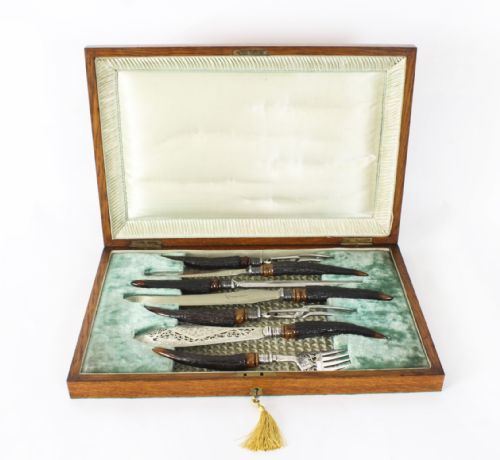
A silver fish knife fork set brings nineteenth century dining elegance to the table, pairing engraved blades with natural handles.
Silver Fish Knife Fork
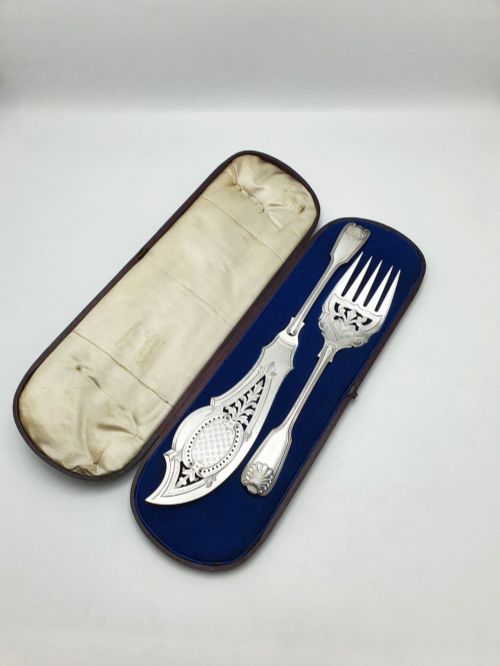
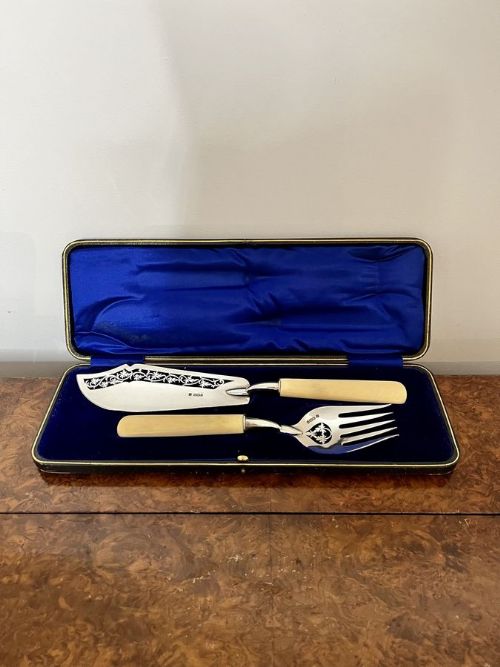
A silver fish knife fork pairing comprises dedicated servers and flatware designed specifically for course dining, appearing across Victorian and Edwardian periods. Buyers encounter these implements in both plated and sterling forms, often housed in original fitted boxes.
The evidence shows forms ranging from individual canteen settings to paired serving knives and forks. Makers utilise natural grips such as stag antler, bone, and horn alongside engraved metal surfaces.
Victorian examples dominate the available selection, frequently dated between 1870 and 1900. These pieces reflect rigorous period dining customs where specialised cutlery was essential for separate fish courses.
Materials and construction
Metalwork relies on silver, sterling silver, and silver plate for the blades and tines, often featuring detailed engraved decoration. Steel also appears within construction, particularly on cutting edges where rigidity is required.
Handles incorporate organic materials such as bone, horn, stag antler, and wood. These natural components are shaped to fit the hand and secured to the metal shafts using traditional pins or ferrule mounts.
Listings feature items from the Victorian and Edwardian eras, spanning from the 1870s to the 1910s.
Assessing quality and finish
Depth and clarity of the blade engraving separate standard production from finer work. Superior examples display crisp chasing and hunting or floral motifs rather than shallow stamping.
The choice of handle material influences the overall grade of the set. Well-matched natural stag antler and horn with rich patination indicate higher tier production than plain wooden grips.
Waring and Gillows·Mappin and Webb
The Silver Fish Knife Fork Glossary
- Silver Plate
- A base metal coated with a layer of silver. This technique provides the visual appeal of solid metal at a different cost point.
- Sterling Silver
- An alloy comprising ninety-two point five percent silver and seven point five percent other metals, usually copper. It represents the standard for high grade British tableware.
- Stag Antler
- The shed horn of a deer used for knife and fork handles. It offers a textured, slip-resistant grip with distinct natural patterning.
- Canteen
- A fitted box or chest designed to hold a complete set of cutlery. These containers are often lined with velvet to protect the contents.
Silver Fish Knife Fork: Frequently Asked Questions
What are silver fish knife fork sets used for?
These utensils were created for serving and consuming fish courses during formal nineteenth and early twentieth century meals. The wide blade assists in lifting flaky fish flesh without breaking it.
Today, they serve both decorative and functional roles in dining rooms, continuing to perform their original task during special meals.
How do I date a silver fish knife fork?
Dating relies on hallmarks stamped onto sterling silver pieces, alongside style indicators like engraving patterns and handle materials. Victorian sets often display heavy ornamentation.
Edwardian items tend toward slightly different proportions, while fitted oak or velvet cases also provide clues to the exact production era.
Are these sets made of solid silver?
The evidence shows a mix of sterling silver and silver plate across the available pieces. Sterling items bear official hallmarks, while plated versions utilise a base metal underneath.
Both material types were common during the Victorian and Edwardian periods, appearing in single pairs and large canteens.
How should I store boxed cutlery sets?
Keeping the pieces in their original fitted wooden or velvet-lined boxes protects the metal from excessive tarnishing and guards the organic handles against damage. Stable indoor humidity prevents wood and bone from warping.
Regular careful use maintains the condition better than long-term airtight sealing, allowing the metal to retain its natural character.