



Vintage Fish Cutlery Set
A vintage fish cutlery set brings elegance to the dining table, pairing specialised blades with refined handles for formal meals.
Vintage Fish Cutlery Set
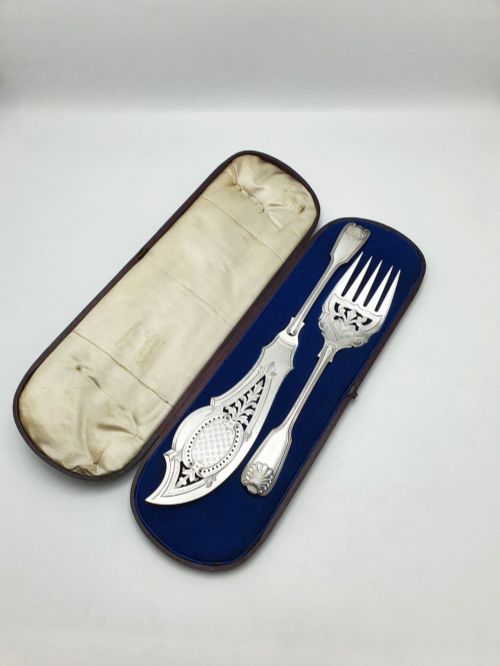
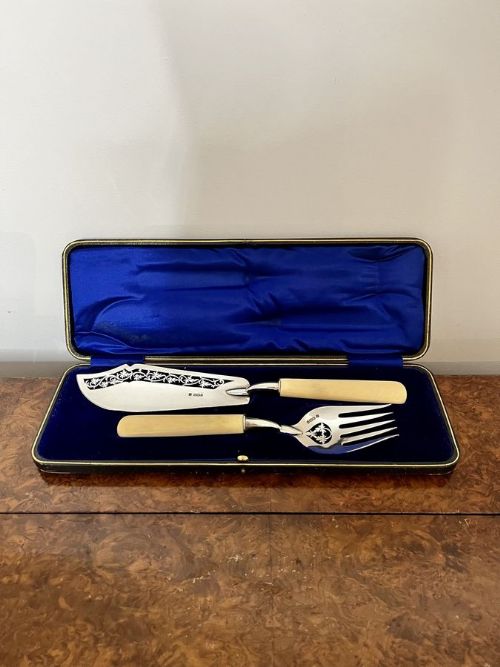
A vintage fish cutlery set comprises dedicated knives and forks designed specifically for serving and eating fish courses at the dining table. These sets frequently appear in forms such as cased fish servers, seafood cutlery, and complete canteens dating from the nineteenth and early twentieth centuries.
The pieces on this page span the Victorian, Edwardian, and Art Deco periods, alongside specific decades from the 1870s to the 1930s. Buyers will frequently encounter silver-plated and sterling silver implementations, often presented in fitted wooden boxes lined with velvet and silk.
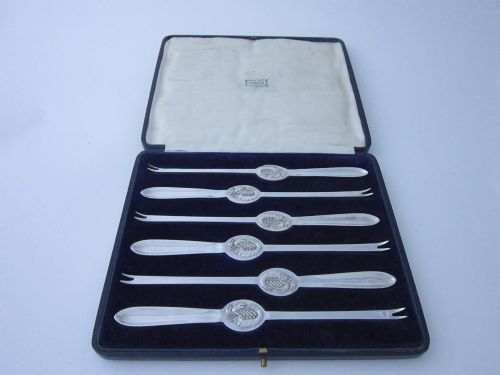
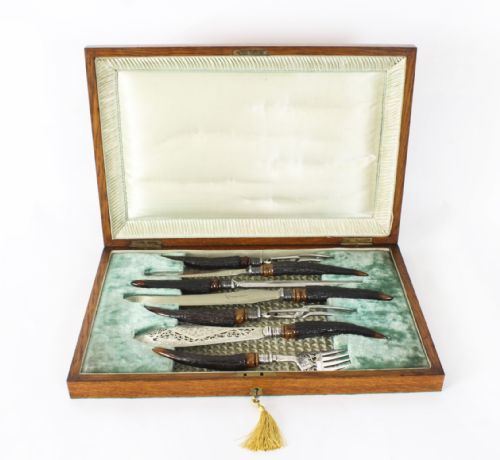
Beyond standard knives and forks, the selection includes specialised servers, carving sets, and lobster or seafood picks. Many examples incorporate natural materials like stag antler or horn for the handles, frequently decorated with engraved hunting or dog motifs.
How these sets were made
Makers shaped the blades and tines from steel, silver, and silver plate, often applying detailed engravings depicting natural or hunting scenes. Handles were constructed from organic materials including wood, horn, and stag antler, shaped to fit the hand securely.
Presentation boxes were built from oak and lined internally with soft fabrics such as velvet and silk to protect the metalwork. Metal components were joined to natural handles using traditional pinning and cementing techniques suited to the period.
Some nineteenth-century fish servers feature finely engraved hunting dogs bounding across the blade, ready for the dining table.
What varies in quality
The distinction between standard and superior sets lies in the choice of base metals, with sterling silver commanding greater regard than silver plate. The quality of the engraving on the blade also indicates the skill of the original artisan.
The condition and matching integrity of the fitted case influence the overall presentation. Complete sets retained in their original oak boxes with intact velvet and silk linings represent higher standards of preservation.
Suckling Ltd.
The Vintage Fish Cutlery Set Glossary
- Silver plate
- A layer of silver bonded to a base metal core. This technique provided the appearance of solid silver at a lower cost during the Victorian and Edwardian eras.
- Sterling silver
- An alloy consisting of silver and other metals, typically copper, standardised for purity. It is stamped with hallmarks indicating its metal content and origin.
- Stag antler
- The shed horn of a deer used as a natural handle material. It offers a textured, durable grip and a distinctive appearance on nineteenth-century cutlery.
- Canteen
- A fitted box or chest designed to hold a complete set of cutlery. These containers often feature dedicated slots and velvet or silk linings.
- Server
- A larger implement, such as a knife or fork, used for portioning food at the table rather than individual dining. Fish servers are typically broader than standard flatware.
Vintage Fish Cutlery Set: Frequently Asked Questions
What is included in a fish cutlery set?
A typical set includes specialised knives and forks designed for navigating fish bones at the table. Larger servers and seafood picks are also common components.
Many sets are found complete with their original presentation boxes, keeping the implements organised together.
How do I care for silver plated cutlery?
Wash the pieces gently by hand in warm soapy water and dry them thoroughly with a soft cloth. Avoid using harsh abrasive cleaners that can wear away the silver plating.
Store the items in a dry environment, preferably inside their original lined case to minimise tarnish.
How are different periods identified?
Stylistic details, hallmarks stamped on the metal, and the construction of the presentation case point towards specific eras. Victorian pieces often feature heavy engraving, while Art Deco items display geometric lines.
Matching the materials, such as specific handle types, helps date the set alongside any accompanying documentation or case markers.