



Silver Plate Fish Cutlery
Silver plate fish cutlery brings formal dining history to the table, offering durable service sets and cased services designed for specialised seafood courses.
Silver Plate Fish Cutlery
Silver plate fish cutlery includes cased sets, servers, and individual place settings designed for dining tables from the nineteenth and twentieth centuries. These objects range from single serving knives and forks to extensive canteens housing dozens of pieces for multiple guests.
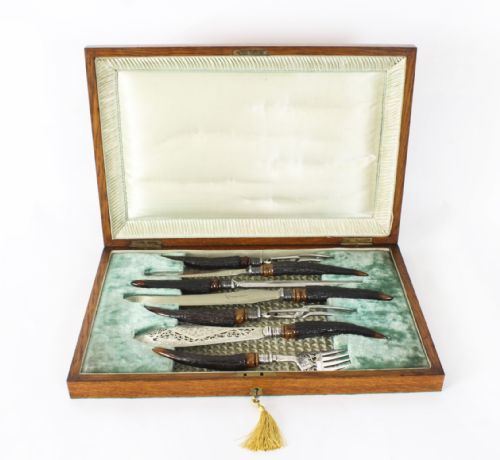
The most common versions met on this page belong to the Victorian and Edwardian periods, frequently featuring engraved blades and fitted wooden boxes. Buyers encounter specific forms such as lobster picks, carving sets, and complete dining services.
Pieces span decades from the late nineteenth century into the twentieth, reflecting changes in domestic dining habits and hosting traditions. Many sets retain their original presentation cases lined in velvet or silk.
Assessing quality and craftsmanship
Quality rests in the crispness of the blade engraving and the secure attachment of natural handles to metal shanks. Superior examples maintain deep relief in decorated patterns and intact plating across high-friction areas.
The integrity of the original storage case contributes to the standing of a set, particularly when fitted with internal velvet or silk linings. Complete canteens with matching components reflect greater care and original investment than assembled groups.
Listings feature items spanning from the eighteen-eighties through the nineteen-thirties, incorporating materials like silk, velvet, stag antler, and mother of pearl.
Suckling Ltd.·Waring & Gillows·Mappin & Webb
The Silver Plate Fish Cutlery Glossary
- Silver Plate
- A thin layer of silver bonded to a base metal substrate. This technique allowed makers to produce durable tableware with the appearance of solid silver at a lower cost.
- Mother of Pearl
- The iridescent inner layer of certain mollusc shells used for knife and fork handles. It provides a smooth, tactile grip with distinctive natural patterning.
- Stag Antler
- The shed horn of a deer utilised for handles on serving pieces and carving sets. It offers a textured, organic grip suited to utilitarian dining implements.
- Canteen
- A fitted wooden chest or box designed to store a matched set of cutlery securely. These cases often feature multiple tiers or slotted compartments lined with fabric.
- Fish Server
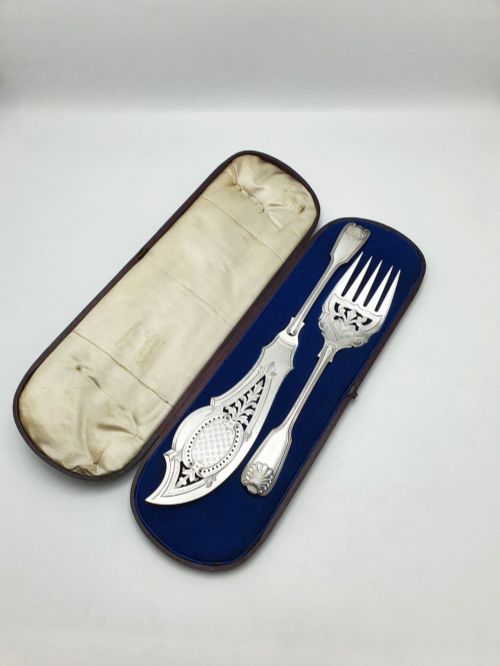
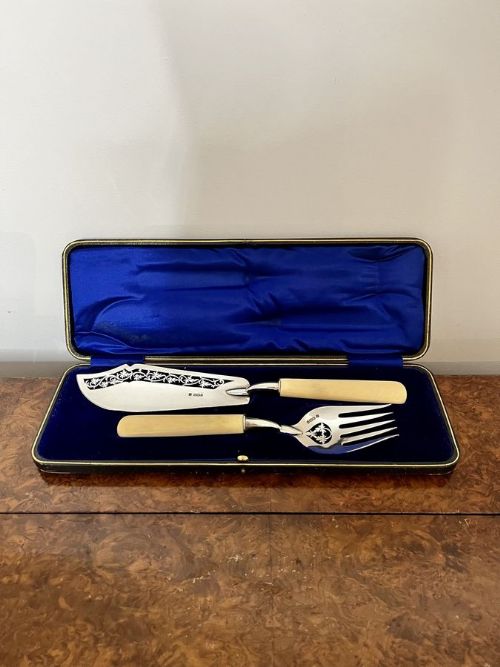
- A specialised pairing of a large knife and fork designed for portioning fish at the table. The knife blade is typically wide and shaped to slide beneath delicate fillets.
Silver Plate Fish Cutlery: Frequently Asked Questions
How do I clean silver plate fish cutlery?
Clean these pieces gently using specialised silver polish and a soft cloth to avoid damaging the plated surface. Natural handle materials like mother of pearl or antler require careful treatment to prevent moisture damage.
Store the items in their designated cases or wrapped in acid-free tissue when not in use. Regular, gentle maintenance preserves the engraved details on the blades.
Can I use antique fish cutlery for dining?
Many people use these vintage and antique sets for special meals and dinner parties today. The robust construction of nineteenth and twentieth century plate makes them practical for serving courses.
Hand washing is essential to protect the handle materials and the underlying silver plate. Dishwashers subject these delicate pieces to excessive heat and harsh detergents.
What is the difference between a fish set and a carving set?
A fish set includes implements shaped specifically for delicate seafood, featuring wide blade knives and short tines designed to separate flesh from bone. Carving sets are larger, built for partitioning roasted meats.
Fish servers often display marine or floral engraving, whereas carving tools prioritize leverage and strength. Both typically feature matching handles when found in original boxes.
How do I date a set of fish cutlery?
Dating relies on stylistic clues, case construction, and any accompanying hallmarks or registration marks on the metal. Victorian pieces often display ornate, naturalistic engraving and heavy floral motifs.
Edwardian and later twentieth century sets tend toward cleaner lines or specific Art Deco geometries. Fitted mahogany or oak cases also reflect the prevailing cabinetry styles of their manufacturing era.