
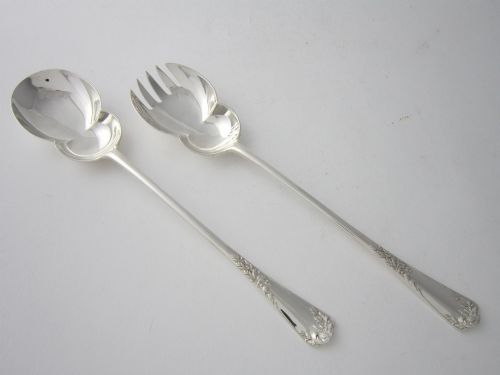


Sterling Silver Salad Servers
Sterling silver salad servers bring formal dining heft to leafy greens, pairing solid precious metal with practical serveware.
Defining sterling silver salad servers
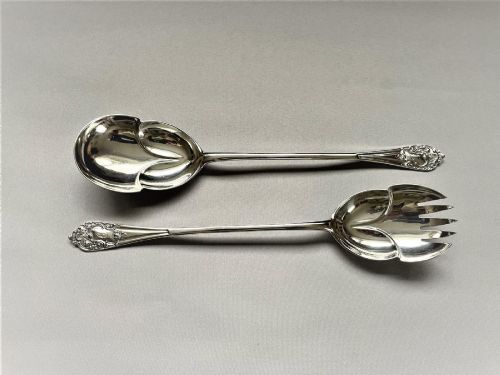
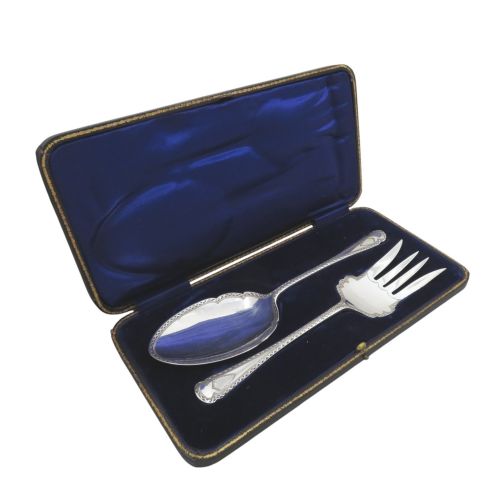
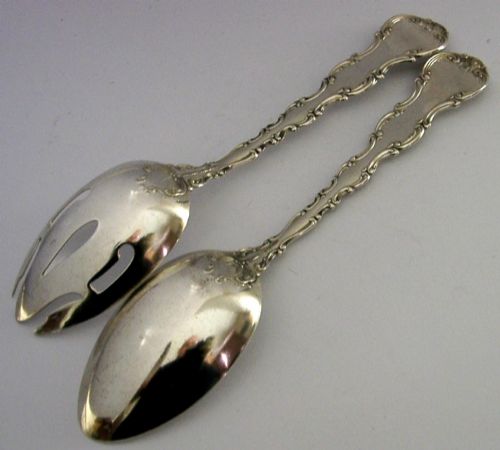
Sterling silver salad servers encompass matched pairs of serving spoons and forks designed for greens and vegetables at the dining table. When exploring sterling silver salad servers, buyers encounter items ranging from George III examples to Edwardian and Victorian forms.
The objects take the form of paired spoons, forks, or combinations featuring bowls paired with tines. Materials extend beyond plain metal to incorporate cut glass, cut crystal, ebony, antler horn, and parcel gilt surfaces.
Materials and construction
The manufacture relies on solid sterling silver, often shaped into traditional patterns such as Old English, or worked by hand in Arts and Crafts and Art Nouveau workshops. Some pieces combine the silver bowls and tines with organic handles like antler horn or ebony.
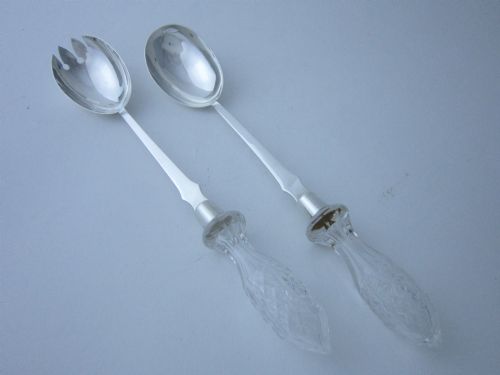
Other variations integrate cut glass and cut crystal components into the service set. Gilding is applied to silver surfaces in certain examples, and enamel work decorates specific Scandinavian pieces.
Retail Price Guide 2026
Typical UK retail prices for sterling silver salad servers, calculated from the Sellingantiques database of over a million retail prices indexed since 2003. This retail price guide relies exclusively on Sellingantiques data; no external sources or auction records are used, so the figures do not describe the wider market.
A hungry butler once deployed heavy antler horn handles to wrestle recalcitrant Victorian lettuce into submission.
Judging quality in silver service
Quality rests in the substantial weight of the metal and the integrity of the pattern work, distinguishing heavier cast or forged pieces from lighter stampings. The balance in the hand and the crispness of decoration define the superior examples.
The choice of secondary materials, such as clear cut crystal or dense ebony and antler handles, further separates standard production from high-end workshop output.
Gorham·Thune
The Sterling Silver Salad Servers Glossary
- Sterling silver
- A silver alloy containing 92.5 percent pure silver by mass and 7.5 percent other metals, usually copper. This standard ensures the durability required for functional tableware.
- Parcel gilt
- Silver objects that have been partially gilded with a thin layer of gold on the interior bowls or decorative highlights. This technique creates a distinct contrast between the silver and gold tones.
- Rat tail
- A traditional strengthening tongue or ridge running down the back of a spoon bowl from the stem. It originates from early manufacturing methods to reinforce the joint.
- Old English pattern
- A classic plain handle design with a downward-turned end, popular in British silver flatware. It offers a restrained profile suited to formal dining.
Frequently Asked Questions
What periods do these servers come from?
The pieces span from the George III period through the Victorian, Edwardian, and George V eras, extending into mid-century international work.
Craftsmanship shifts from early plain patterns to ornate Art Nouveau, Arts and Crafts hand-hammered surfaces, and parcel gilt finishes.
How were salad servers used?
They were employed at the dining table for serving leafy greens, vegetables, and fruit dishes during formal and domestic meals.
The paired fork and spoon allow the user to lift and toss ingredients cleanly without damaging delicate leaves.
What materials are paired with the silver?
Many examples combine solid metal with organic elements such as polished ebony wood and antler horn handles.
Other variations integrate cut glass and cut crystal components, or apply coloured enamel over silver gilt.
How do I care for silver servers?
Regular gentle washing in warm soapy water helps maintain the silver surface and prevents tarnishing build-up.
Organic handles like wood and horn require protection from prolonged immersion in water to preserve the material.