


Silver Salad Serving Spoon
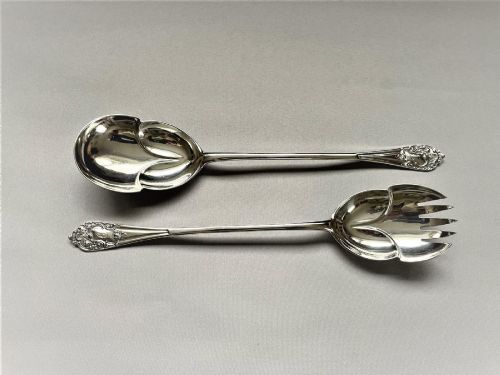
These silver salad serving spoon pieces bring table service into focus, offering the weight and shine of Sterling Silver and silver across Edwardian, Victorian, and George III periods.
Silver Salad Serving Spoon
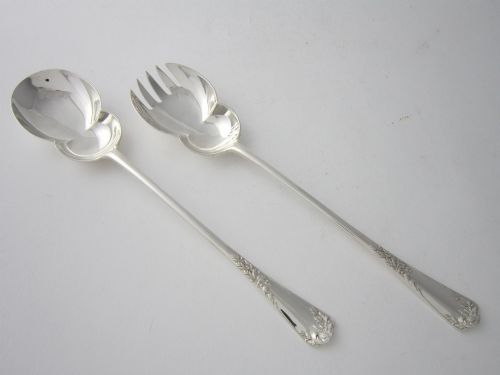
A silver salad serving spoon forms part of the serveware category, appearing alongside salad servers, serving cutlery, and serving utensils designed for the dining table. When searching this phrase, a buyer meets items shaped for specific serving tasks during meals, spanning periods from the 18th century through to the 20th century.
Origins vary across the listings, showing English provincial hallmarks such as Chester, alongside French Third Republic pieces and creations by makers like Georg Jensen. Forms range from standalone large serving spoons to paired fork and spoon sets intended for leaf vegetables and dressings.
What varies in quality
Quality differences lie in the gauge of the silver, the crispness of the hallmarks, and the integrity of any non-metal components like horn or cut crystal. Thicker gauge metal provides a more substantial balance in the hand during use.
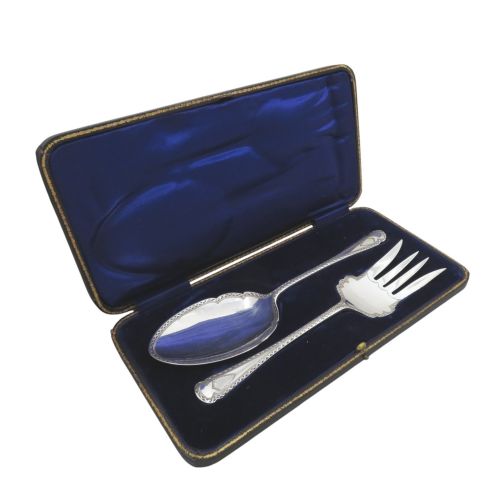
The execution of decorative styles, from George III restraint to Edwardian elegance and Art Deco geometric lines, determines the refinement of the piece. Preservation of original fitted cases, complete with velvet and silk interiors, also influences the character of the surviving set.
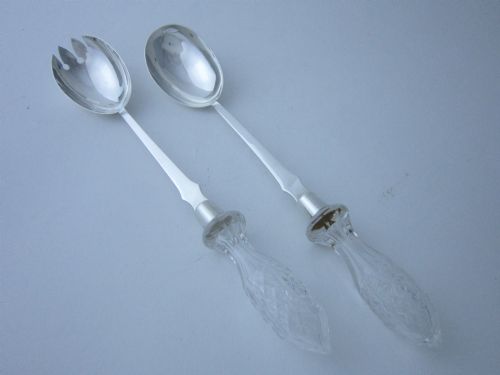
Materials documented across the inventory include Sterling Silver, silver, horn, cut crystal, cut glass, velvet, silk, and leatherette.
Georg Jensen
The Silver Salad Serving Spoon Glossary
- Rat tail
- A strengthening tongue of metal running down the back of the spoon bowl where it joins the handle. This traditional feature provides structural durability.
- Sterling Silver
- An alloy consisting of pure silver and other metals, usually copper, standardised for strength and lustre. It forms the primary material for the majority of these serving pieces.
- Cut crystal
- High-clarity glass decorated with deeply cut geometric patterns, used alongside silver in composite serving pieces and vanity items. It adds refractive brilliance to the table.
- Serveware
- A collective term for dishes, bowls, and utensils used to serve food at the table. Silver serving spoons and salad servers sit within this broader category.
Silver Salad Serving Spoon: Frequently Asked Questions
What are silver salad serving spoons used for?
These utensils serve leafy greens and dressed salads at the dining table, often functioning as a paired set with a matching fork. Their larger bowl capacity accommodates voluminous side dishes during formal meals.
Historically, they formed part of broader table service collections, frequently presented in dedicated velvet-lined cases for special occasions.
How do I care for antique silver serving pieces?
Maintenance involves gentle cleaning with appropriate silver polish to preserve the metal surface without wearing down hallmarks or fine details. Storing pieces in dry environments helps prevent tarnish accumulation.
Pieces incorporating organic materials like horn or delicate crystal require specific handling to protect those sections from moisture and temperature extremes.
How can I tell an Edwardian spoon from a Victorian one?
Edwardian pieces, dating from the early 1900s, often display lighter, more refined proportions influenced by neoclassical revivals. Victorian examples tend towards heavier ornamentation reflecting the tastes of the 19th century.
Checking the hallmarks provides a definitive date, linking the piece to specific assay offices and active registration years.
Why do some serving spoons come with glass or horn?
Makers paired silver with cut glass, crystal, or horn to create visual contrast and utilise the specific practical properties of each material. Horn offered a lightweight, non-reactive surface for certain foods.
These composite designs reflect the decorative preferences of specific periods, such as late 19th-century French production or Edwardian dining refinements.