
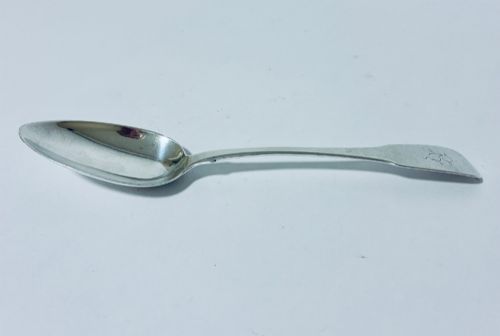
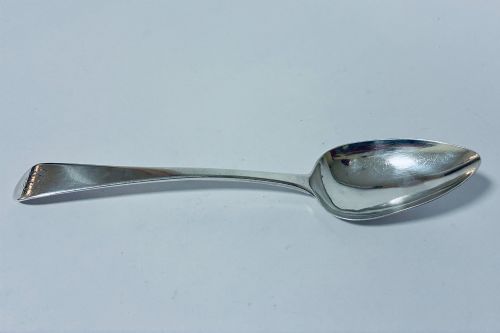


Engraved Silver Tablespoon
These engraved silver tablespoons are substantial dining implements carrying centuries of functional history and precise assay marks.
Engraved Silver Tablespoon
An engraved silver tablespoon represents a core category of antique cutlery designed for formal dining and serving during the seventeenth, eighteenth, and nineteenth centuries. Buyers searching for an engraved silver tablespoon encounter substantial flatware pieces originating from London, Exeter, and Scottish provincial centres, fashioned for domestic service.
The versions most frequently met on this page span the Georgian era and earlier reigns, often bearing crisp armorials, crests, or floral motifs hand-engraved onto the terminal or stem. These implements frequently appear as matched pairs, single serving pieces, or sets, reflecting the changing social customs of British households over three hundred years.
How they were made
Silversmiths hammered sterling silver or finer Britannia silver into thick blanks before shaping the bowls and stems by hand. Artisans utilised punches and gravers to strike hallmarks and incise delicate decorative lines directly into the metal surface.
Makers reinforced stress points such as the rat-tail or heel beneath the bowl to withstand daily use at the dining table. Guild standards ensured that metal purity remained strictly controlled across London and regional assay offices.
Early Scottish provincial silversmiths occasionally used improvised town marks when operating far from Edinburgh.
What varies in quality
The clarity and crispness of the original hand engraving separate standard utility flatware from pieces commissioned for elite households. Sharp, deep armorial crests retain their visual impact despite centuries of polishing.
Substantial gauge metal ensures the stem resists bending under pressure, while well-preserved hallmarks provide clear provenance regarding the maker and year of production. Superior examples maintain the original balance and weight intended by the silversmith.
James Tookey·Isaac Davenport·Richard Rae·Jabez Daniell
The Engraved Silver Tablespoon Glossary
- Hallmark
- A series of official marks struck into silver to guarantee metal purity, the maker, and the year of assay. These stamps serve as the primary tool for dating British flatware.
- Dognose tablespoon
- An early flatware form featuring a notched terminal resembling a dog's nose, popular during the late seventeenth and early eighteenth centuries.
- Sterling silver
- An alloy consisting of pure silver and other metals, traditionally regulated to a standard of ninety-two point five percent silver content.
- Britannia silver
- A higher purity silver standard introduced by statute in England, containing ninety-five point eight percent silver, commonly seen on pieces from the turn of the eighteenth century.
- Private die
- A custom hallmark or stamp commissioned by a specific retailer or noble family rather than a standard guild mark.
Engraved Silver Tablespoon: Frequently Asked Questions
How do I date an antique tablespoon?
Examine the stamped hallmarks on the reverse of the stem for specific date letters and assay office symbols. Provincial items may rely more heavily on makers' marks rather than standard London date cycles.
Comparing the shape of the bowl and the profile of the terminal against known periods provides a reliable secondary method of confirmation.
Were these spoons used for eating?
Tablespoons during the Georgian and earlier periods functioned primarily as serving implements or general eating spoons before modern place settings evolved. Their generous bowl capacity reflects the communal style of dining common in earlier centuries.
Over time, their role shifted towards serving broths, sauces, and vegetables at the table.
What is a Dognose tablespoon?
A Dognose tablespoon is an early flatware style characterised by a distinct notched terminal and a prominent rat-tail spine down the back of the bowl. This form enjoyed popularity during the reigns of William III and Queen Anne.
Surviving examples in this style represent some of the earliest pieces available to collectors.
How should I clean antique silver?
Maintain antique silver by washing it gently in warm water with mild soap and drying it immediately with a soft cloth. Avoid abrasive pastes that can wear away crisp hand engraving over time.
Natural tarnish often highlights the fine details of the maker's marks and decorative incisions.