
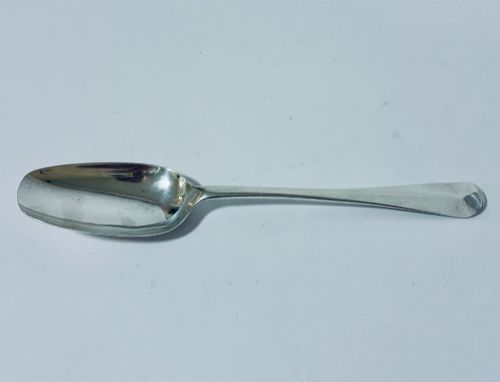
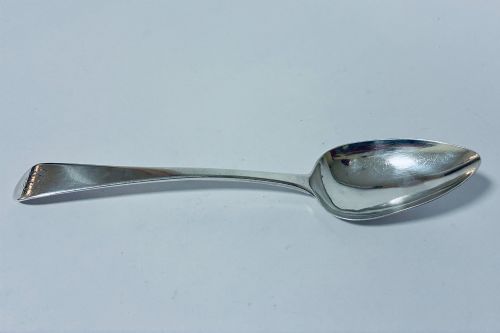
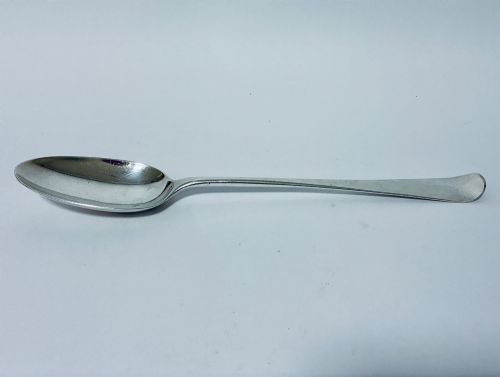
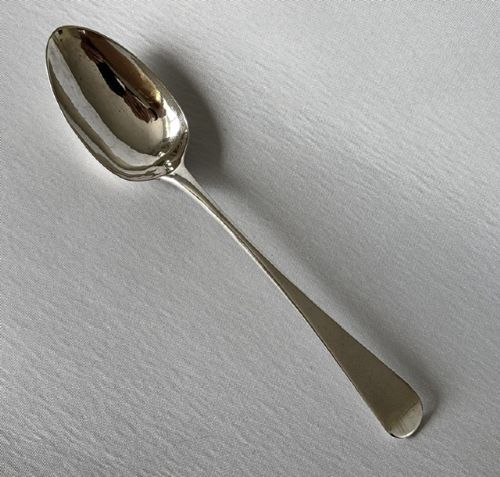




Old English Pattern Spoon
An old english pattern spoon brings the understated grace of Georgian and later dining tables directly into your hand with its distinctive downward-curving stem.
Old English Pattern Spoon
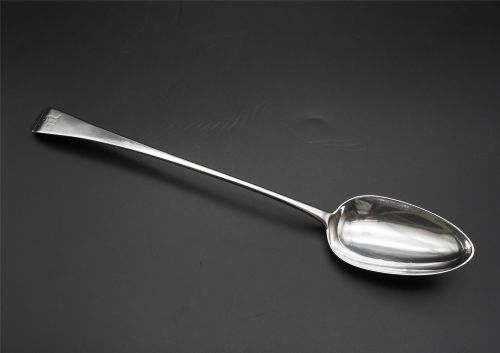
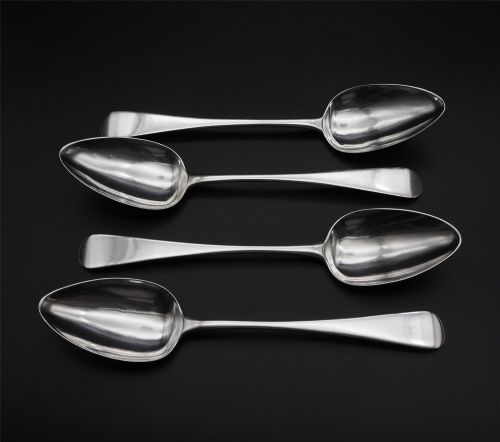
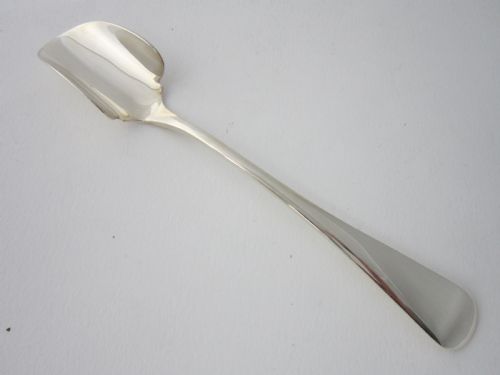
An old english pattern spoon is a classic piece of tableware defined by its plain, elegant handle that curves away from the user at the terminal. You will most frequently encounter tablespoons, serving spoons, and basting spoons from the Georgian period, alongside smaller specialty items like salt spoons and stilton scoops.
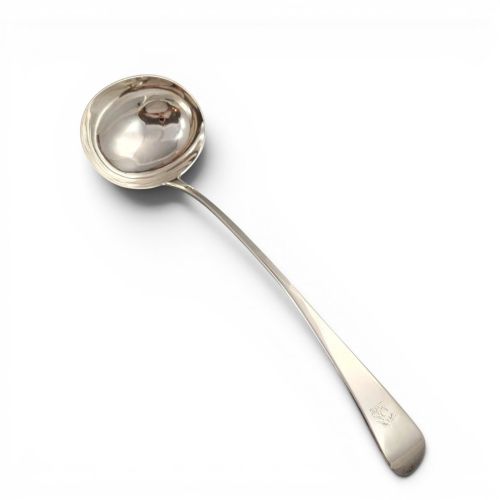
The form developed in the eighteenth century and remains remarkably versatile across subsequent reigns, including George III and George V. These pieces range from substantial basting and straining spoons down to delicate coffee and dessert spoons.
Materials and Technique
The pieces recorded here are fashioned from sterling silver or solid silver, reflecting the durable medium chosen by silversmiths. Workshops utilised traditional smithing techniques to hammer and shape the metal into the characteristic smooth, plain profile.
Assay office hallmarks stamped directly into the silver provide precise records of origin and date, from London and regional centres such as York, Edinburgh, and Inverness.
Old English Pattern Spoon Retail Price Guide 2026
Typical asking prices for old english pattern spoon among the pieces listed under this phrase on Sellingantiques today, from the lower quarter to the upper quarter. They describe what is for sale here now, not the wider market.
Listings feature sterling silver and silver spanning the eighteenth and twentieth centuries, including George III, George V, and Art Deco styles.
Qualities of Distinction
The distinction between ordinary and exceptional examples lies in the weight of the metal and the crispness of the hallmarks. Substantial gauge silver resists bending over centuries of use, preserving the balanced feel of the handle.
Maker marks from notable provincial or London silversmiths elevate certain pieces, as does the survival of original engraving or crests upon the terminal without excessive polishing that thins the silver.
Peter & Jonathan Bateman·Hampston & Prince·George Wintle·Emile Viner·Deakin and Francis·Robert Pringle·Josiah Williams and David Landsborough Fullerton
The Old English Pattern Spoon Glossary
- Old English pattern
- A traditional flatware design featuring a plain stem with a rounded end curving downwards, popular from the late eighteenth century onward.
- Hallmark
- A series of official marks stamped on precious metals, indicating the maker, assay office, standard of silver, and year of production.
- Basting spoon
- A large spoon utilised in the kitchen or at the table for serving large portions or spooning juices over meat.
- Stilton scoop
- A specialist utensil with a half-cylindrical blade designed for cutting and serving hard cheeses.
- Provincial silver
- Silverware manufactured outside of London, bearing marks from regional assay offices such as York, Chester, or provincial towns.
Old English Pattern Spoon: Frequently Asked Questions
How do I clean old silver?
Wash the silver gently in warm water with a mild, phosphate-free washing up liquid and dry it immediately with a soft cotton cloth. Avoid harsh abrasive dips that strip away the subtle patination built up over centuries.
Store the pieces in anti-tarnish rolls or dry drawers away from direct sunlight and rubber materials. Regular, gentle use prevents heavy tarnishing and maintains a bright finish.
Can I use these spoons daily?
Sterling silver is durable enough for regular dining provided you wash the cutlery by hand rather than placing it in a mechanical dishwasher. Hand washing protects the delicate hallmarks and prevents the wooden or bone handles, if present, from splitting.
Using antique flatware brings history into daily routines while preserving the metal. Modern detergents and high temperatures in dishwashers pit the surface and dull the antique polish.
What is a basting spoon used for?
A basting spoon is an oversized serving implement designed to scoop roasting juices from a pan and pour them over meat. Their generous bowl capacity makes them equally suitable for serving vegetables at the dining table.
These large spoons represent the heavier end of domestic silverware production. Their substantial length kept hands safely away from hot roasting pans.
How do I date a silver spoon?
Locate the small stamped hallmarks on the reverse of the stem and match the letter punch to the assay office date tables. Provincial spoons often carry maker marks alongside town marks that indicate the decade of creation.
Stylistic shifts in the bowl shape and the curve of the terminal also help narrow down the period. Eighteenth-century examples generally feature crisper drops where the stem meets the bowl.