
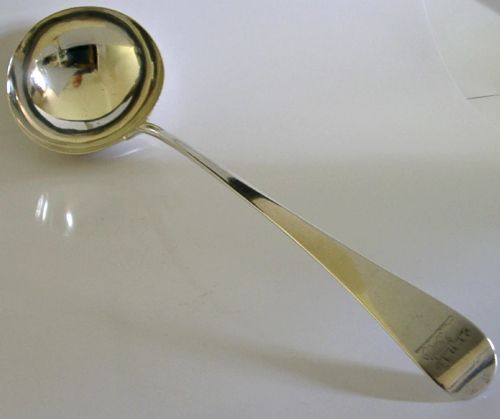
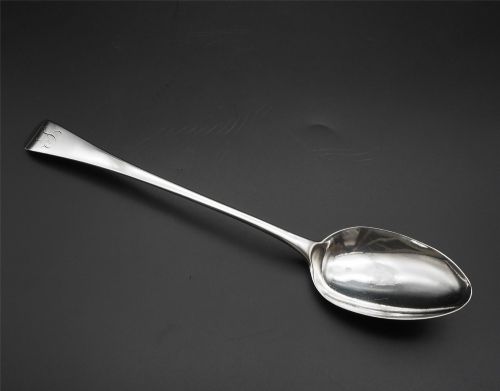
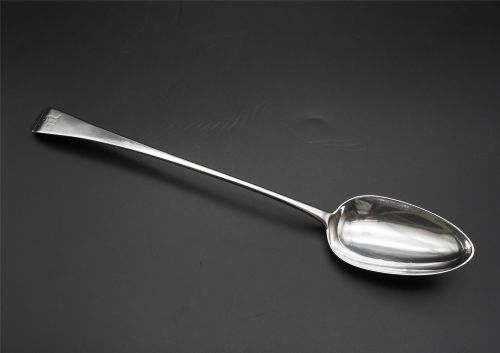
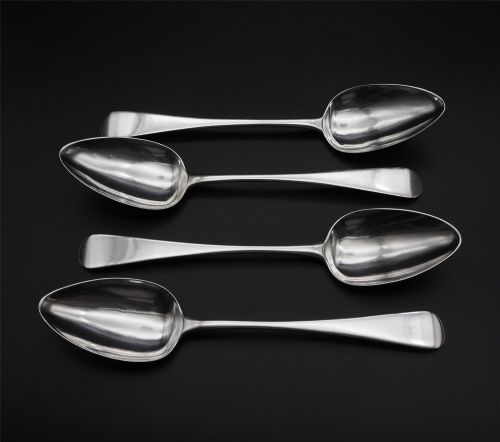
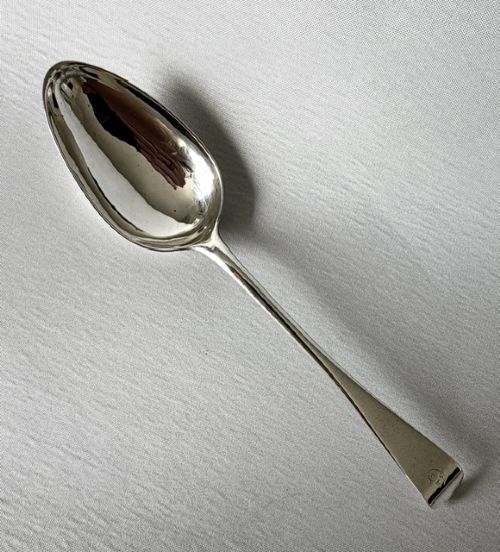
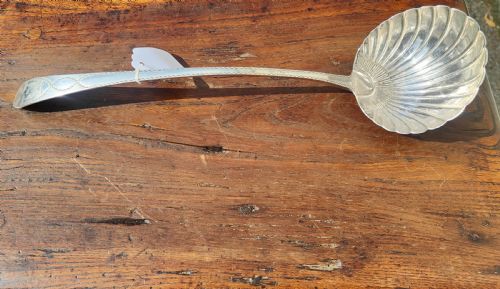
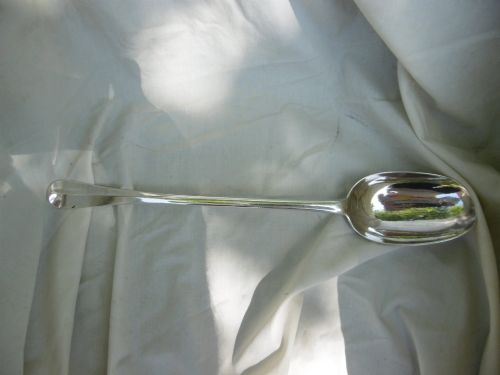
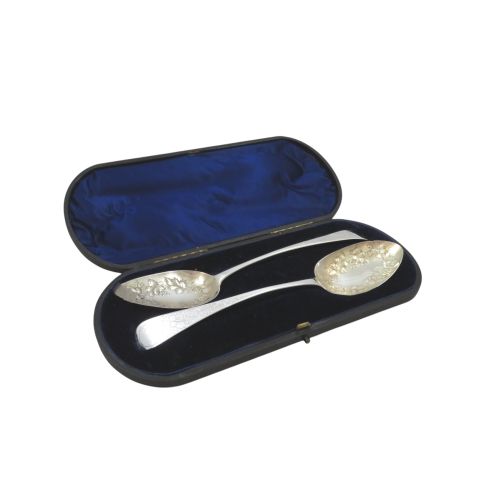
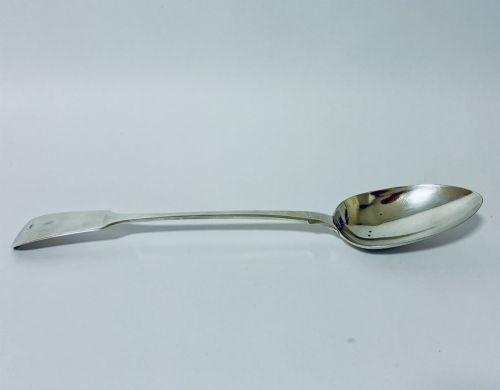
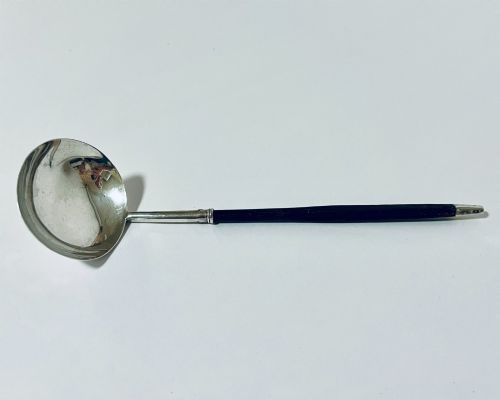
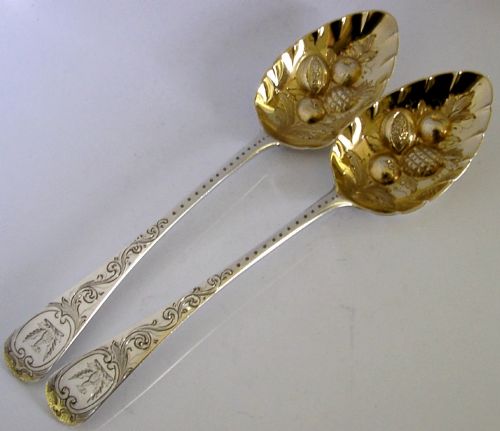
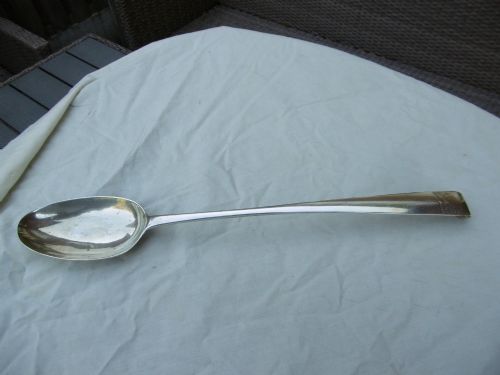
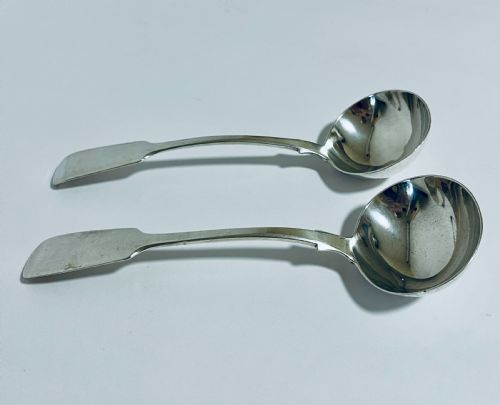
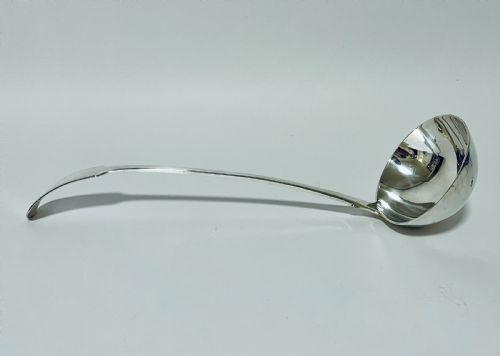
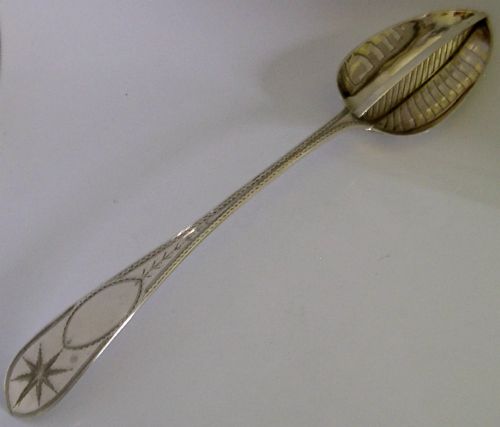
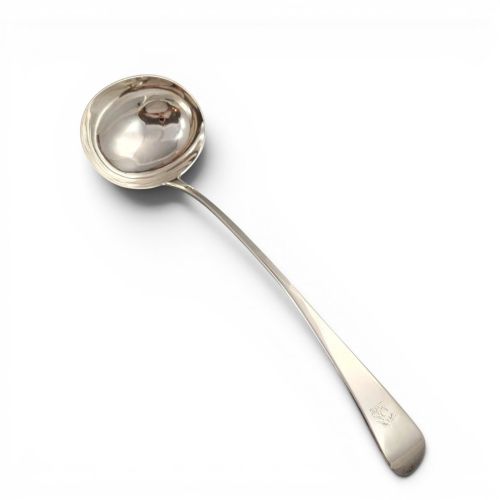
Georgian Silver Serving Spoon
A georgian silver serving spoon brings the substantial weight and hand-hammered grace of the eighteenth and nineteenth centuries straight to the dining table.
Forms and Origins
Provincial and capital centres across England, Ireland, Scotland, and Wales produced distinct regional variations. Pieces from Dublin, Exeter, York, Newcastle, and Scottish towns like Inverness add local character to the standard forms.
Specialised variations such as punch ladles, strainer spoons, and celtic point basting spoons demonstrate the diverse utility of silver flatware during this period. The surviving examples reflect domestic dining habits spanning from the mid-eighteenth century into the nineteenth century.
Standards of Craftsmanship
The distinction between standard utility flatware and top-tier examples lies in the crispness of the chasing and the weight of the silver in the hand. Master silversmiths achieved balanced proportions where the stem thickness matches the generous capacity of the bowl.
Provenance and provincial marks elevate certain items, particularly when combined with original fitted cases or documented familial crests. The clarity of the maker stamps and assay office marks directly influences the historical standing of each piece.
Retail Price Guide 2026
Typical UK retail prices for georgian silver serving spoon, calculated from the Sellingantiques database of over a million retail prices indexed since 2003. This retail price guide relies exclusively on Sellingantiques data; no external sources or auction records are used, so the figures do not describe the wider market.
Many a stern Georgian ancestor found their family crest quietly covered by a Victorian silversmith carving enthusiastic little strawberries.
James Tookey·Bateman·R Hennell·Paul Storr
The Georgian Silver Serving Spoon Glossary
- Berry spoon
- A serving spoon heavily embossed and chased with fruit and foliage, often during the Victorian period upon earlier Georgian blanks. These feature textured bowls designed to serve soft fruits.
- Basting spoon
- A large spoon utilised in the kitchen or at the table for pouring pan juices over meat. They measure significantly longer than standard tablespoons.
- Silver gilt
- Silver objects coated with a thin layer of gold on the surface. This technique protected the silver from tarnish in acidic contexts.
- Hallmark
- Official stamps struck into precious metals to indicate the standard of purity, the maker, and the year of assay. These marks provide the definitive date for Georgian silverware.
- Provincial silver
- Silverware manufactured outside of London in regional assay towns such as Exeter, York, or Newcastle. These pieces often display unique local maker marks.
Frequently Asked Questions
What is a georgian silver serving spoon used for?
These large utensils served meats, vegetables, and specialty foods at grand dining tables across the eighteenth and nineteenth centuries. Their generous bowl capacity and sturdy stems made them practical for heavy domestic service.
Today, collectors utilise them for traditional dining or display them as examples of period silversmithing. They bridge the gap between functional tableware and historical artefacts.
How can I date a georgian silver serving spoon?
Dating relies upon the assay office marks, maker's stamps, and date letters struck directly into the silver handle or reverse of the bowl. Comparing these punch marks against established regional registers reveals the exact year of production.
Stylistic cues, such as handle shape and the presence of later berry chasing, also offer strong indicators of the manufacturing period.
Why do some spoons feature fruit and birds?
Many eighteenth-century spoons were later embellished in the Victorian era with chased fruit, berries, and birds across the bowl. This decorative reworking transformed plain family silver into fashionable serving pieces for desserts.
Unaltered spoons retain their original plain bowls or engraved family crests applied during the initial Georgian period of manufacture.
Are provincial marks worth more?
Provincial pieces originating from towns outside London, such as Exeter, York, or Scottish burghs, often attract strong interest due to their lower survival rates. Regional makers produced smaller quantities compared to the capital workshops.
Collectors appreciate the local variation and scarce town marks found on these distinct regional items.