


Silver Sauce Ladle
A silver sauce ladle brings proper weight and measure to the table, finishing a Georgian gravy boat or a Victorian tureen with a curved bowl and a balanced handle.
Silver Sauce Ladle
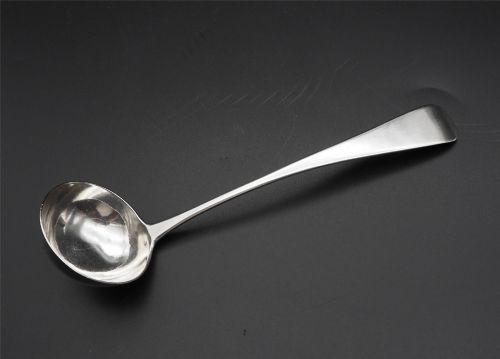
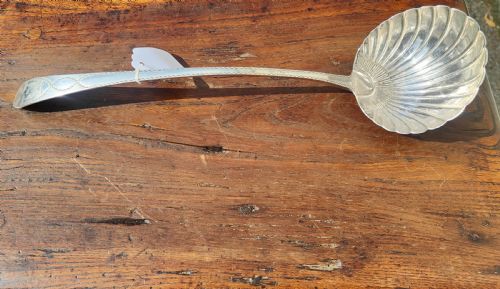
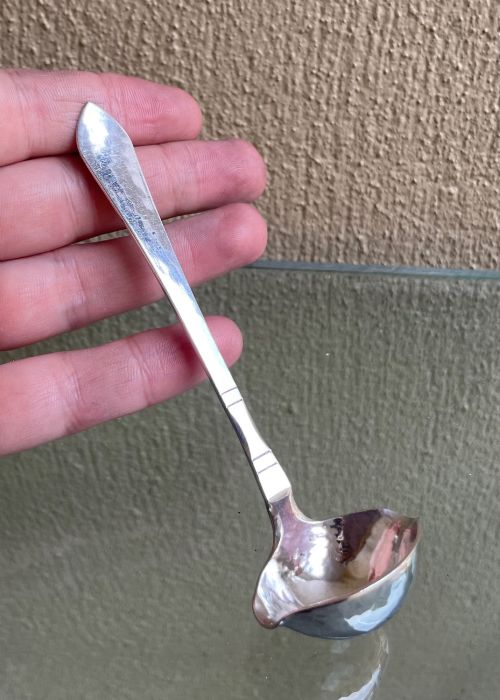
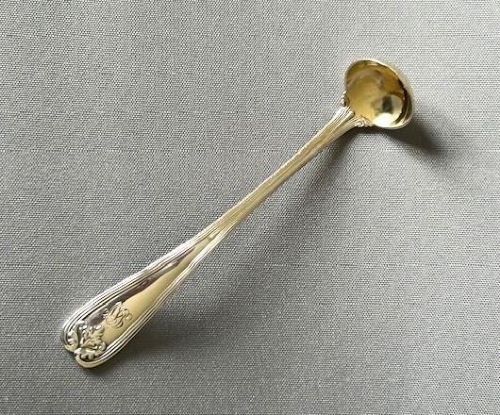
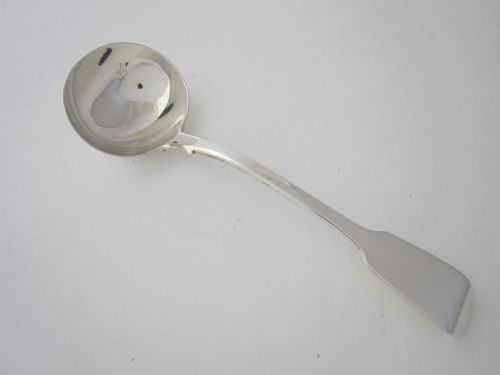
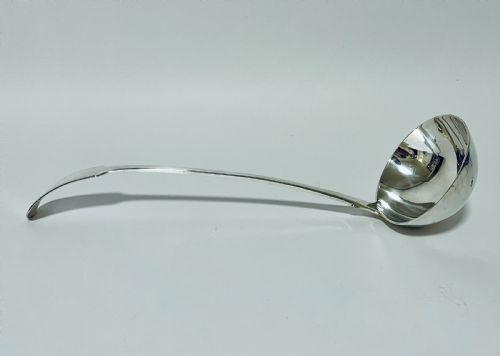
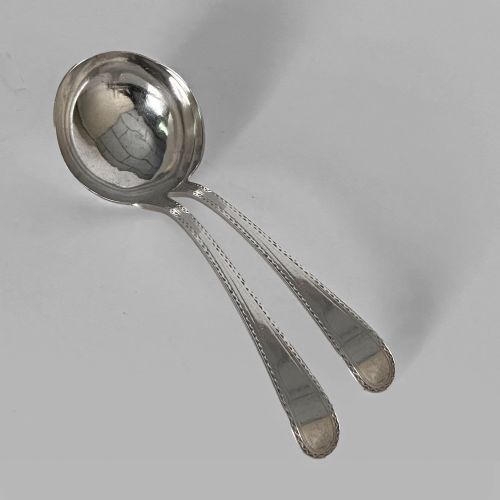
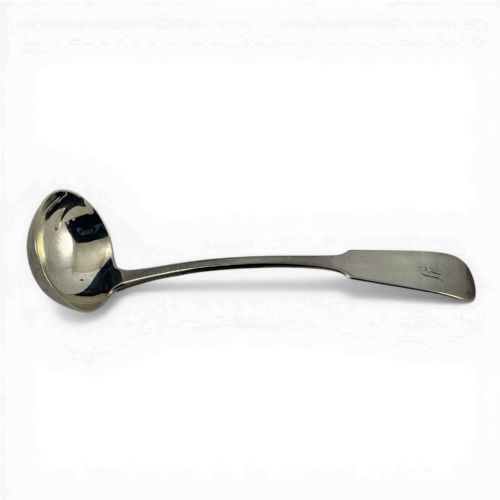
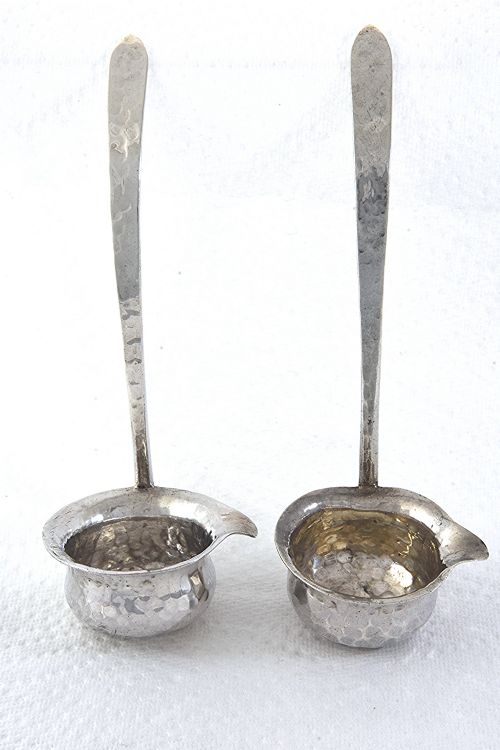
A silver sauce ladle is a small serving implement designed for portioning liquids, gravies, creams and condiments from a boat or tureen into a plate. The pieces seen here span the Georgian, Victorian and Edwardian periods, alongside later 20th-century Scandinavian and Continental designs.
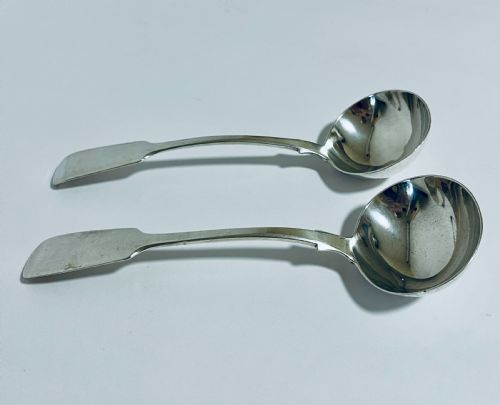
Most examples encountered on this page belong to the Georgian and Victorian eras, taking the form of traditional English, Irish or Scottish provincial flatware. They occur individually or in matched pairs, and occasionally as part of larger cased table services.
Makers shaped these utensils for specific dining rituals, leading to variations like the shorter bowl of a cream ladle, the deeper reservoir of a punch ladle, or the pierced bowl of a straining ladle used for mint sauce.
Materials and construction
Silversmiths forged these utensils primarily from sterling silver or solid silver, hammering and shaping the metal from ingots into flatware blanks before raising the bowl. Some domestic and Continental examples utilise silver plate or electroplated nickel silver over a base metal core.
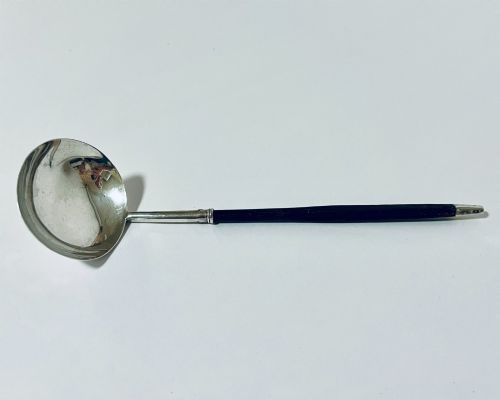
Handles occasionally incorporate contrasting materials such as turned wood or horn, particularly on earlier toddy ladles designed to insulate the hand from hot liquids. Decoration was applied through hand-engraving, ornate scrollwork, or distinct die-stamped patterns like Fiddle, Thread and Shell, and Queens.
Silver Sauce Ladle Retail Price Guide 2026
Typical asking prices for silver sauce ladle among the pieces listed under this phrase on Sellingantiques today, from the lower quarter to the upper quarter. They describe what is for sale here now, not the wider market.
Some Victorian mint sauce ladles feature clever removable strainers so the enthusiastic diner leaves the heavy herb bits behind in the boat.
Assessing quality and execution
Quality rests in the gauge of the silver and the crispness of the pattern stamping on the stem and reverse of the bowl. Heavier gauge metal resists bending at the narrow neck where the handle meets the bowl, ensuring the implement maintains its structural integrity through generations of use.
The distinction between standard commercial output and superior workshop production lies in the hand-finishing of the bowl edge and the clarity of the hallmarks stamped into the metal. Finer pieces retain sharp definition in engraved crests and scrollwork, whereas worn or heavily polished examples lose the intended profile of their ornamental motifs.
Georg Jensen·Tiffany·Hester Bateman·Mappin and Webb·Elkington and Co·Chawner and Co
The Silver Sauce Ladle Glossary
- Hallmark
- Official marks stamped into precious metals indicating the maker, assay office, standard of purity, and year of production. These stamps provide the primary evidence for dating British silver.
- Britannia Standard
- A stricter standard of silver purity introduced by English statute in 1697, containing ninety-five point eight percent pure silver rather than the standard ninety-two point five percent. Pieces made to this standard often display a figure of Britannia.
- Fiddle pattern
- A traditional 19th-century flatware handle shape featuring a narrow stem that broadens near the terminal into a distinct shoulder resembling a fiddle or violin. It forms the base for popular variations like Fiddle, Thread and Shell.
- Toddy ladle
- A small-bowled ladle originally utilised for serving hot alcoholic punches and toddies from a communal bowl into individual glasses. They frequently feature twisted whalebone, horn, or wooden handles.
Silver Sauce Ladle: Frequently Asked Questions
How do I identify a Scottish provincial silver ladle?
Scottish provincial pieces carry maker marks from towns outside Edinburgh and Glasgow, such as Dundee, Aberdeen, Perth, or Banff. These marks often include unique initials combined with town or specialty symbols rather than standard assay office leopard heads.
They represent regional silversmithing traditions that operated independently of the major city guilds.
Were silver sauce ladles originally sold in pairs?
Many Georgian and Victorian dining sets included pairs of sauce ladles so diners could access both sides of a long table or serve two different condiments simultaneously.
While many survive today as matching pairs, others were produced as single items or became separated over centuries of family distribution.
How should I clean antique silver flatware?
Antique silver benefits from gentle washing in warm water with a mild liquid soap, followed by drying with a soft cotton cloth to prevent water spots. Commercial silver dips and abrasive pastes should be avoided, as they strip away the natural patina accumulated over generations.