





Georgian Silver Toddy Ladle
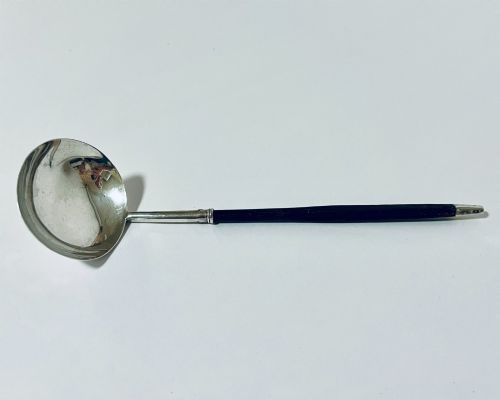
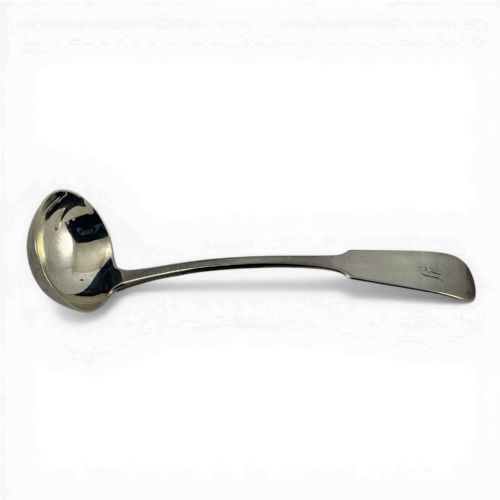
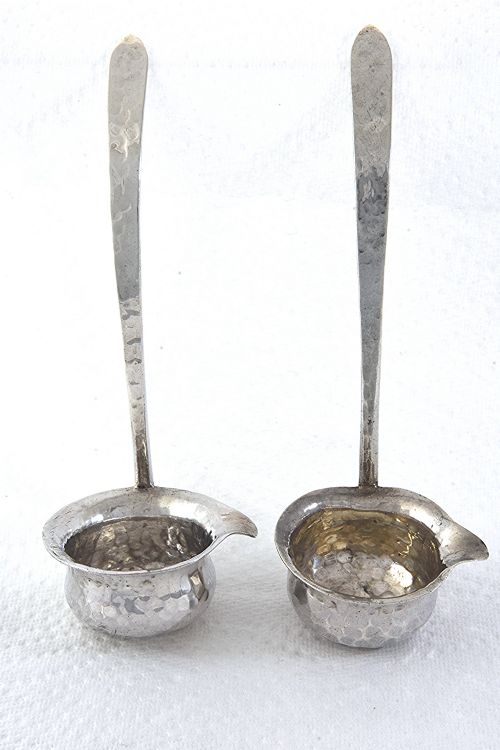
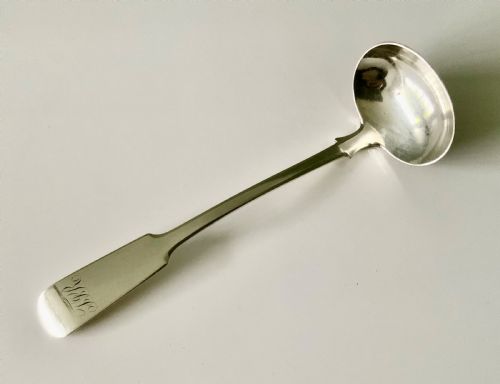
These Georgian silver toddy ladles are small serving utensils forged for mixing punch and spirits at the dining table.
Georgian Silver Toddy Ladle
A georgian silver toddy ladle is a specialised serving utensil designed for drawing hot punch or spirits from a bowl into individual glasses. Buyers examining this page will encounter forms originating from the eighteenth century, the Georgian period, and the Regency era, alongside occasional Victorian and later examples.
The dominant varieties on this page include silver bowls paired with twisted handles or coin inserts, alongside provincial Scottish and Irish pieces. Makers often integrated silver gilt coins or utilised organic materials for the grip.
Most examples function as long serving spoons or punch ladles, ranging from single items to matched pairs. Collectors search for these historical items to connect with period dining customs.
What varies in quality
Quality rests in the crispness of the hallmarking, the clarity of any inset coin, and the structural integrity of the join between bowl and handle. Examples bearing distinct provincial marks or named makers command closer attention from discerning collectors.
The condition of the organic handle material, whether twisted whalebone, horn, or wood, dictates the overall integrity of the piece. Superior specimens retain their original proportions and undamaged natural grips without modern repairs.
Georgian Silver Toddy Ladle Retail Price Guide 2026
Typical asking prices for georgian silver toddy ladle among the pieces listed under this phrase on Sellingantiques today, from the lower quarter to the upper quarter. They describe what is for sale here now, not the wider market.
Listings feature sterling silver, silver, wood, horn, coquilla nut, and whalebone across Georgian, Regency, and Victorian periods.
William Ferguson·Thomas Morley·Elizabeth Morley
The Georgian Silver Toddy Ladle Glossary
- Toddy ladle
- A small handled spoon used for serving warm alcoholic punch or spirits. These utensils typically feature shallow bowls suited for sharing liquids from a central vessel.
- Baleen
- Flexible whale keratin utilised historically for slender, twisted handles on drinking vessels. This organic material provided a tactile grip that did not conduct heat as quickly as metal.
- Silver gilt
- Silver covered with a thin layer of gold, frequently applied to the interior of coin inset bowls. This technique protected the metal from acidic punch mixtures.
- Provincial silver
- Silverware manufactured and hallmarked outside the main assay offices of London, such as in Edinburgh, Dublin, or Elgin. These regional pieces often display distinct local design traits.
- Coquilla nut
- The hard, brown seed of a South American palm used by turners for small handles and decorative items. Its dense grain polishes to a smooth finish.
Georgian Silver Toddy Ladle: Frequently Asked Questions
What is a toddy ladle used for?
These utensils were employed at the dining table for ladling hot punch or spirit mixtures from a bowl into drinking glasses.
Their long handles kept hands safely away from the heated contents during evening gatherings.
Why do some ladles have coins in them?
Silversmiths frequently inserted silver coins, such as shillings, directly into the base of the bowl as a decorative motif or patriotic gesture.
This practice adds a distinct historical date marker to many eighteenth-century pieces.
How do you date a silver toddy ladle?
Dating relies on reading the stamped hallmarks, maker marks, and duty marks struck directly into the silver bowl or stem.
Stylistic shifts in the handle twist and bowl shape also help assign pieces to the Georgian or Regency periods.
Are the handles made of real whalebone?
Many eighteenth and nineteenth-century examples utilise baleen or whalebone for the twisted handle stems.
This material was chosen for its flexibility and ability to withstand heat without burning the user's hand.