



Fiddle Pattern Ladle
A fiddle pattern ladle brings solid silver and classic nineteenth-century form directly to the table.
Identifying a fiddle pattern ladle
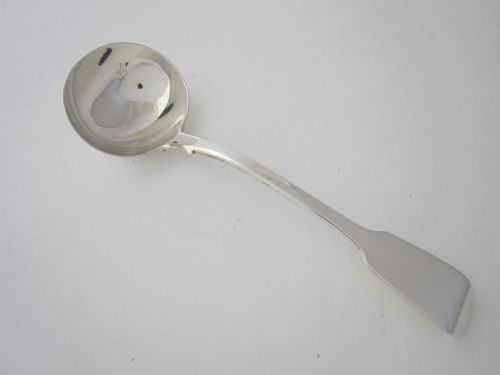
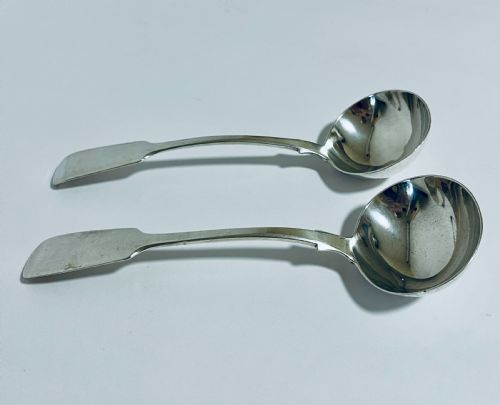
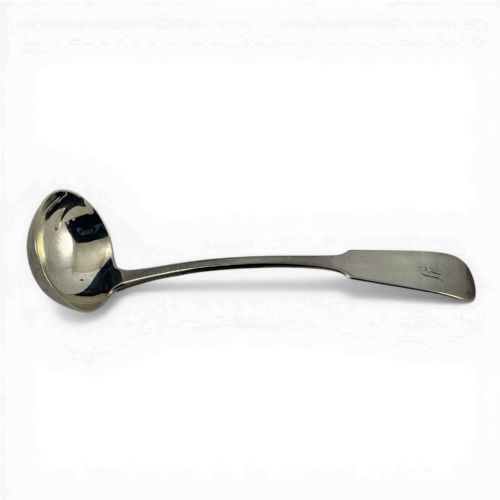
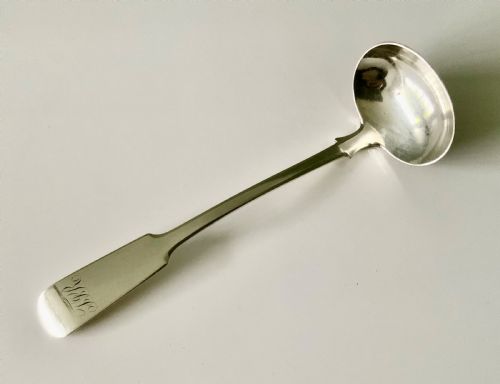
A fiddle pattern ladle is a serving utensil featuring a distinctive shaped handle that widens toward a squared terminal, resembling the outline of a fiddle. These pieces appear across Georgian, Regency, and Victorian periods as serving utensils, soup ladles, gravy ladles, cream ladles, and toddy ladles.
The handle design provides a comfortable grip and a broad surface suited for crests or initials. Scottish provincial examples from Elgin, Inverness, and York sit alongside pieces bearing regional town marks and maker stamps.
Makers such as William Ferguson, Jamieson and Naughton, BCN, and Chawner and Co produced these flatware items in sterling silver. Buyers find single items, matched pairs, and larger sets across the listings.
Materials and construction
Each fiddle pattern ladle is fashioned from solid silver or sterling silver, hammered and shaped to form the bowl and the characteristic fiddle handle. Heavier pieces, such as the large soup ladles recorded at over four hundred grams, demand substantial metal thickness to support deep bowls.
Makers integrated decorative variants into the baseline fiddle shape, adding thread borders or shell motifs as seen in fiddle, thread, and shell pattern items. Stamping and engraving techniques applied crests, initials, and provincial town marks directly onto the silver surface.
Retail Price Guide 2026
Typical UK retail prices for fiddle pattern ladle, calculated from the Sellingantiques database of over a million retail prices indexed since 2003. This retail price guide relies exclusively on Sellingantiques data; no external sources or auction records are used, so the figures do not describe the wider market.
Listings feature sterling silver and silver across Georgian, Regency, Victorian, and nineteenth-century periods, spanning soup, gravy, cream, and toddy forms.
Distinctions in quality
The upper tier of fiddle pattern ladle examples demonstrates exceptional weight and robust gauge silver, maintaining balance across large soup bowls and heavy serving utensils. Provincial pieces carry added interest through scarce town marks and identifiable regional makers.
Fine craftsmanship shows in the crispness of the fiddle shoulders and the preservation of engraved crests against decades of polishing. Plain fiddle handles rely entirely on proportion and metal thickness, whilst embellished variants depend on the sharp relief of thread and shell decoration.
William Ferguson·Jamieson and Naughton·Chawner and Co
The Fiddle Pattern Ladle Glossary
- Fiddle pattern
- A flatware handle style characterised by shoulders tapering down to a widened, squared terminal resembling a stringed instrument.
- Sterling silver
- A silver alloy containing 92.5 percent pure silver by mass, standard for British antique tableware.
- Provincial silver
- Items made and marked outside the main assay offices of London, carrying regional town marks.
- Toddy ladle
- A small ladle designed for serving hot spiced spirits, typically featuring a smaller bowl and shorter handle.
- Town mark
- A punch mark applied by a guild or assay office to indicate the specific town where an item was struck.
Frequently Asked Questions
What is a fiddle pattern ladle used for?
These utensils serve liquids and sauces at the table, ranging from large portions of soup down to small quantities of cream or gravy. Different sizes accommodate everything from communal serving bowls to individual toddy cups.
Heavier examples handle dense stews and clear broths, whilst smaller variants suit cream jugs and sauce boats during formal dining.
How do I date a silver ladle?
Dating relies upon hallmarks stamped into the silver, which record the assay office, the date letter for the year of manufacture, and the silversmith's mark. Stylistic cues also help narrow down the period.
Georgian pieces display different bowl proportions and crest styles compared to later Victorian items, whilst provincial pieces often rely on maker marks alone.
Are these ladles made of solid silver?
Listings record sterling silver and solid silver construction across both Georgian and Victorian periods. Solid construction means the entire utensil is formed from silver metal rather than plated base metal.
Heavier pieces contain substantial metal weight, reflecting the robust manufacturing standards of nineteenth-century silversmiths.