
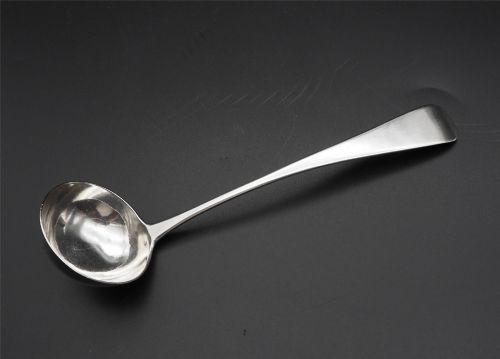
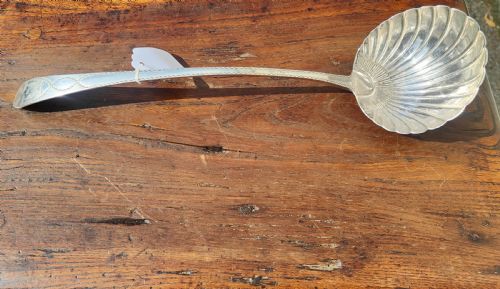
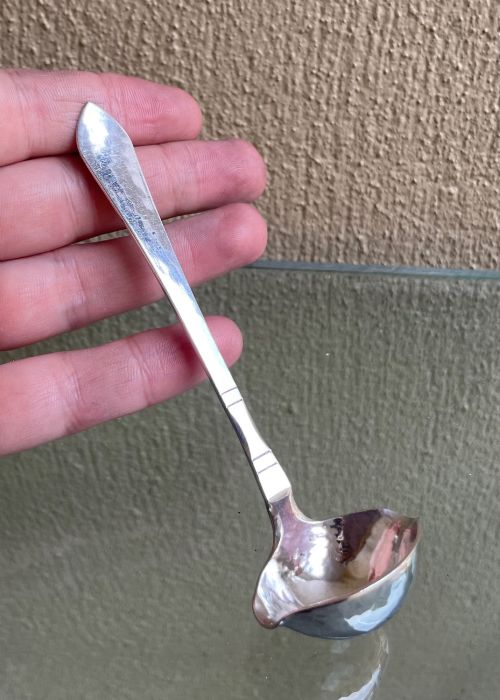
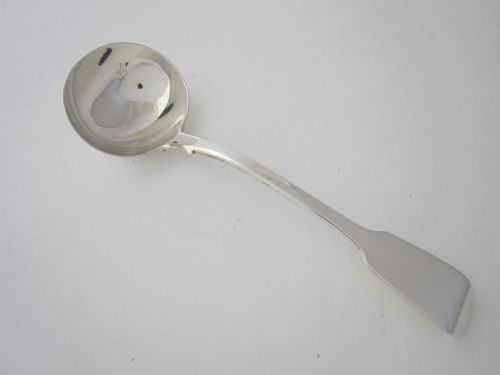
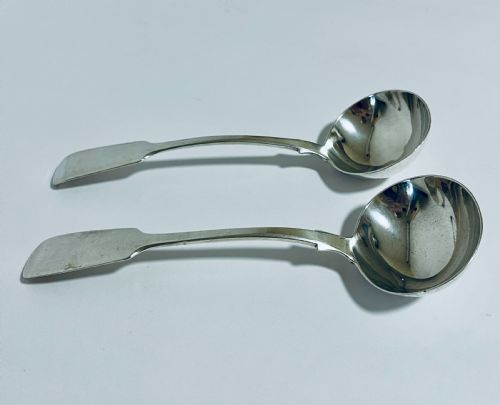
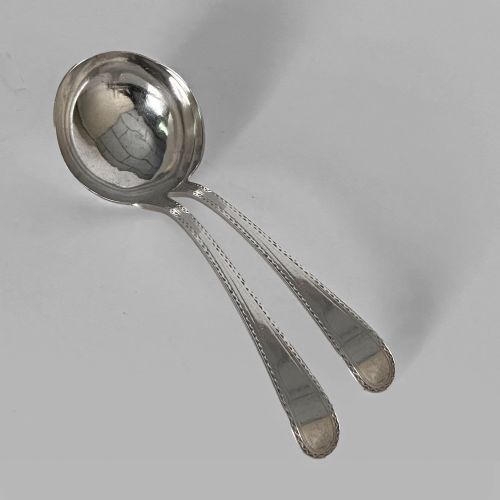


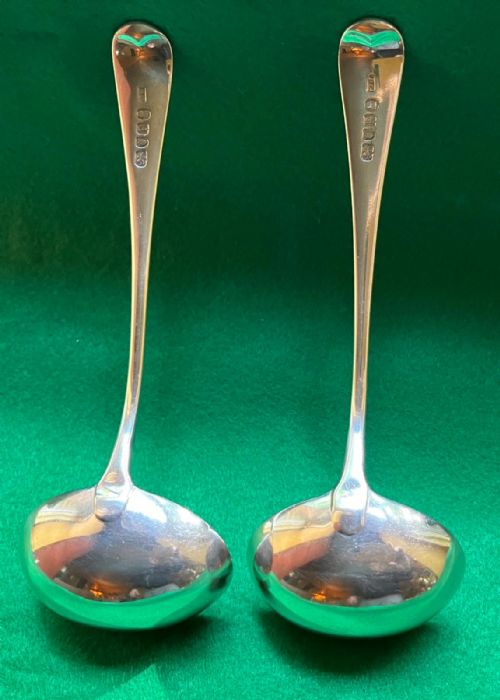


Silver Gravy Ladle
A silver gravy ladle brings proper balance to the Sunday joint, combining generous bowls with comfortable handles designed for daily service.
Silver Gravy Ladle
A silver gravy ladle sits among essential flatware and serving utensils, specifically shaped to portion sauces and juices smoothly at the dining table. When exploring this selection, buyers encounter forms ranging from compact sauce ladles to larger soup examples.
The pieces appearing on this page span several distinct eras, with Georgian and Victorian examples forming the backbone of the inventory. Makers from these periods produced flatware designed to match established dining table services.
Geographic origin shapes many of these utensils, with Scottish provincial, Irish, and Continental variants appearing alongside standard English silver. Collectors frequently target these regional variations for their distinct maker marks and local casting patterns.
Materials and construction methods
Silversmiths constructed these utensils primarily from sterling silver and solid silver, utilising traditional smithing and casting techniques. Handles occasionally incorporated organic materials like horn and wood to provide contrast and grip.
Decoration relied on hand-applied techniques such as bright cut engraving and ornate scrollwork rather than machine stamping. Patterns like Fiddle, Thread and Shell required precise stamping dies followed by careful hand finishing.
Silver Gravy Ladle Retail Price Guide 2026
Typical asking prices for silver gravy ladle among the pieces listed under this phrase on Sellingantiques today, from the lower quarter to the upper quarter. They describe what is for sale here now, not the wider market.
Some provincial silversmiths apparently had to improverise their punches, leaving delightfully wonky town marks on otherwise pristine ladles.
Factors influencing quality
Distinction between standard utility pieces and high-end examples rests in the crispness of the pattern work and the gauge of the silver. Substantial metal weight prevents bowl distortion and ensures the handle balances correctly in the hand.
The clarity of hallmarks and maker stamps dictates the historical value of individual pieces. Well-preserved maker marks from notable workshops command greater interest than worn or rubbed stampings.
Georg Jensen·Hester Bateman·Tiffany and Co·Paul Storr·George Adams·Mappin and Webb
The Silver Gravy Ladle Glossary
- Gravy ladle
- A serving utensil featuring a deep bowl and extended handle designed specifically for transferring pan juices and sauces.
- Fiddle pattern
- A nineteenth-century flatware handle design characterised by its tapered, shoulder-notched shape resembling a stringed instrument.
- Rat-tail
- A distinctive strengthening tongue extending from the underside of the handle down the back of the bowl.
- Bright cut
- An engraving technique utilising faceted angular cuts to create brilliant reflective patterns across the silver surface.
- Provincial mark
- A regional hallmark applied by silversmiths working outside major assay office cities like London.
Silver Gravy Ladle: Frequently Asked Questions
How do I identify a Georgian silver ladle?
Georgian examples display specific duty marks, maker initials, and regional town marks struck directly into the silver handle.
Stylistic cues from this era include rattail attachments and simple Hanoverian or Old English handle profiles.
Can I use antique silver ladles daily?
Solid silver utensils handle regular dining service quite comfortably provided owners wash them by hand using mild detergents.
Avoiding abrasive scourers preserves the historic hallmarks and original bright cut engraving over decades of use.
What does provincial silver mean?
Provincial silver originates from workshops operating outside London in regional centres such as York, Newcastle, or Scottish towns.
These pieces often carry unique local maker marks that differ from standard capital assay office stamps.