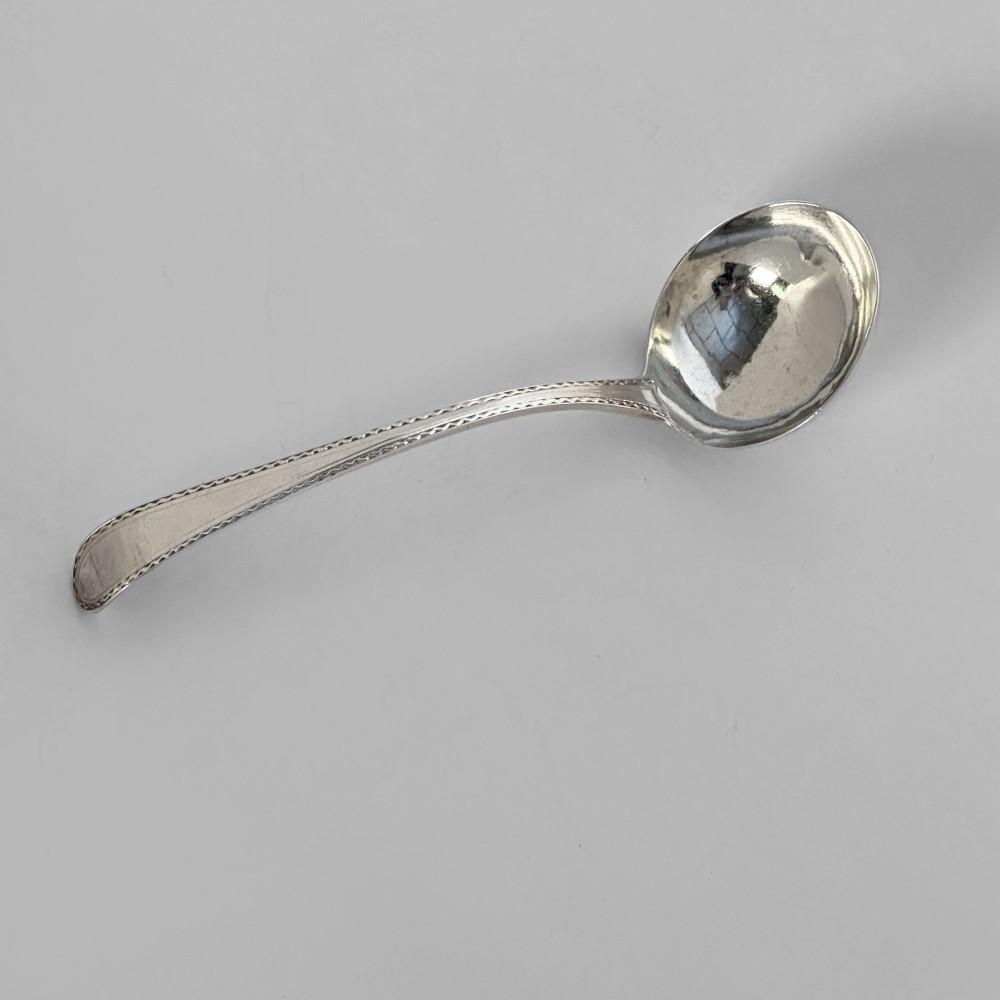
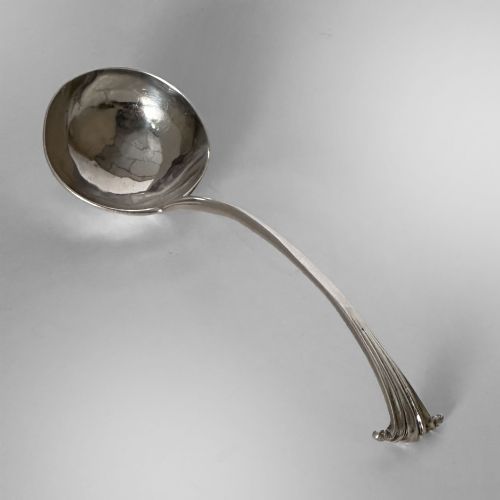
Baggott & Co. has dated these Georgian Silver Sauce Ladles to the 18th Century.
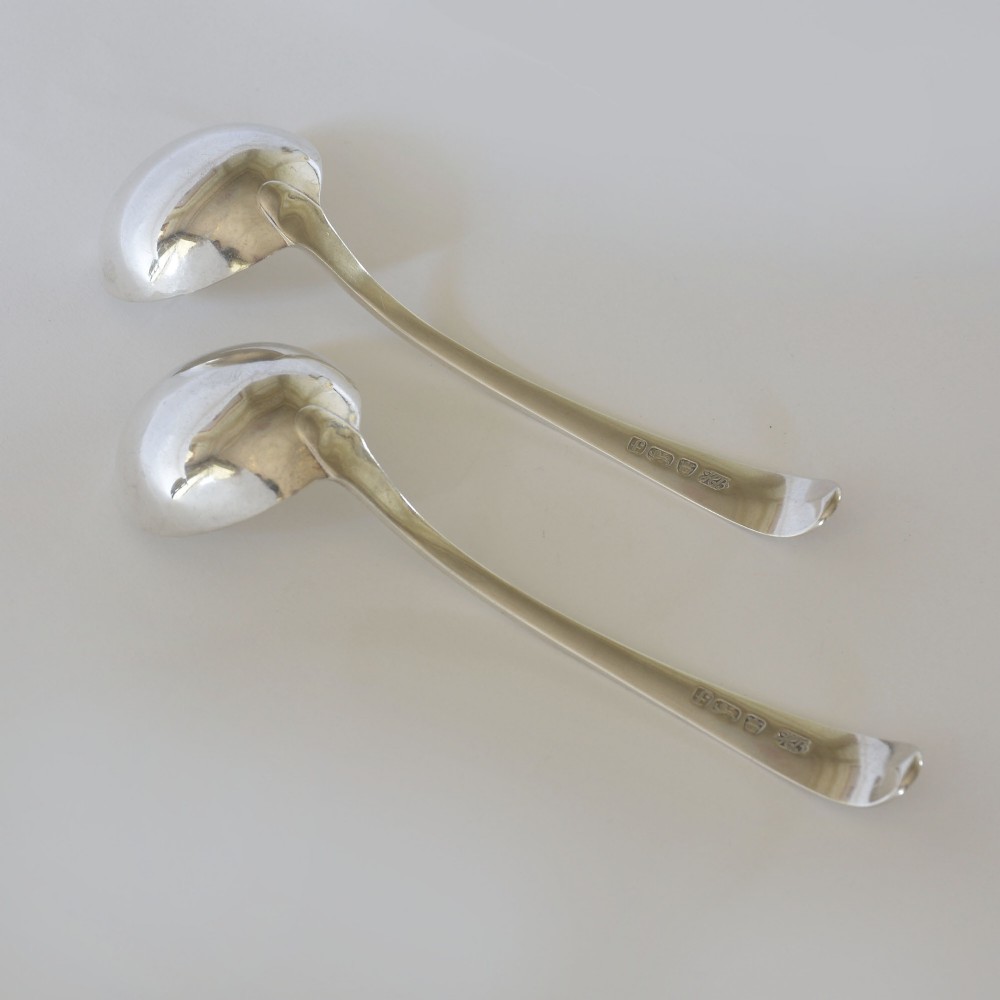
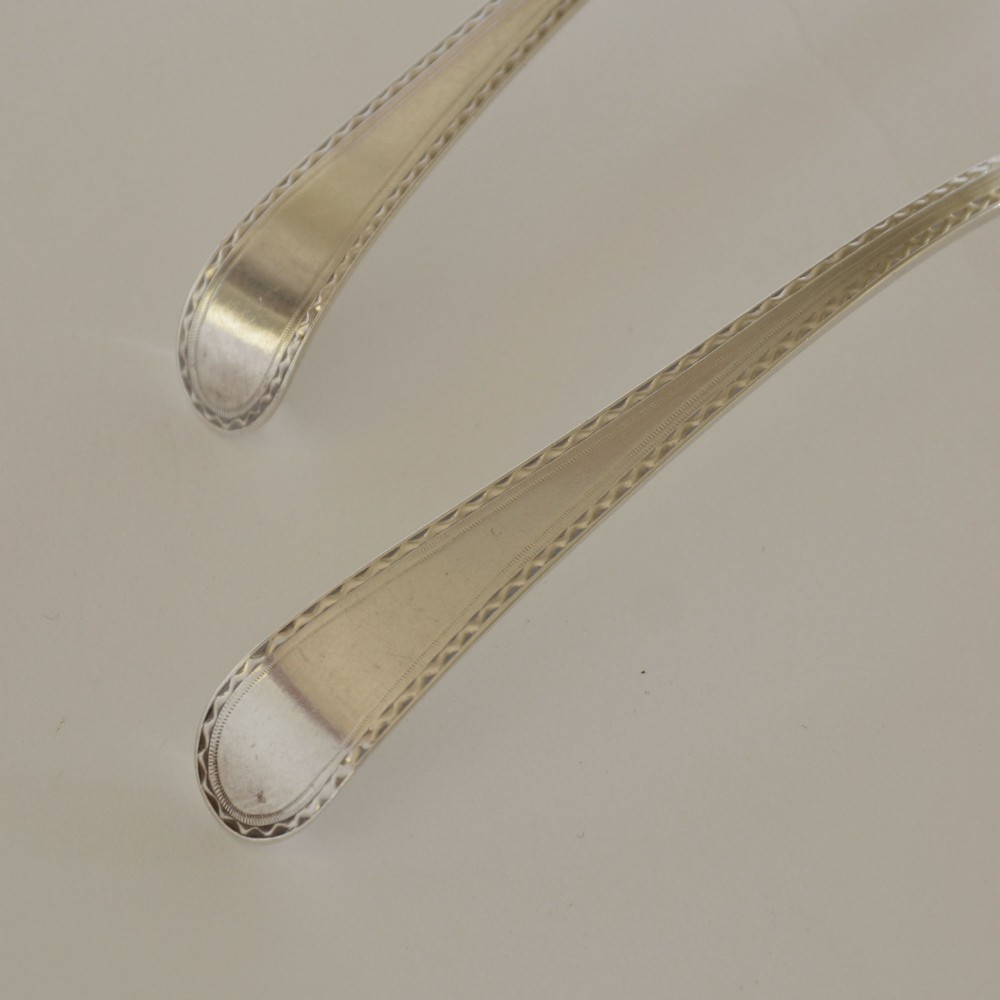
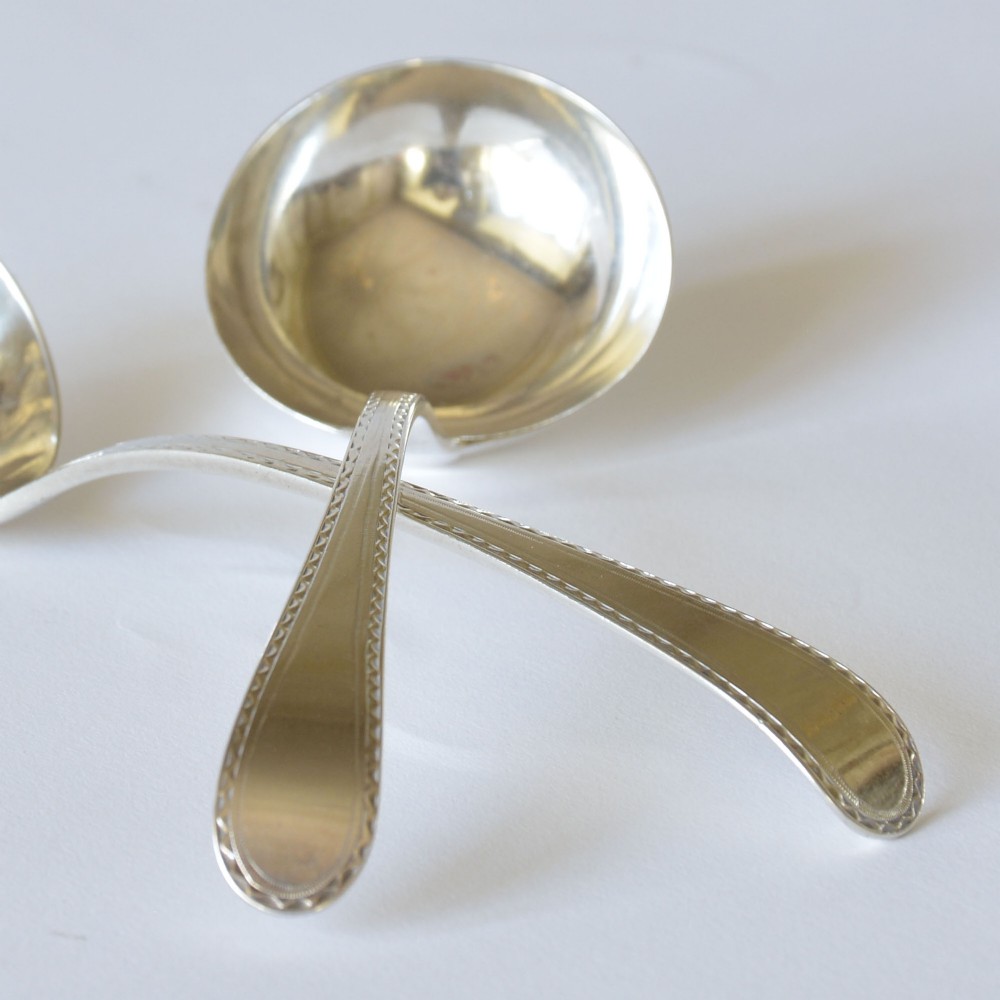
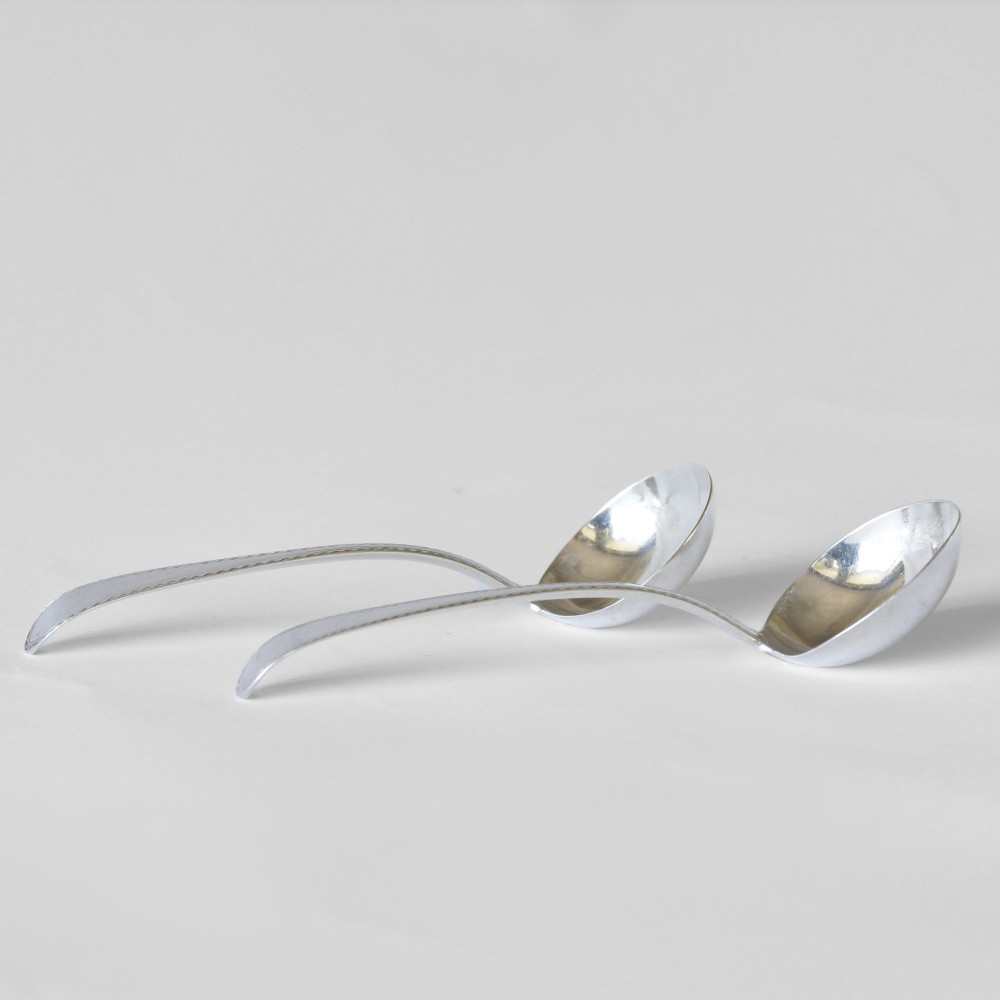
Old English pattern silver ladles by the renowned female silversmith, Hester Bateman. The spoons are decorated with her trademark bright cut stems.
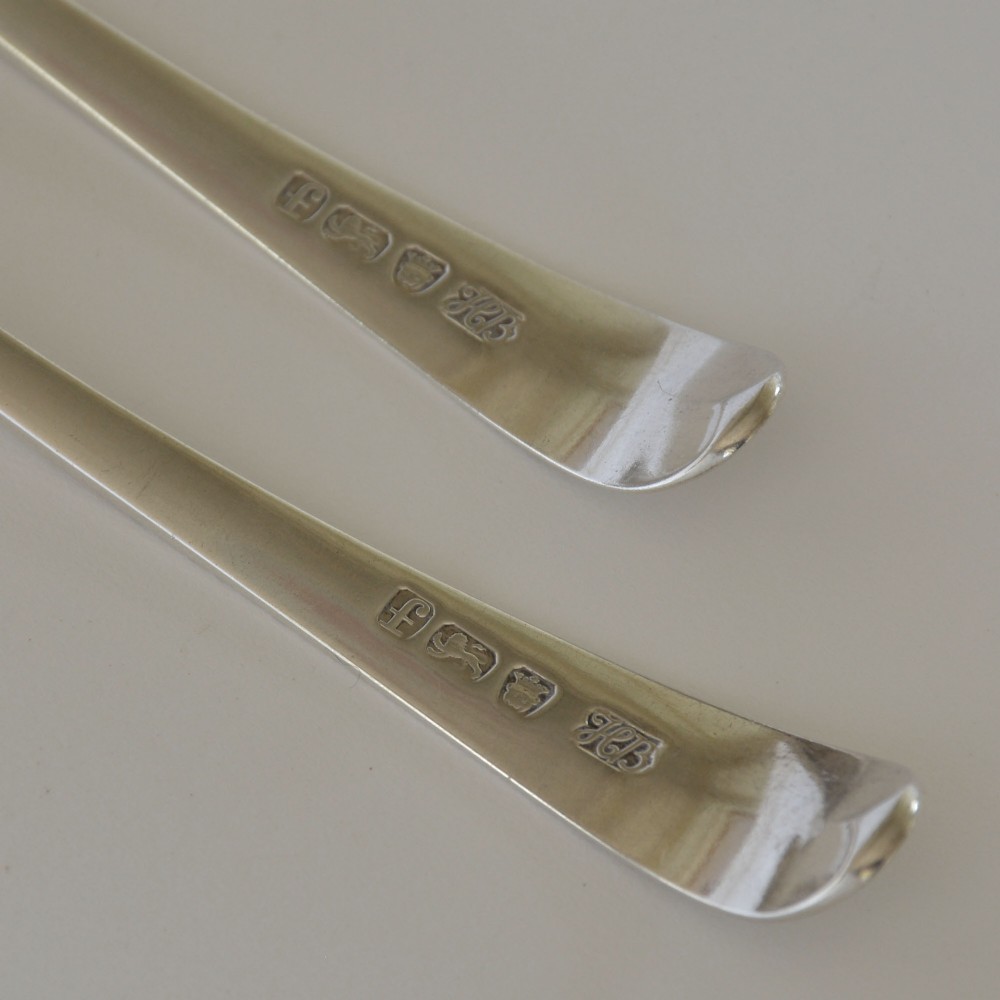
Sterling silver, hallmarked Hester Bateman, London, 1781
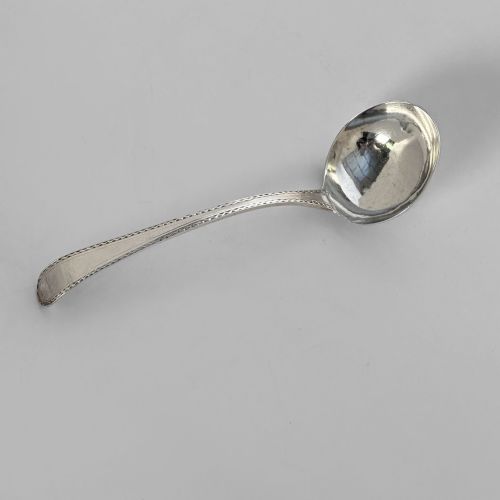
Bright cut engraving became popular from about 1770, with most pieces dating from about 1780 to 1805. The technique involves facets being cut out of the surface of the silver to leave a shiny appearance, as opposed to lines being drawn.
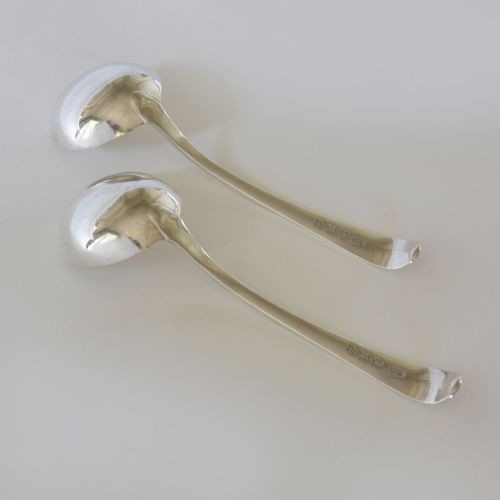
Hester Bateman (1708–1794) carried on her husband's (John) silversmith after his death, Hester registered her first mark with Goldsmith’s Hall in 1761. At the time women were not allowed to use their initials alone as a maker’s mark but exceptions were made in the case of widowed craftswomen. What set the Bateman’s work apart from many of their contemporaries was Hester’s attention to detail and the quality of her designs. Her style favoured the neo-classical which was the popular style of the late 18th century.
Baggott & Co. has dated these Georgian Silver Sauce Ladles to the 18th Century.
Dealers in antiques and decorative interiors based in the cotswolds and scotland
You can view the stock and full dealer information on the Baggott & Co. Profile Page
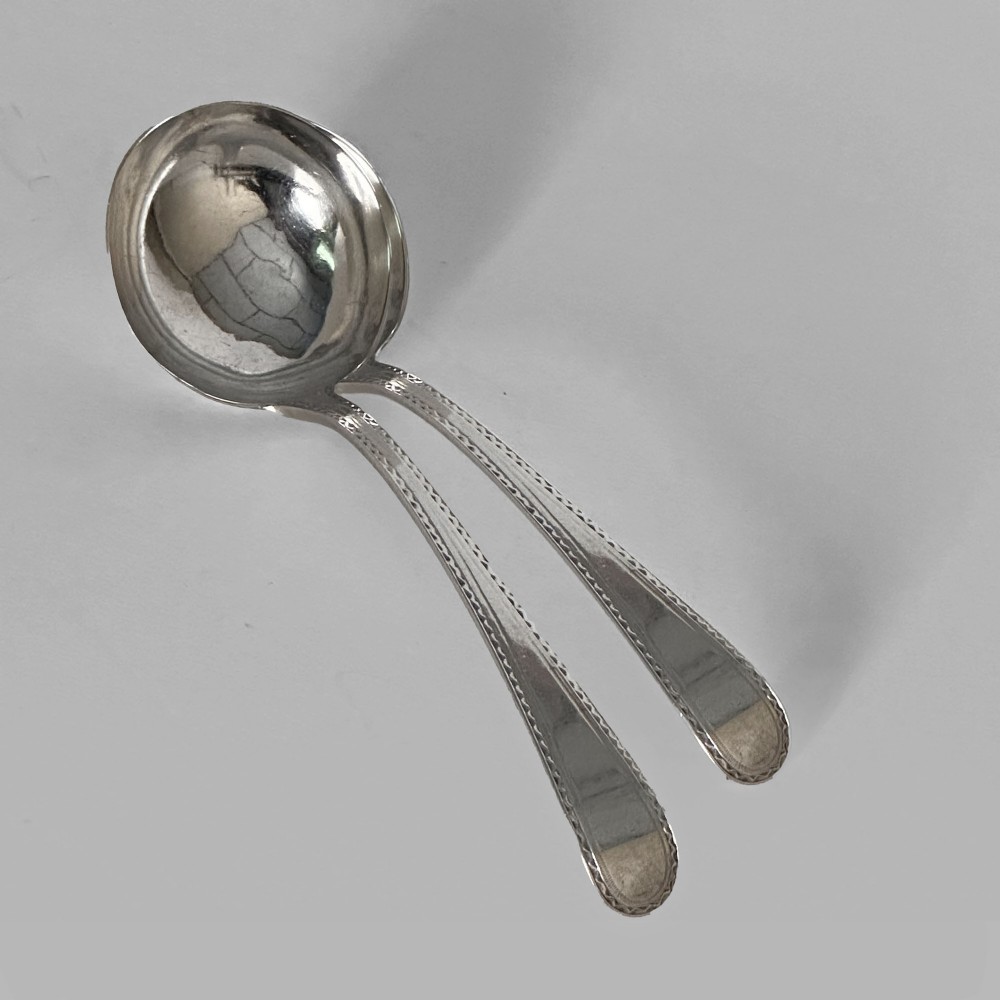
Pair of 18th Century Hester Bateman Silver Ladles, 1781