


Georgian Silver Table Spoons
Georgian silver table spoons bring the weight and bright metal of eighteenth- and nineteenth-century dining rooms straight to the modern table.
Georgian Silver Table Spoons
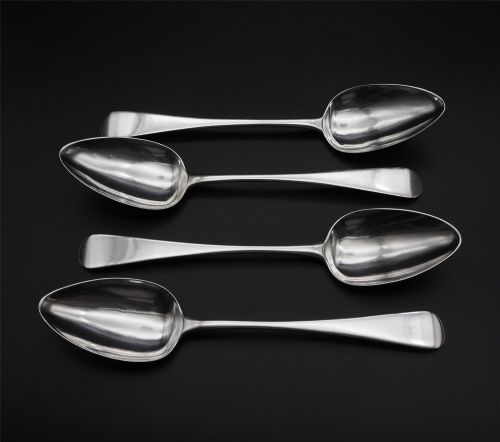
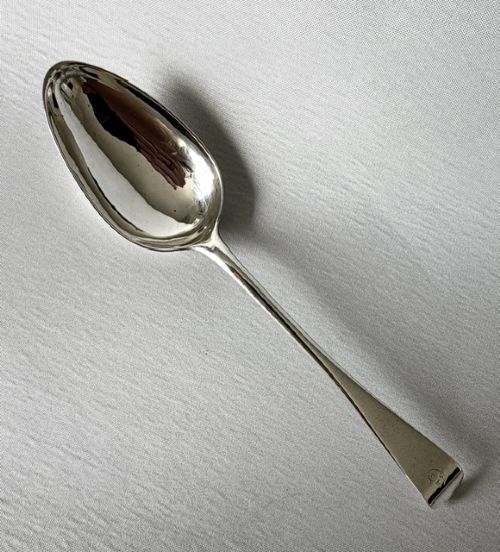
When you search for georgian silver table spoons, you encounter flatware produced primarily during the Georgian, 18th Century, and 19th Century periods, encompassing styles from George I to George III.
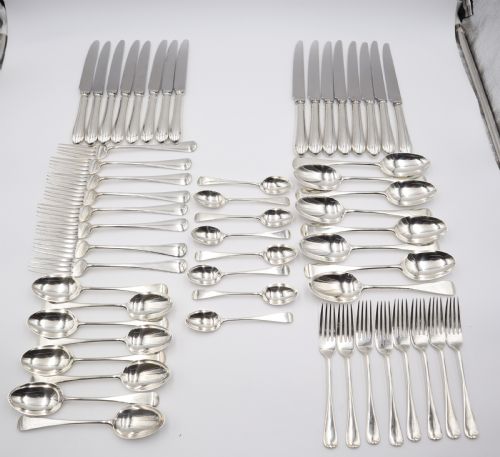
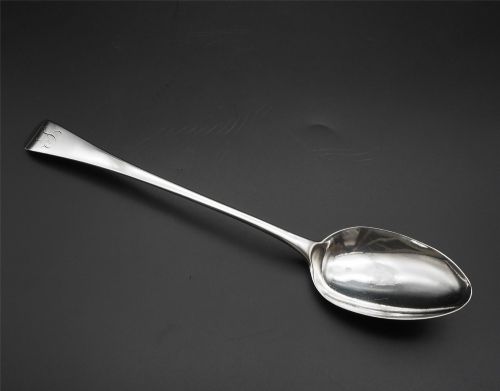
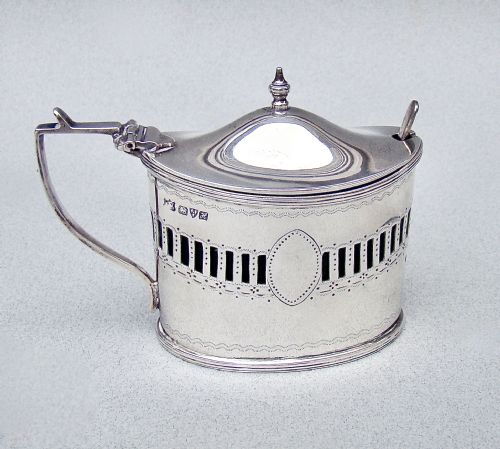
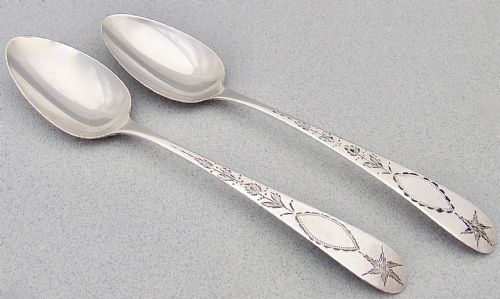
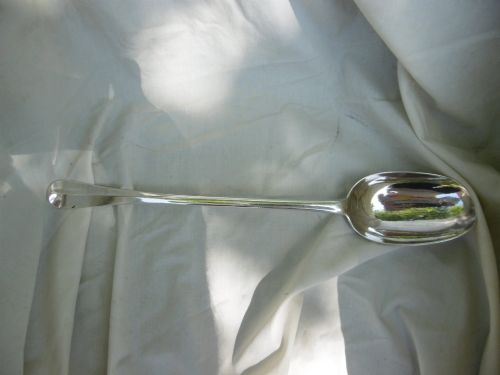
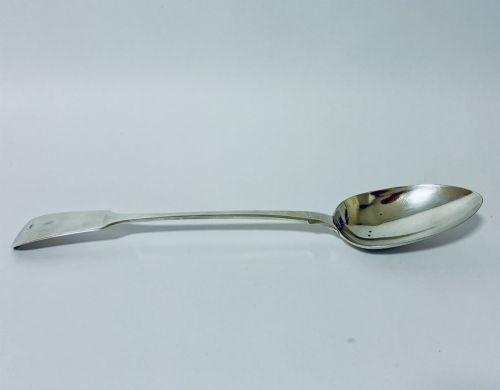
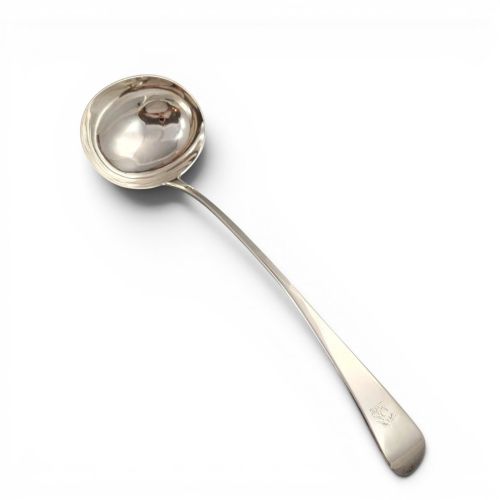
The pieces on this page include standard table-sized items alongside larger basting, hash, and serving spoons, occasionally found in fitted cases with velvet or silk linings.
Materials and Technique
Silversmiths forged these utensils from Sterling Silver and Britannia standard silver, hammering ingots into blanks before shaping bowls and handles.
Details such as rat-tail drops, threaded borders, and engraved family crests were applied by hand, while later boxed sets incorporated wood or steel elements within leatherette and silk cases.
Listings span the eighteenth and nineteenth centuries, featuring sterling silver and Britannia standard flatware alongside velvet-lined presentation cases.
Assessing Quality
The distinction between ordinary and exceptional examples rests upon the crispness of the hallmarks, the preservation of original bowl profiles against years of polishing, and the clarity of engraved crests.
Matched sets and original cased pairs command greater interest than assembled groups, as do pieces carrying the punch of known provincial or Dublin makers.
Alfred Marston·John Pittar·Andrew Archer·William Scarlett·John Locker·John Wilks·James Tait·Charles Stuart Harris·Paul Storr·Charles Houghman·Henry Day·George Smith III·William Marshall
The Georgian Silver Table Spoons Glossary
- Hallmark
- The official stamp struck into precious metal indicating the maker, assay office, standard of silver, and date letter. These marks provide the primary evidence for dating an antique spoon.
- Rat-tail
- A tapered tongue of metal extending down the back of a spoon bowl from the handle base. This structural reinforcement appeared frequently on early eighteenth-century pieces.
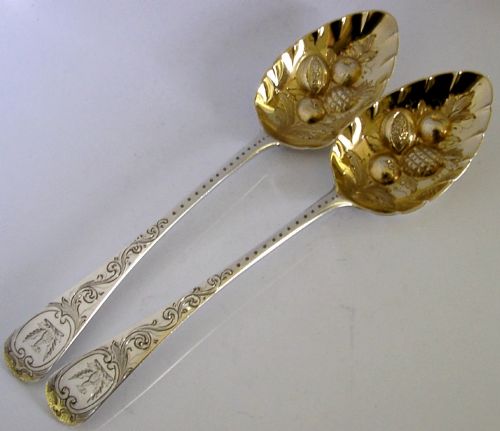
- Berry spoon
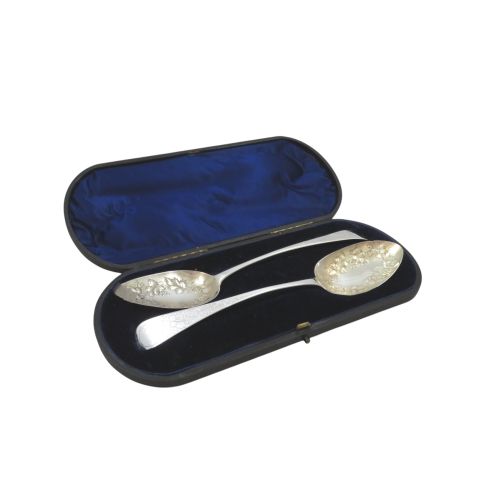
- A table spoon embellished at a later date with fruit and foliage repoussé work on the bowl and chased decoration on the handle. These conversions often date from the Victorian period.
- Fiddle pattern
- A flatware handle shape featuring shoulders above a widening stem that terminates in a squared, fiddle-like end. This style gained widespread popularity during the early nineteenth century.
Georgian Silver Table Spoons: Frequently Asked Questions
What is the difference between a tablespoon and a serving spoon?
Table spoons generally measure around twenty to twenty-two centimetres in length and were designed for general dining use at the table.
Serving, basting, and hash spoons measure significantly longer, often exceeding thirty centimetres, and were intended for serving food from communal platters.
How do I know if my spoons are Georgian?
Dating relies heavily upon the set of hallmarks struck into the silver, which include the maker's mark, standard mark, town mark, and an annual date letter.
Stylistic markers such as old english or fiddle handles, rat-tail backs, and Britannia standard silver also point toward the eighteenth and early nineteenth centuries.
Can I use antique silver table spoons every day?
Sterling silver possesses a durable physical structure that handles regular use, provided the pieces are washed by hand in mild soap without harsh abrasive pads.
Frequent use actually develops a soft, pleasing patina across the metal surface over decades of handling.
What are berry spoons?
Berry spoons are Georgian table spoons that were subsequently decorated during the Victorian era with embossed fruit, flowers, and chased scrolls across the bowl and stem.
These embellished pieces were frequently housed in dedicated leatherette and silk-lined presentation cases for gifting.