






Figural Painted Vases
Figural painted vases bring classical narratives and lively processions into a room through rich enamel and ceramic work.
Figural Painted Vases
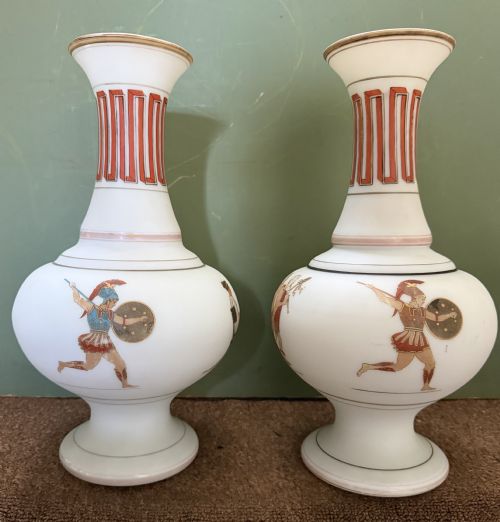
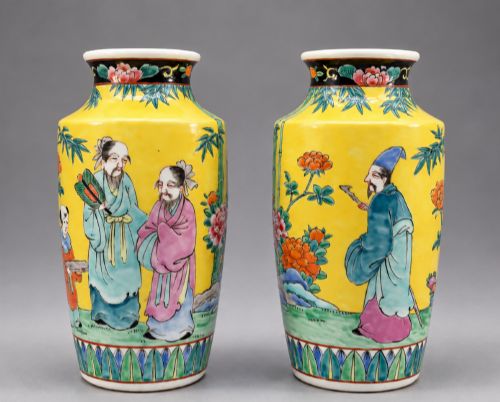
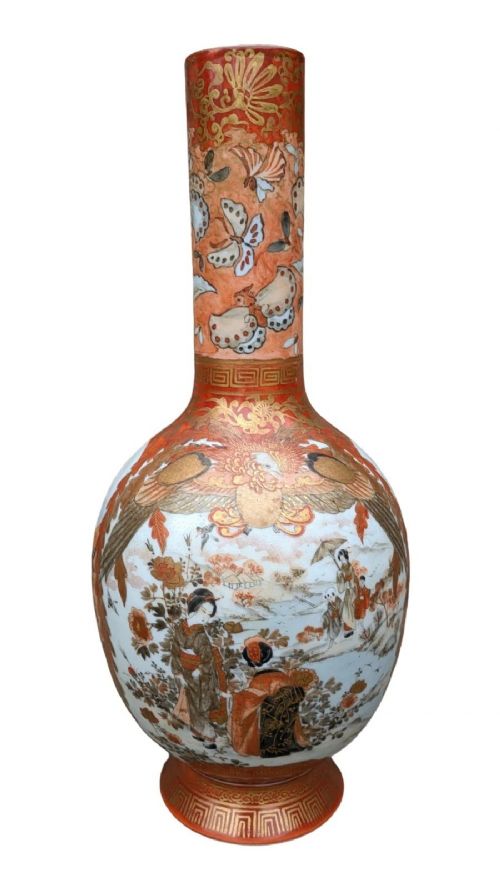
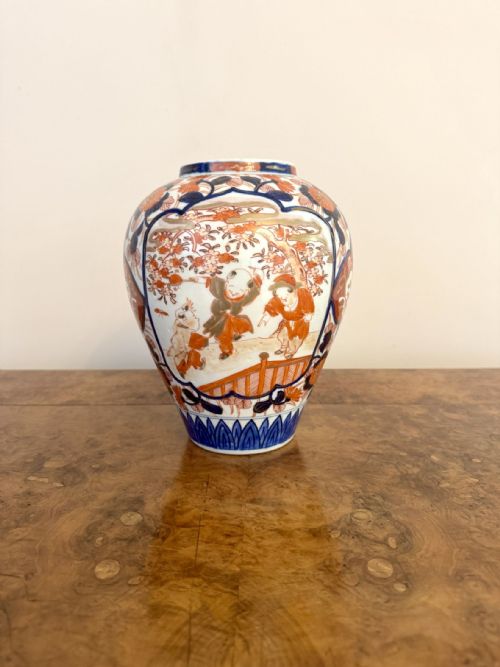
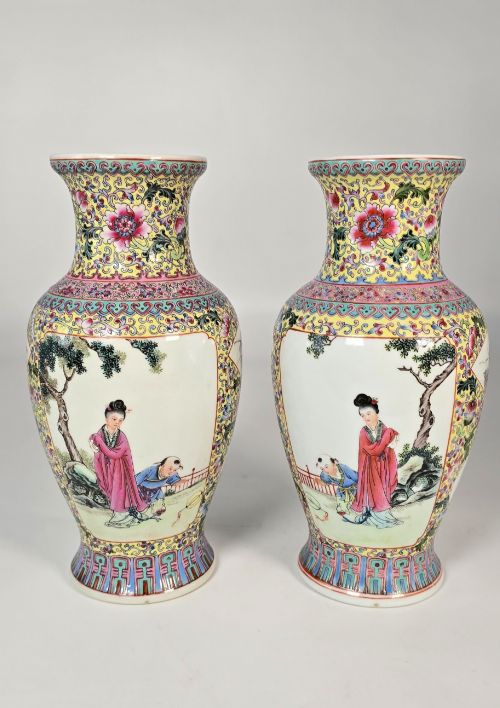
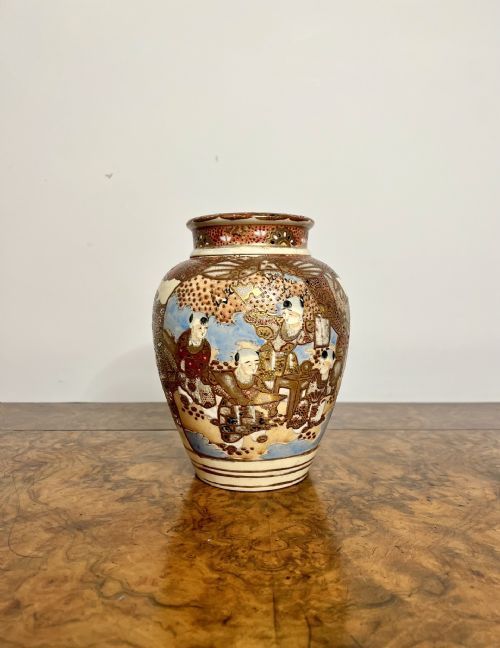
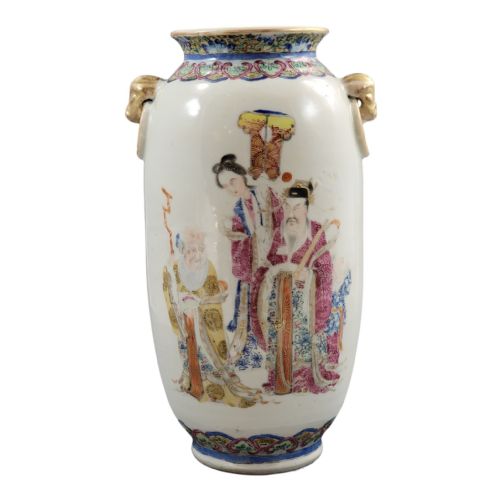
Figural painted vases present painted human figures upon ceramic and porcelain bodies, ranging from Chinese export wares to Japanese Satsuma and Kutani productions. These vessels span the nineteenth century through the early twentieth century, capturing distinct regional artistic traditions.
The selections here most frequently include Japanese Satsuma pieces depicting processions and scholars alongside Chinese porcelain jars and vases decorated with figures in garden or interior scenes. Continental European porcelain and majolica examples also appear, often incorporating sculptural bisque figures or brass mounts.
How they were made
Makers shaped porcelain, earthenware, and ceramic bodies before applying detailed enamel paints and gold leaf accents by hand. Many pieces utilise the moriage technique to build up raised enamel outlines that give the painted figures a tangible relief.
Japanese Satsuma and Kutani workshops combined fine clay bodies with intricate overglaze enamelling, sometimes pairing the ceramics with carved wooden stands or patinated brass mounts.
Figural Painted Vases Retail Price Guide 2026
Typical asking prices for figural painted vases among the pieces listed under this phrase on Sellingantiques today, from the lower quarter to the upper quarter. They describe what is for sale here now, not the wider market.
Several miniature vases pack entire imperial processions and crowded garden gatherings onto surfaces barely larger than a teacup.
What varies in quality
The balance of the form and the preservation of the original hand-painted surface dictate the standing of a vessel. Pieces showing careful detailing in the background scenery alongside the main figures maintain a stronger visual depth.
Kinkozan·Chosei·Vion et Baury
The Figural Painted Vases Glossary
- Satsuma
- A type of Japanese earthenware featuring a crackled pale ivory glaze decorated with polychrome enamels and gold leaf. It originated in Satsuma Province and became immensely popular during the Meiji period.
- Kutani
- Japanese porcelain or earthenware recognised by bold colour palettes, frequently incorporating rich iron reds and greens. These wares often depict narrative scenes and natural motifs.
- Famille Rose
- A major palette of Chinese ceramic glazes introduced in the Qing dynasty, distinguished by opaque pink or rose enamel. The style allowed for subtle tonal gradations in painted figures and floral designs.
- Moriage
- A decorative technique used in ceramics where liquid clay is piped onto the surface before firing to create raised, textured patterns. This method adds a tangible relief beneath the final enamel and gilt layers.
- Bisque
- Unglazed white porcelain that has been fired once, producing a matte, marble-like texture ideal for sculptural figures and figural vase mounts.
Figural Painted Vases: Frequently Asked Questions
How do I identify Satsuma ware?
Satsuma ware is recognised by its distinctive ivory-coloured, finely crackled glaze that provides a warm ground for intricate enamel and gilt painting.
Most pieces date from the Meiji period onwards and frequently display Japanese court figures, immortals, or dense floral compositions.
What is the difference between Kutani and Satsuma?
Kutani ceramics typically utilise bolder palettes dominated by iron reds, greens, and golds upon either porcelain or earthenware bodies.
Satsuma relies primarily on a soft, crackled earthenware base with detailed polychrome figures and heavier gilding.
How were these vases used originally?
These vessels served primarily as decorative display items within parlours, drawing rooms, and studies during the nineteenth and early twentieth centuries.
Many larger examples were later converted into table lamps with electrical wiring, while others remained purely ornamental centrepieces.
What period do most of these pieces belong to?
The majority of these figural painted vases date from the nineteenth century, particularly the late Victorian and Meiji periods.
A smaller number extend into the early twentieth century, including Chinese Republican period pieces.