
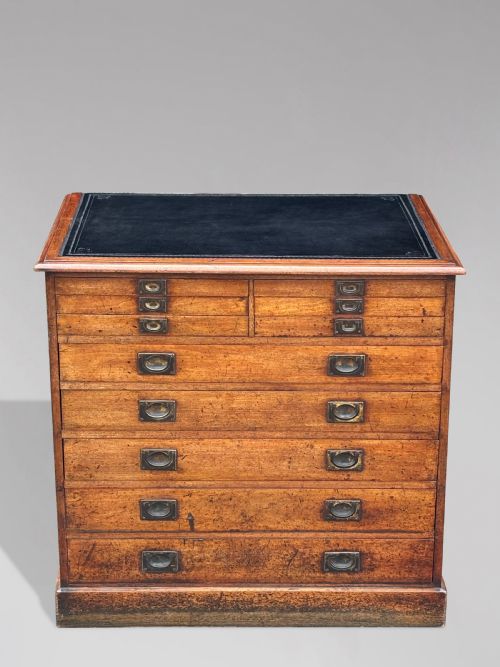
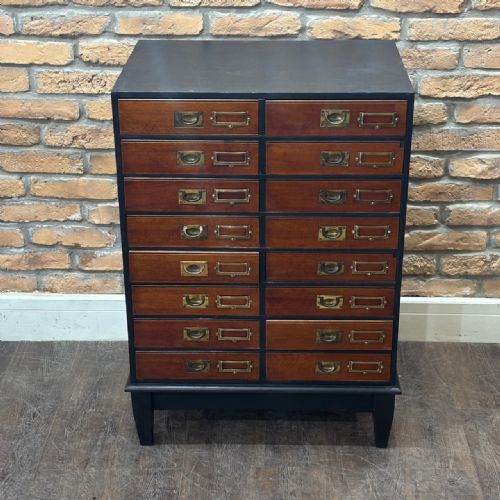
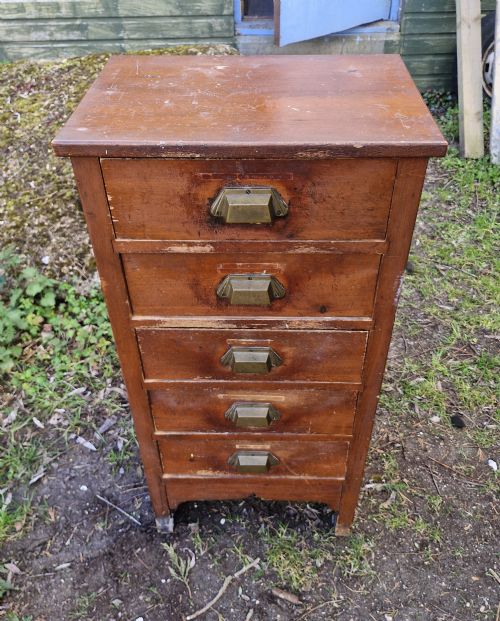


Brass Handle Filing Drawers
Brass handle filing drawers span centuries of practical storage, offering robust utility in timber with tactile metal fastenings.
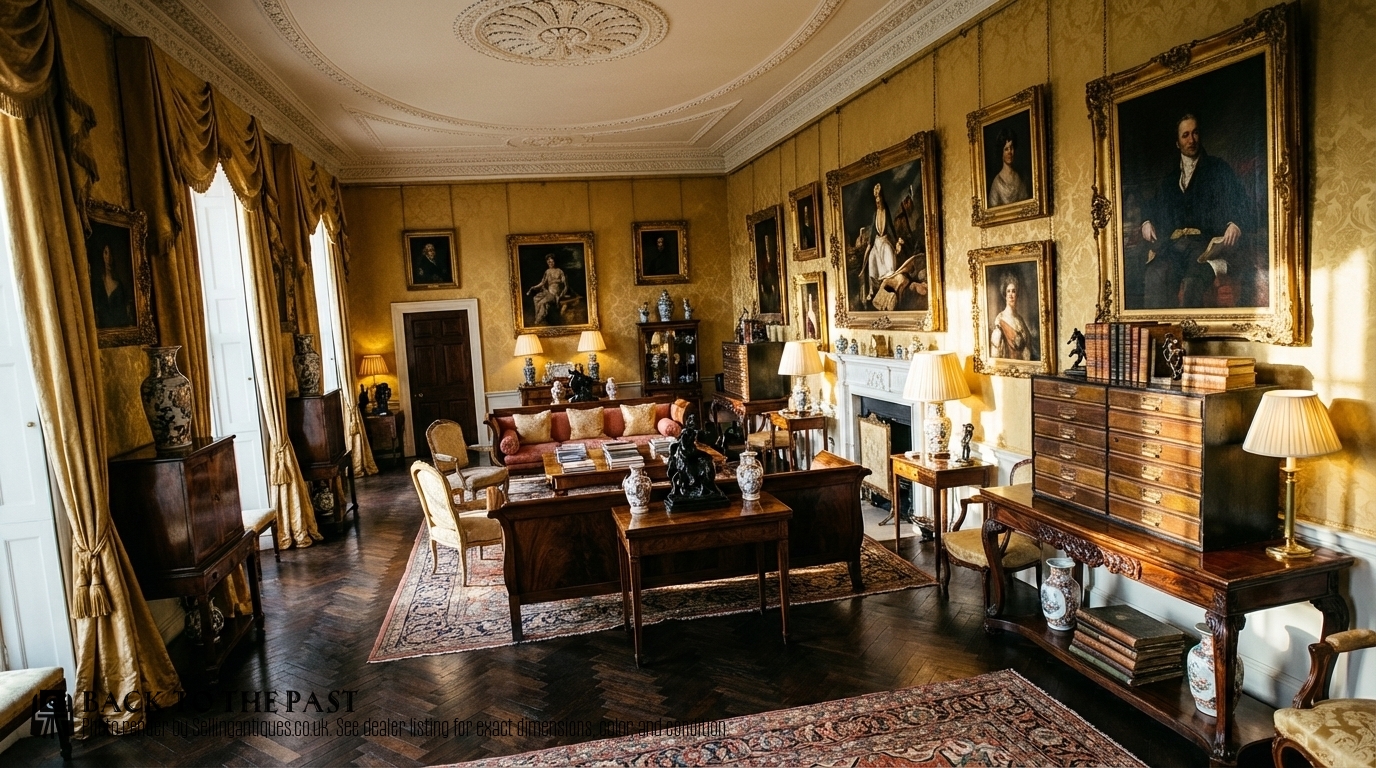
Brass Handle Filing Drawers
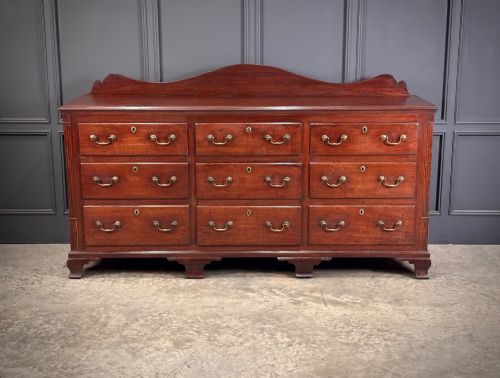
Brass handle filing drawers encompass multi-drawer banks, filing cabinets, and collectors' chests designed for organised storage. These pieces emerge from periods spanning the eighteenth, nineteenth, and twentieth centuries, taking forms such as campaign furniture, workshop banks, and office cabinets.
Mahogany, oak, walnut, and pine form the primary carcases, fitted with functional pulls and label holders. Buyers encounter Victorian, Edwardian, and industrial styles alongside Georgian designs, reflecting utilitarian and commercial origins.
How They Were Made
Cabinet makers utilised dense hardwoods like mahogany, walnut, and oak alongside pine and beech for carcase construction. Joinery methods prioritised durability for office and workshop environments, housing numerous small or shallow drawers.
Metal hardware played a central role, featuring brass shell pulls, scalloped handles, and integrated label holders secured directly to drawer fronts. Steel components and leather surfaces also appear across industrial and campaign iterations.
Listings feature pieces spanning the eighteenth, nineteenth, and twentieth centuries, incorporating oak, mahogany, walnut, pine, steel, and leather.
What Varies in Quality
Construction heft and timber selection separate utilitarian workshop pine units from finely figured mahogany and walnut collector cabinets. The integrity of the original brass handles, label holders, and shell pulls heavily influences the character of each piece.
Depth of drawers and the complexity of internal configurations, such as patent letter files or multi-tiered banks, dictate the sophistication of the design. Retaining surface patination and original fitted hardware distinguishes superior examples.
The Brass Handle Filing Drawers Glossary
- Shell pull
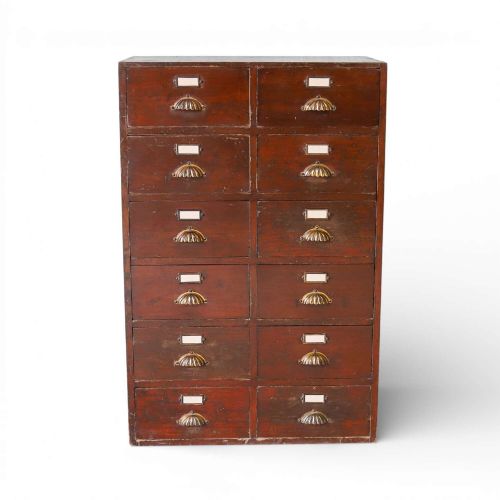
- A stamped or cast brass handle shaped like a semi-circular shell, commonly found on early filing furniture. These fixtures often incorporate slots for paper labels.
- Bank of drawers
- A multi-tiered set of numerous small compartments built for sorting documents, specimens, or retail stock. Such units typically sit on desks or form substantial floor-standing pedestals.
- Campaign cabinet
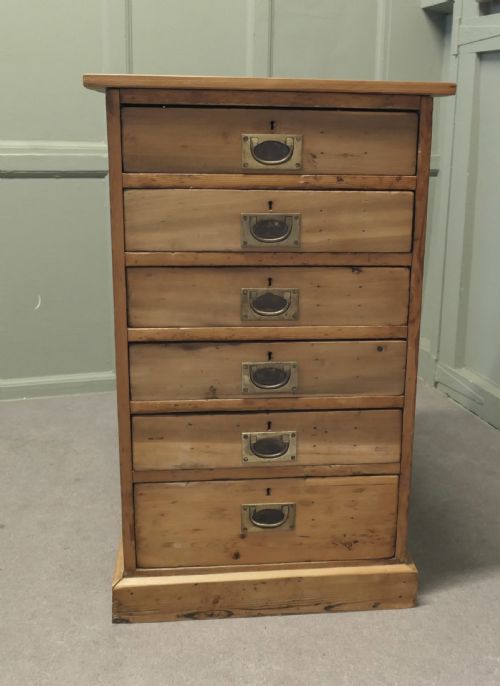
- Portable furniture constructed for travel, equipped with recessed brass handles and reinforced corners to withstand frequent movement. These pieces utilise sturdy timbers like mahogany or pitch pine.
- Haberdashery cabinet
- A glass-fronted or multi-drawer storage unit originally designed for retail drapery display. They provide shallow compartmentalised space suited to paperwork and small collections.
- Label holder
- A metal frame affixed to a drawer front to secure a small descriptive tag. They facilitate rapid identification of contents in busy office and workshop settings.
Brass Handle Filing Drawers: Frequently Asked Questions
How are these drawers best used today?
These cabinets serve well for organising stationery, craft supplies, and paperwork in modern home offices or studies. Their many compartments accommodate small items that demand tidy separation.
Larger banks function effectively as sideboards or console tables while providing concealed storage space. The durable timber carcases suit daily domestic environments.
What woods were commonly used?
Mahogany, walnut, oak, and pine dominate the construction of these filing pieces. Workshops selected hardwoods for durability and aesthetic presence in professional settings.
Secondary timbers often appear in internal drawer linings and backboards. Occasional pieces utilise beech, satin walnut, or painted wood finishes.
How do I identify a Victorian piece?
Victorian examples frequently display dense mahogany construction, heavy proportions, and functional campaign hardware. Dovetail joints and patinated timber surfaces indicate nineteenth-century manufacture.
Label holders and brass shell pulls from this era show traditional casting marks. Interior configurations often reflect contemporary office or banking requirements.
What is an industrial bank of drawers?
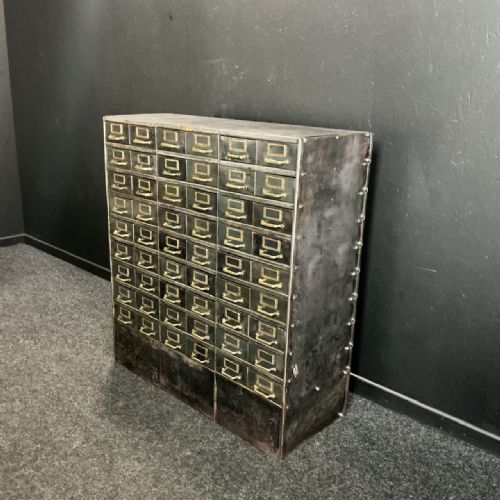
Industrial units originate from twentieth-century factories, workshops, and commercial premises where utility outweighed ornamentation. They prioritise numerous shallow drawers for sorting components or documents.
Robust construction and utilitarian brass or steel hardware define this grouping. Their functional origins lend them a distinct architectural aesthetic.