
Small Desktop Cabinet
A small desktop cabinet organises precious items or letters on a surface, offering neat proportions and practical storage.
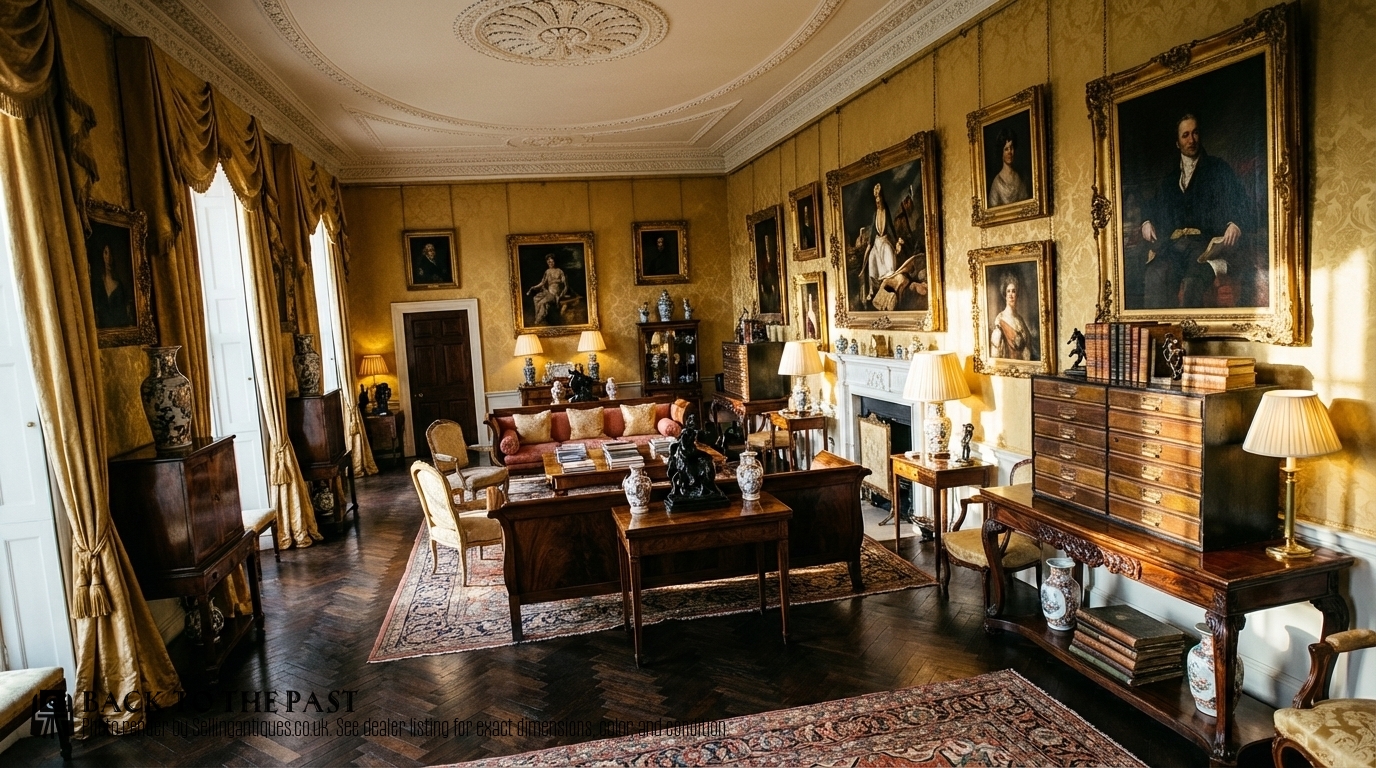
Small Desktop Cabinet
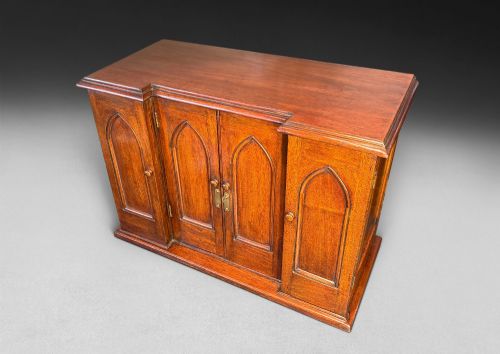
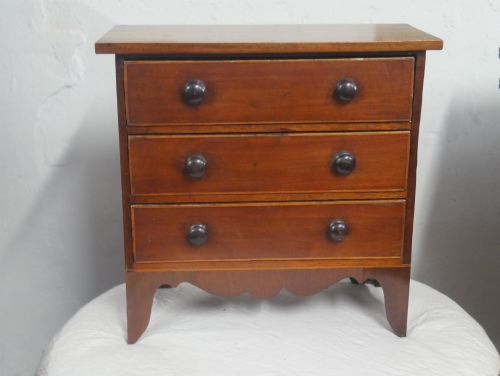
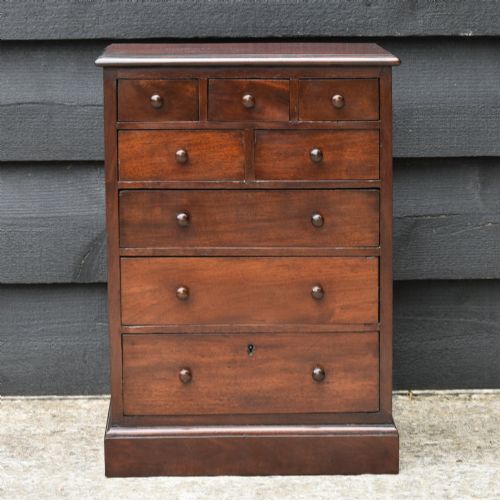
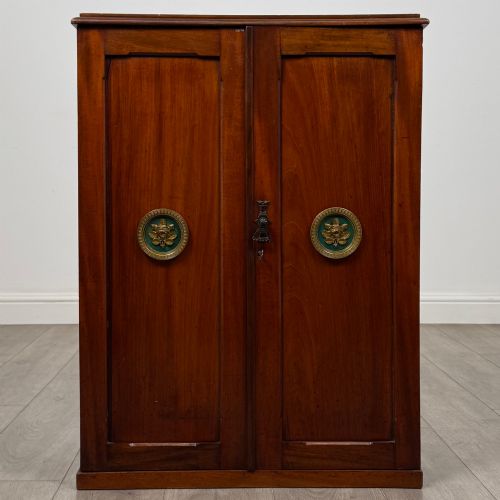
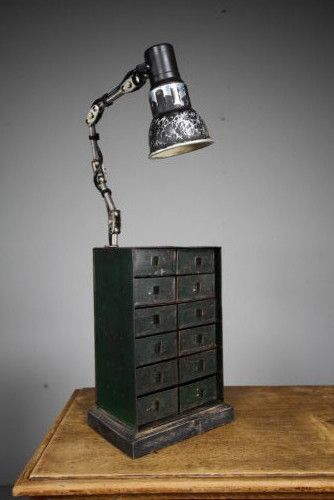
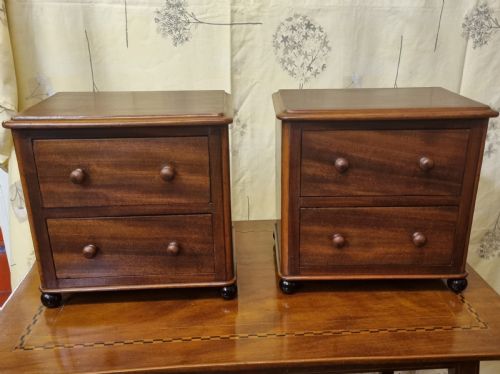
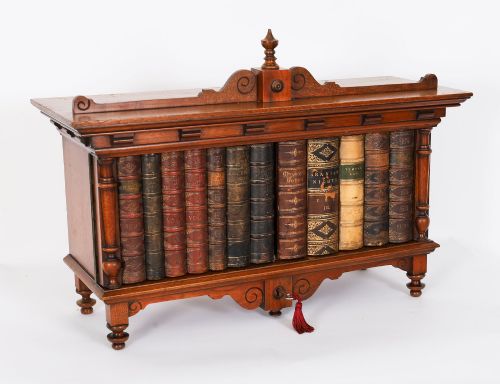
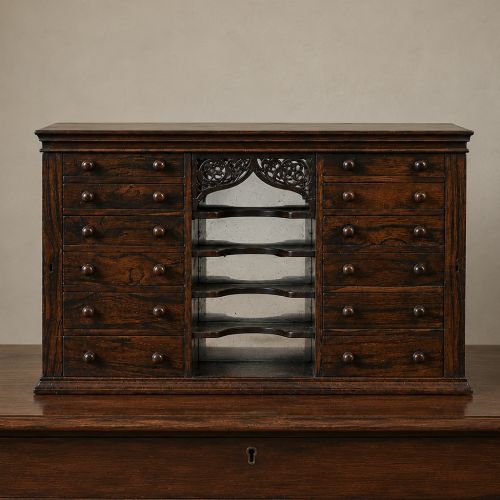
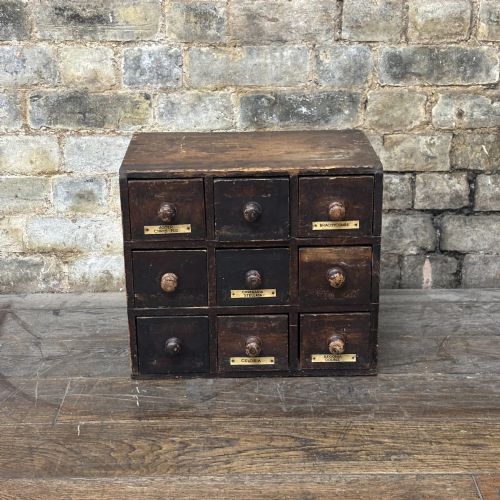
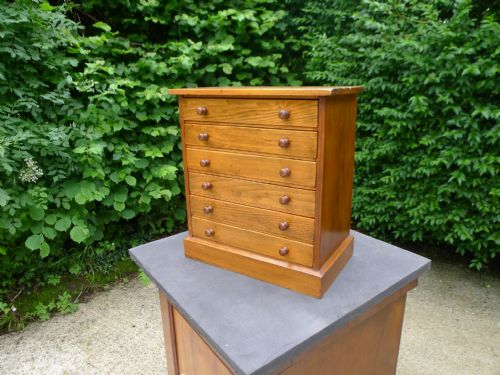
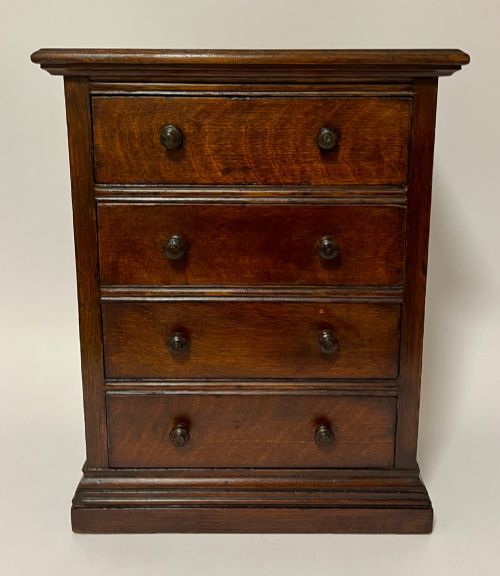
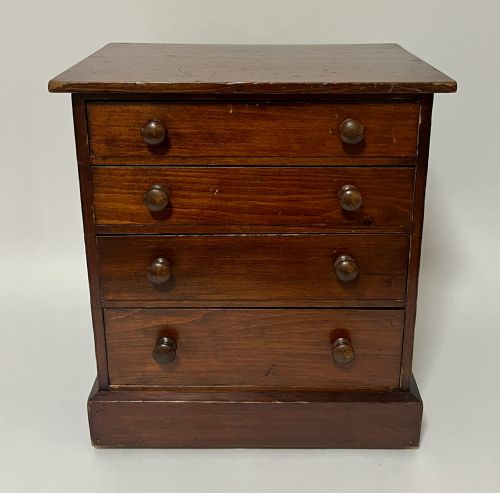
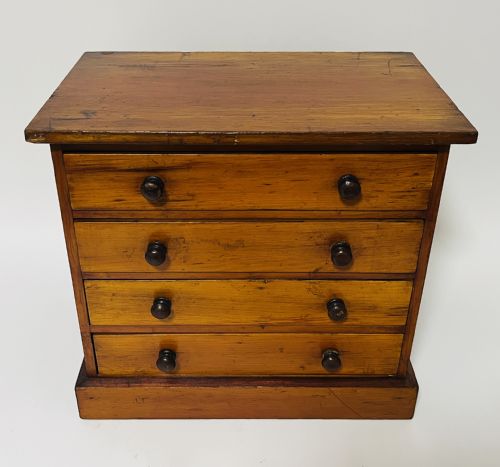
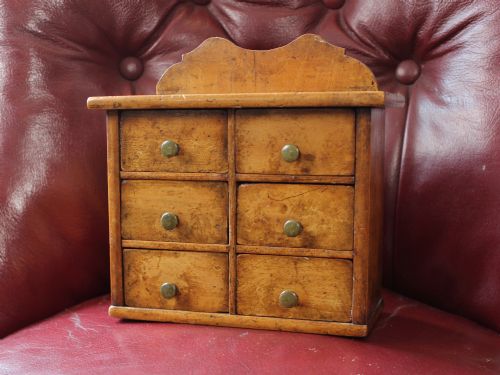
A small desktop cabinet encompasses various tabletop forms designed to sit on a surface rather than the floor. These items appear in formats such as miniature chests of drawers, collectors cabinets, specimen cases, and counter-top shop cabinets.
The pieces on this page originate from periods spanning the Georgian, Regency, Victorian, and Edwardian eras, extending into the early twentieth century. Makers produced them in styles including Gothic Revival, Arts and Crafts, and industrial designs.
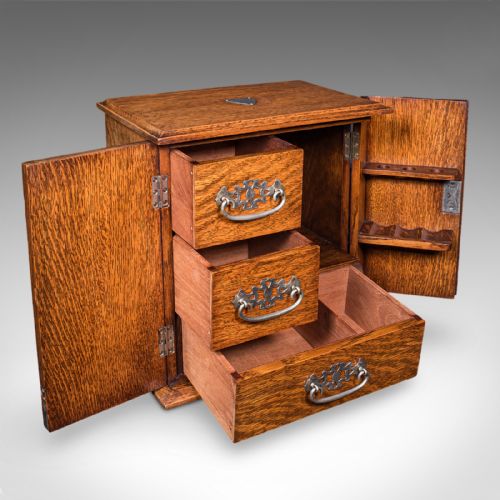
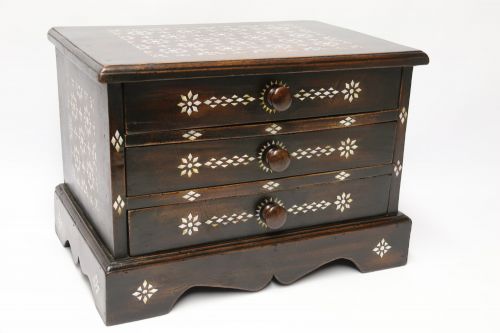
Miniature chests of drawers and apprentice pieces dominate the selection, often mirroring larger domestic furniture in compact dimensions. Other frequent examples include specialised holders for specimens, jewellery, spices, and smoking accessories.
Materials and Construction
Carpenters constructed these cabinets using hardwoods like mahogany, walnut, oak, and rosewood, alongside softer timbers such as pine and fruitwood. Many examples feature burr veneers, inlay, and ebonised mouldings to enhance the surface appearance.
Makers incorporated functional hardware including brass handles, hinges, locks with keys, and glass panels for display doors. Metal elements appear on specific utilitarian pieces, such as jewellers chests and seed drawers.
Listings feature oak, mahogany, walnut, and pine across Victorian, Edwardian, and Georgian periods.
Craftsmanship and Proportion
Quality rests in the precision of the joinery and the selection of timber figures, such as burr walnut or figured mahogany. Superior cabinets display carefully matched grains, tight dovetail joints on the drawers, and intact original hardware.
Proportion and scale distinguish finer miniature and apprentice pieces, which mimic full-sized furniture with exact architectural detail. Flimser constructions or replacements of original fittings place a piece lower down the scale.
The Small Desktop Cabinet Glossary
- Apprentice piece
- A small item of furniture made by a trainee to demonstrate skill to a guild. These objects typically replicate standard furniture forms on a reduced scale.
- Collectors cabinet
- A shallow-drawer chest designed for storing small specimens, coins, or insects. These units frequently feature lockable doors to protect contents.
- Wellington chest
- A tall, narrow chest of drawers secured by a hinged locking side flap. Miniature versions appear on tabletops with similar locking mechanisms.
- Specimen cabinet
- A housing unit built with multiple shallow internal trays for natural history samples. Oak and mahogany serve as common timbers for these scientific cases.
- Bowfront
- A curved convex front profile found on certain miniature chests. This shaping requires skilled woodworking to bend or carve the timber accurately.
Small Desktop Cabinet: Frequently Asked Questions
How were apprentice pieces used?
Apprentice pieces served as test projects where woodworkers demonstrated their mastery of joinery and proportion. Makers produced these miniature chests to prove their readiness for professional guild membership.
Over time, buyers repurposed these items as decorative tabletop storage for small household goods. Today, their careful scaling makes them sought-after examples of historical woodworking skill.
How do I care for wood cabinets?
Wood cabinets require stable room temperatures away from direct sunlight and heat sources to prevent timber cracking. Maintaining moderate humidity protects delicate veneers like burr walnut and mahogany from lifting.
Applying a traditional wax polish occasionally helps nourish the grain and preserve the surface sheen. Avoid harsh chemical cleaners that can strip historical finishes and patinas.
How can I tell the period?
Dating relies on observing construction methods, timber choices, and stylistic details aligned with documented eras. Georgian and Regency pieces often feature clean mahogany lines, whereas Victorian examples lean towards heavier burr walnut or carved oak.
Hardware styles, such as brass drop handles or inset locks, also offer clues to the manufacturing decade. Comparing the construction to dated examples in the listings helps narrow the origin.