
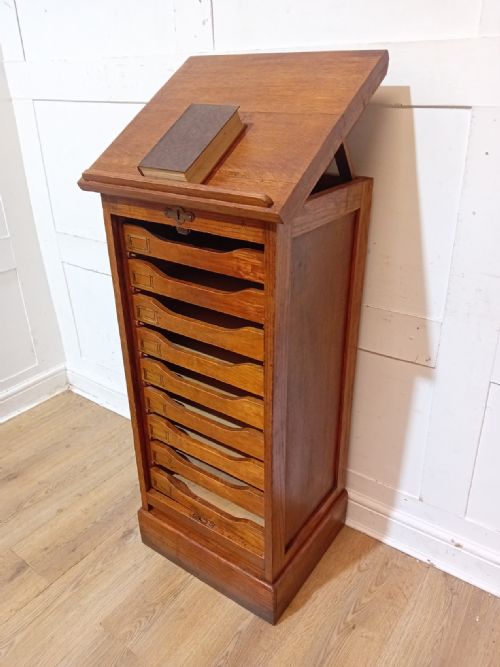
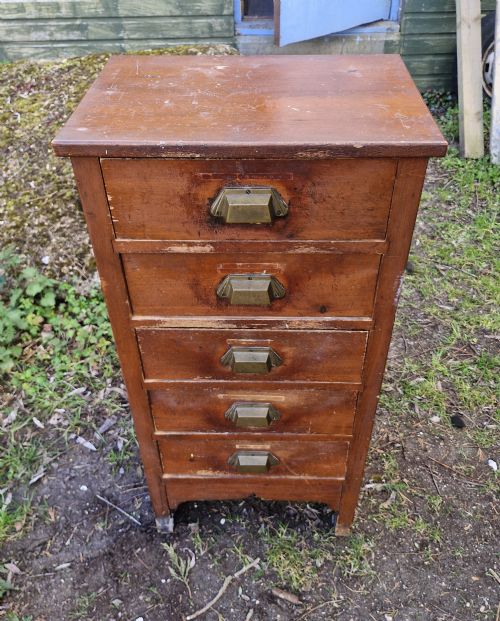


Edwardian Oak Filing Drawers
Edwardian oak filing drawers bring genuine period utility to a room, offering sturdy storage built from honest timber.
Edwardian Oak Filing Drawers
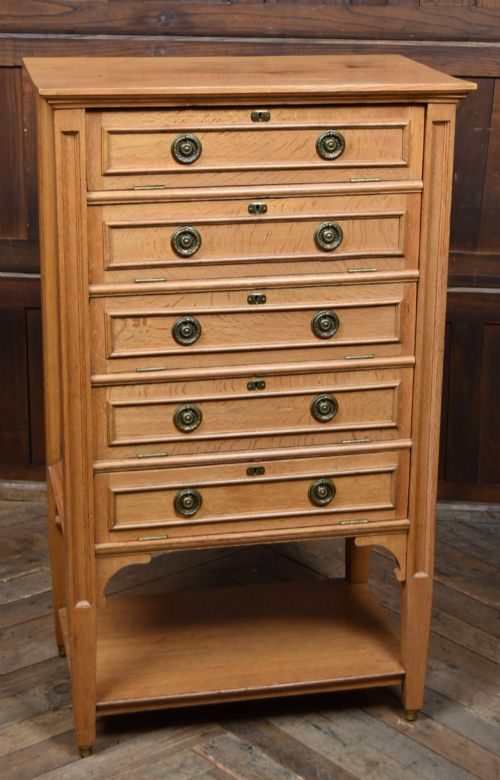
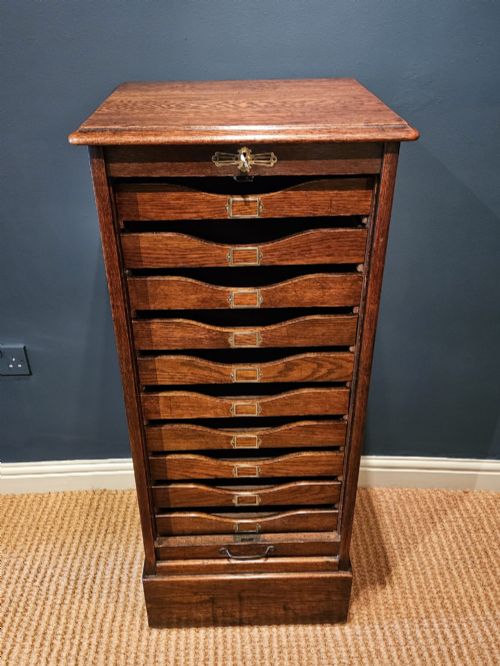
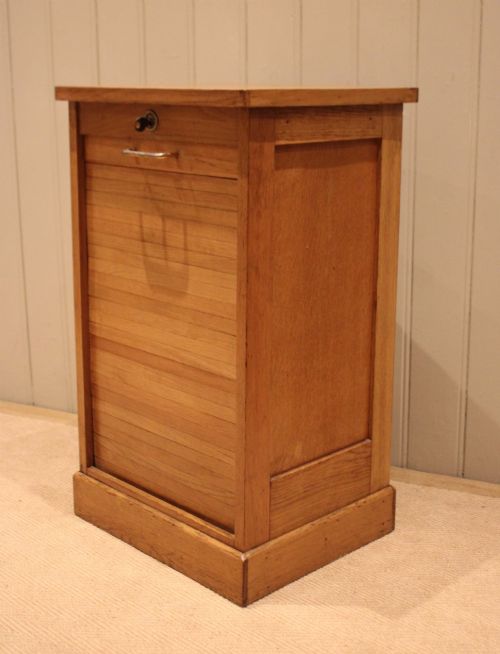
When you search for edwardian oak filing drawers, you encounter pieces designed for practical office use during the early twentieth century. These include vertical filing cabinets, banks of drawers, and tambour front designs built to house correspondence and documents.
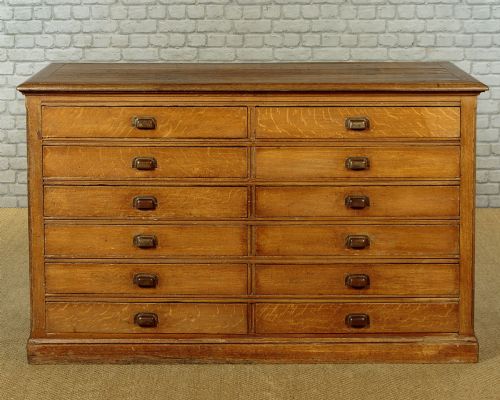
The version you are most likely to meet on this page is the standard oak filing cabinet or small-proportioned set of drawers originating from the Edwardian period or the surrounding decades of 1890 to 1930. They range from single-column units to larger banks with numerous small drawers.
Makers and inventors also surface within these forms, alongside simpler commercial office furniture. Their utilitarian origins mean they were built for heavy daily use in offices rather than purely for display.
How they were made
Construction relies heavily on solid oak and oak veneers, providing a durable carcase capable of withstanding the weight of heavy paper files. Secondary timbers such as pine occasionally appear in internal framing or drawer bottoms.
Hardware is functional and robust, utilising brass and steel for handles, label holders, and patent mechanism fittings. Tambour fronts employ narrow wooden slats tracked on canvas or flexible backings to slide smoothly around a curved path.
Some cabinets still contain tiny rusted alphabetical paper clips tucked into forgotten corners from their days in bustling Edwardian offices.
What varies in quality
Quality separates along the lines of mechanism complexity and scale, such as smooth-running tambour doors versus simple pull drawers. Patent locking systems and specialised filing mechanisms elevate a piece above standard utility furniture.
The integrity of the original brass handles and label holders dictates the visual completeness of the piece. Timber selection and the presence of makers' names also distinguish standard commercial boxes from superior workshop examples.
Amberg·Shannon
The Edwardian Oak Filing Drawers Glossary
- Tambour front
- A flexible door made of narrow wood strips glued to canvas, allowing it to slide around a track to conceal drawers. This mechanism was popular in office furniture to save space.
- Bank of drawers
- A multiple-drawer unit designed for sorting and storing documents or small items. These structures prioritize storage capacity over decorative flourishes.
- Wellington design
- A cabinet style featuring a side-locking bar that secures all the drawers simultaneously. It offers security for confidential papers.
- Haberdashery cabinet
- A set of shallow drawers originally used in retail for storing small goods. They share a similar modular aesthetic with filing drawers.
Edwardian Oak Filing Drawers: Frequently Asked Questions
What are edwardian oak filing drawers?
Edwardian oak filing drawers are sturdy timber storage units originally built for offices and businesses around the turn of the twentieth century. They are designed to organise correspondence, letters, and documents efficiently.
These pieces range from single vertical cabinets with tambour doors to large multi-drawer banks and specialised patent letter files constructed primarily from solid oak.
How were tambour front cabinets used?
Tambour front cabinets were used to keep office paperwork secure and out of sight while saving desk or floor space. The slatted wooden door slid smoothly around a track to open or close the compartment.
In period offices, these units housed active client files and important letters, combining the function of a traditional desk tidy with a secure cabinet.
How do I date an oak filing cabinet?
Dating an oak filing cabinet involves examining the construction methods, hardware materials, and any patent marks or maker plaques. Pieces from the Edwardian era typically feature quarter-sawn oak, brass label holders, and period locking mechanisms.
Later pieces extending into the 1920s and 1930s often adopt a more industrial utility aesthetic with simplified steel hardware and fewer decorative mouldings.
How do I care for antique oak furniture?
Caring for antique oak involves keeping the timber away from direct heat sources and sudden humidity changes to prevent splitting. Regular dusting with a dry cloth and occasional application of traditional beeswax maintains the finish.
Avoid modern silicone polishes, as they build up over time and dull the warm natural sheen of the aged oak surface.