
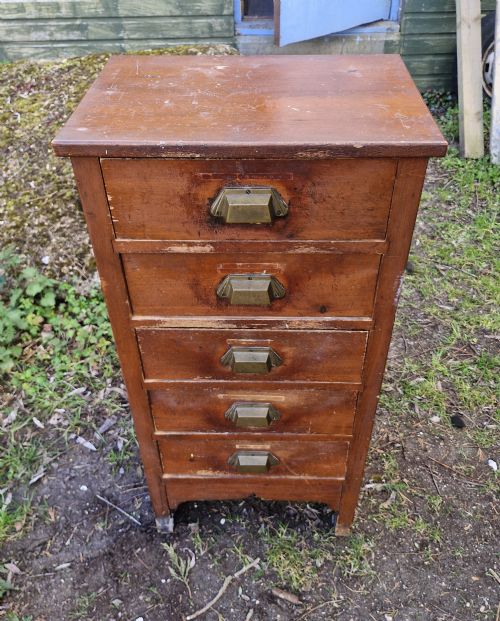

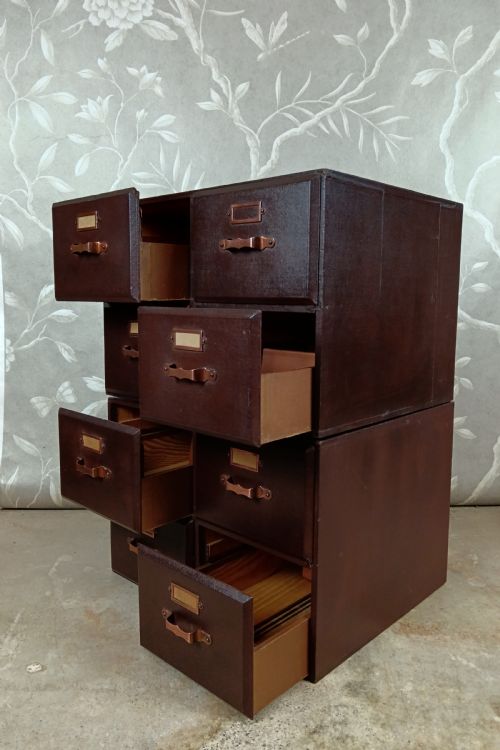


Vintage Index Cabinet
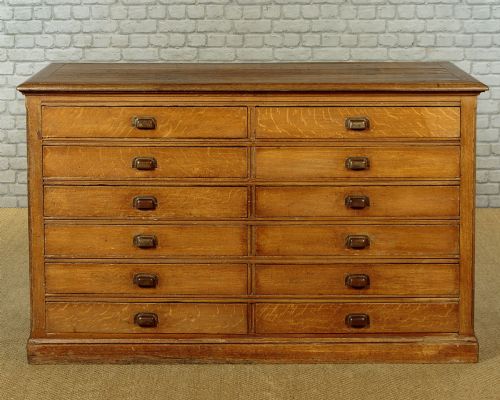
A vintage index cabinet brings orderly charm to a room, offering rows of compact drawers designed for keeping small papers and records.
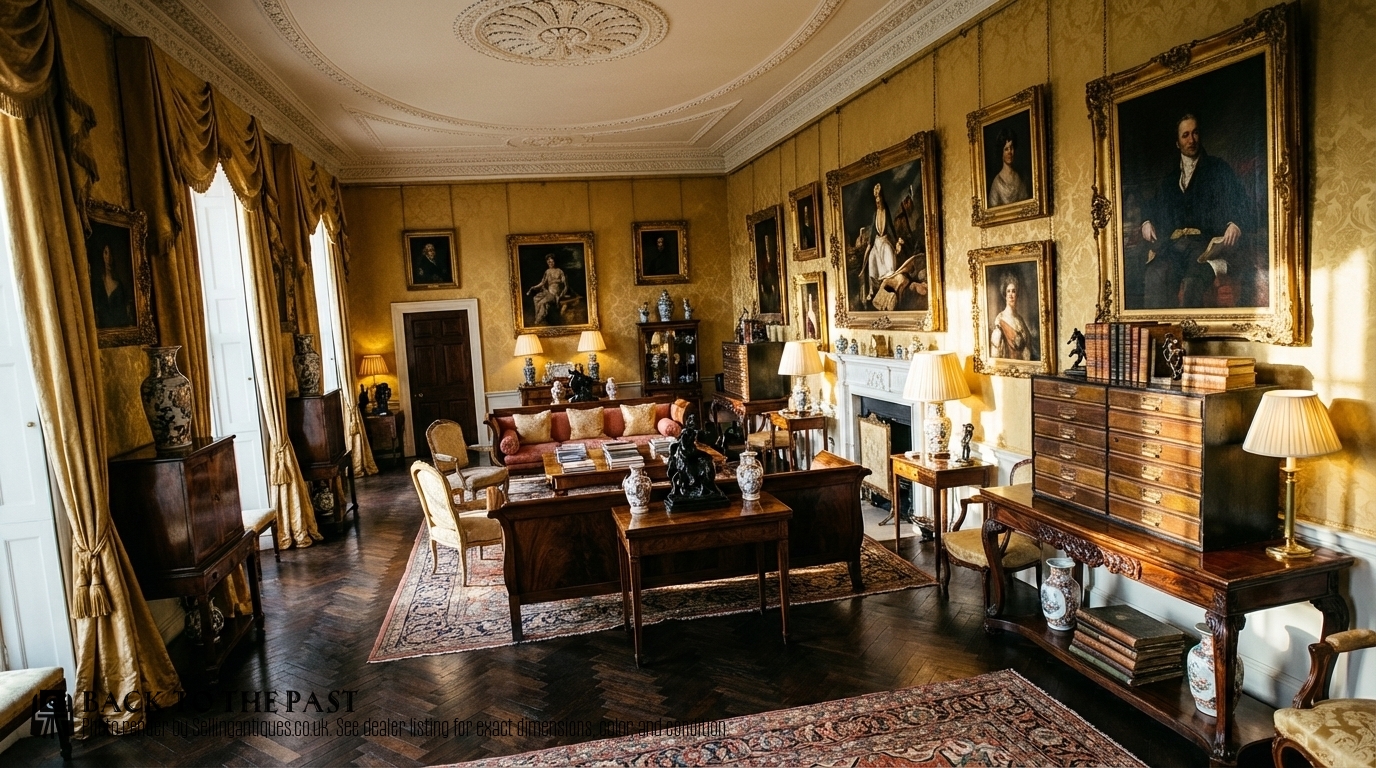
Vintage Index Cabinet
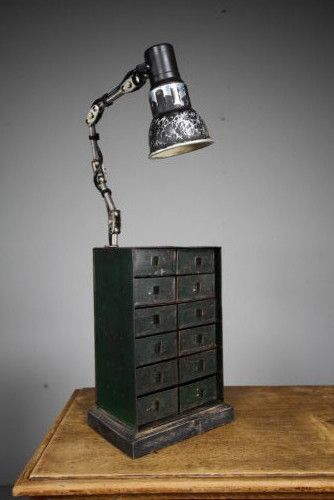
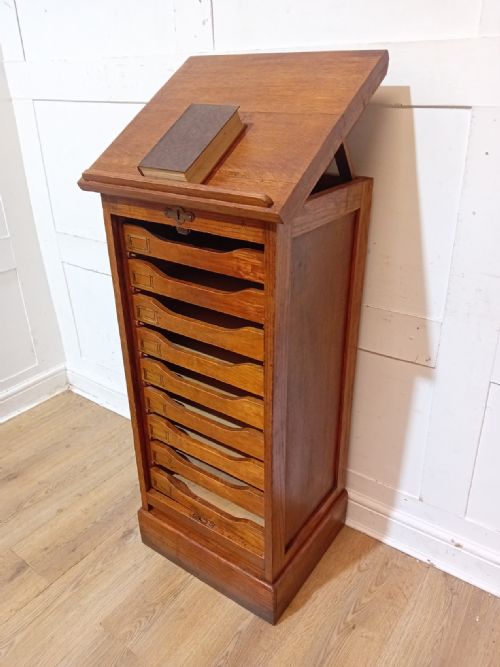
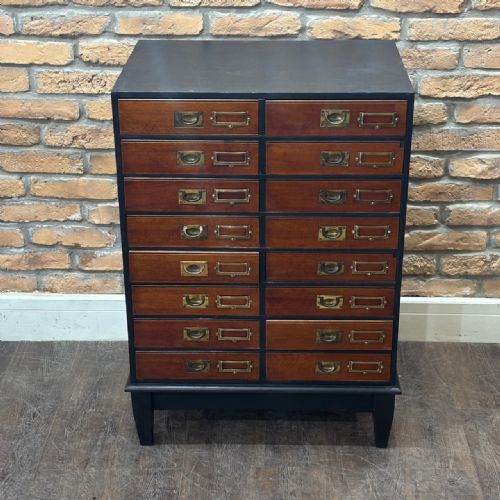
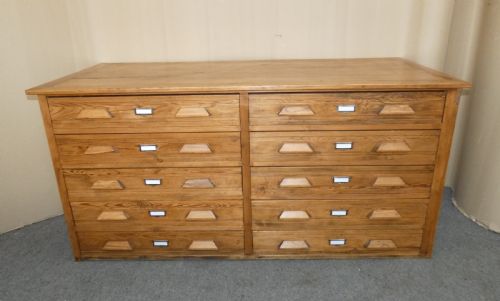
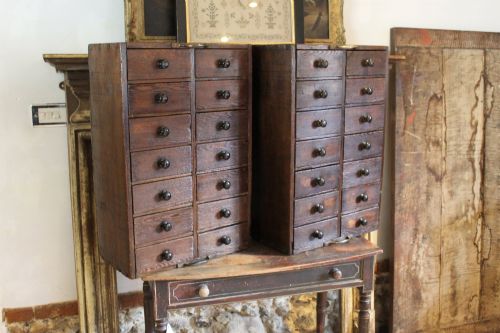
A vintage index cabinet is essentially a bank of small drawers or filing compartments designed to organise cards, letters, and small items. When searching for a vintage index cabinet, buyers encounter pieces originating from the late nineteenth century through to the nineteen thirties. These range from compact desktop filing drawers to large shop fittings and industrial banks.
The pieces on this page span Victorian, Edwardian, and industrial styles, reflecting offices, libraries, and workshops of the past. Oak and mahogany are common woods, alongside painted pine, metal, and steel variations.
Office filing cabinets, collectors cabinets, and haberdashers drawers form the primary selections available to collectors today. Each format serves a specific storage purpose, from card indexes to specialist jewellers and watchmakers chests.
Markers of distinction and build
Superior examples display original brass hardware, maker signatures, and patent mechanisms that remain fully operational. The choice of timber grain, particularly in figured mahogany or quarter-sawn oak, elevates the presence of a piece.
The scale and complexity of the drawer configuration dictate the distinction of an item. Large multi-drawer shop fittings and patent letter files demonstrate higher craftsmanship than standard office utility chests.
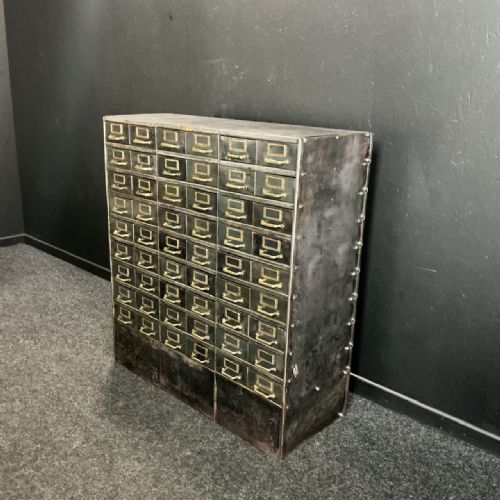
A fifty-drawer shop fitting brings an impressive army of tiny compartments to organise life down to the last paperclip.
D Napier And Sons·Brady·Amberg·Shannon
The Vintage Index Cabinet Glossary
- Cartonniere
- A decorative piece of furniture containing several pull-out boxes or carton drawers for sorting papers. French examples often combine walnut and leather.
- Tambour front
- A sliding door constructed from narrow strips of wood glued to a flexible canvas backing. This mechanism allows access to internal filing drawers within a confined space.
- Shell pull
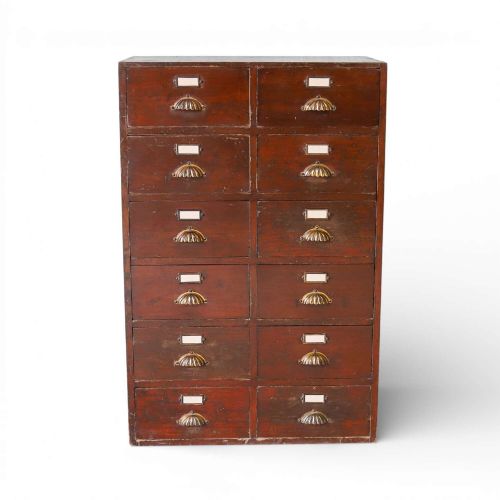
- A pressed metal or brass handle shaped like a half-shell, frequently combined with a slot for a paper label. These are typical on early filing cabinets and bank drawers.
- Patent letter file
- A specialised filing system incorporating spring-loaded clips or index mechanisms designed by inventors to secure correspondence. Amberg is a notable patent system seen in this category.
Vintage Index Cabinet: Frequently Asked Questions
What were index cabinets used for?
Index cabinets served as functional storage systems in offices, libraries, and commercial shops. Businesses utilised them to organise customer records, index cards, and correspondence.
Specialist trades also adopted smaller drawer chests for jewellers, watchmakers, and artists to store components and materials safely.
How do I date a cabinet?
Dating relies on observing construction methods, timber choices, and hardware styles across different periods. Victorian and Edwardian pieces often feature solid oak or mahogany with turned or brass pulls.
Later industrial examples from the nineteen twenties and thirties introduce steel elements, tambour doors, and simpler utility framing.
Are all these cabinets for office use?
While many pieces originated in commercial offices and libraries, others served entirely different trades. Haberdashery counters, jewellers chests, and watchmakers banks are common variations.
Collectors cabinets and artist drawer sets also appear frequently within this grouping, showing diverse historic applications.
How should I care for wooden drawers?
Maintaining wooden index cabinets requires simple dusting with a soft cloth and avoiding excessive moisture. Natural beeswax helps nourish older oak, mahogany, and walnut surfaces.
Keeping drawers clean and avoiding overfilling protects the original wooden runners and interior joints from unnecessary wear.