

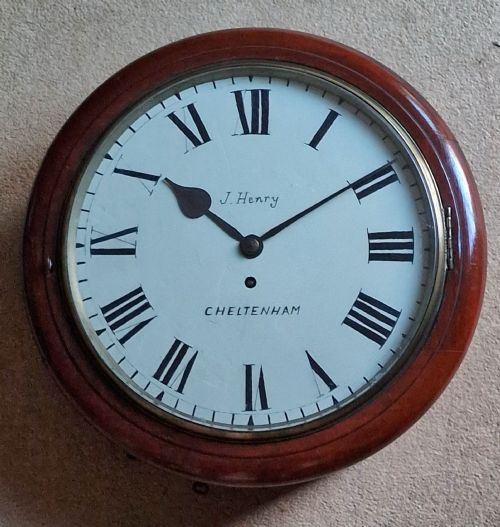
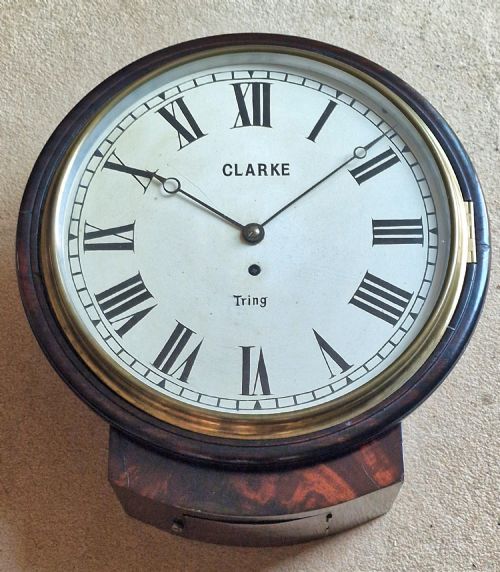
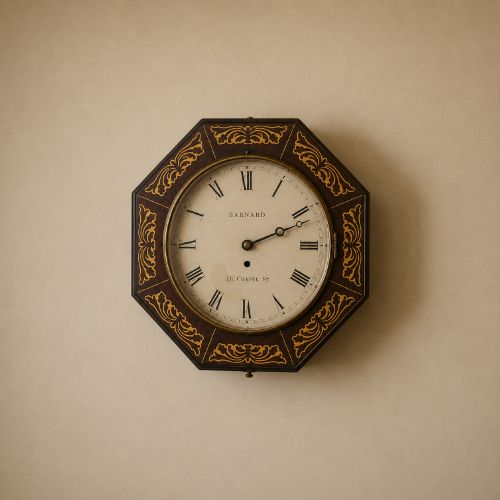
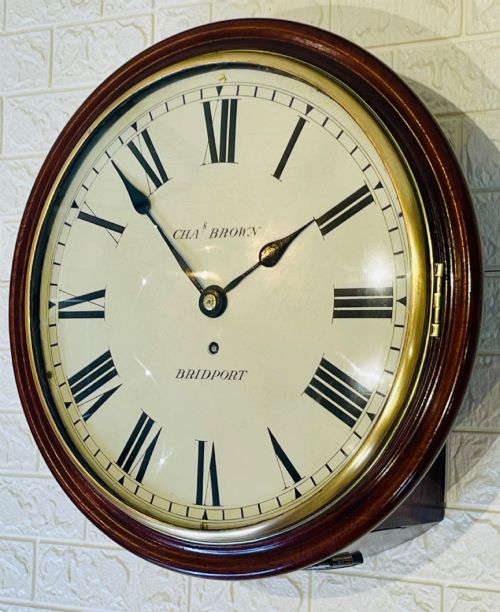
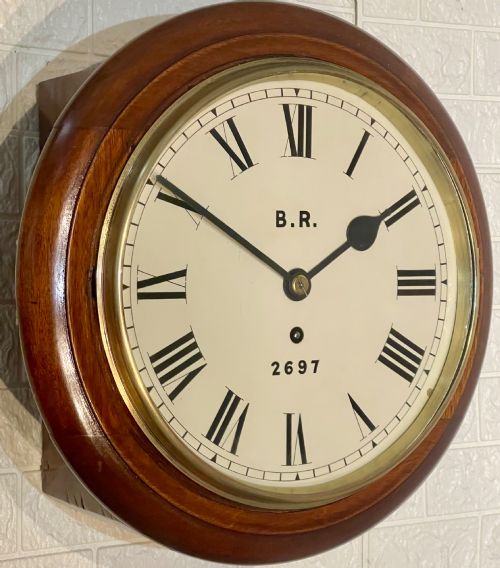
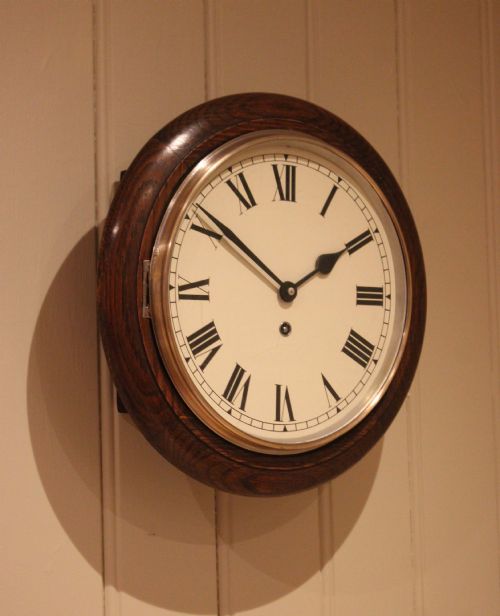
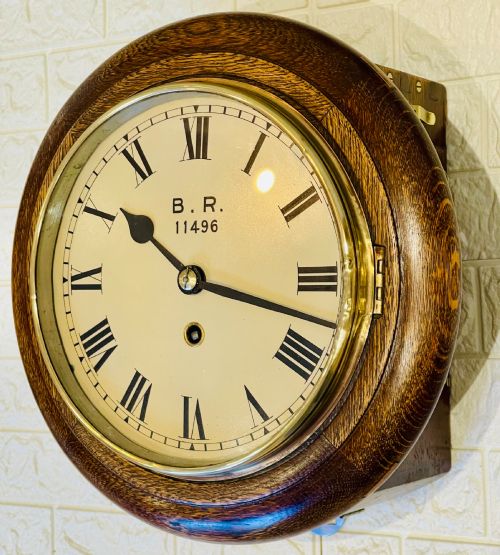
Brass Fusee Wall Clock
A brass fusee wall clock brings precision timekeeping and architectural presence into a room through its heavy cast brass bezel and reliable chain-driven movement.
Brass Fusee Wall Clock
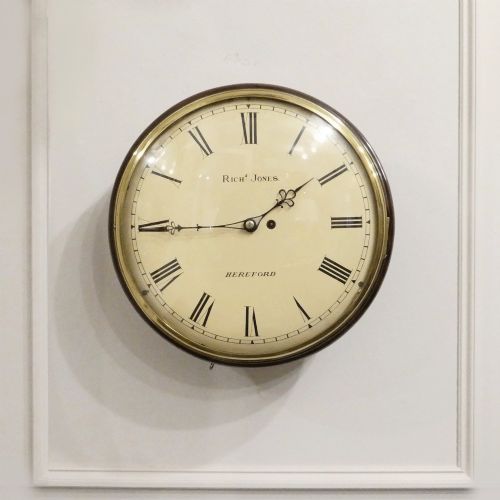
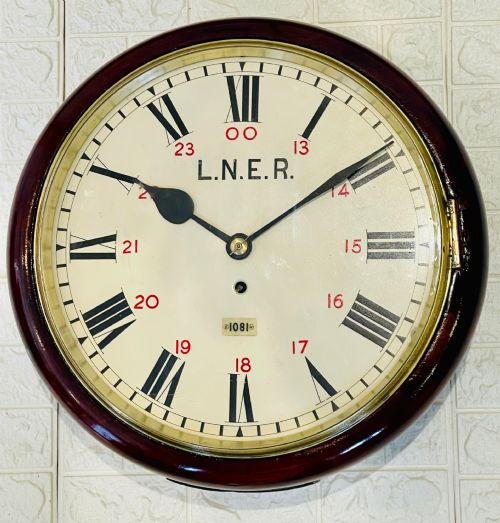
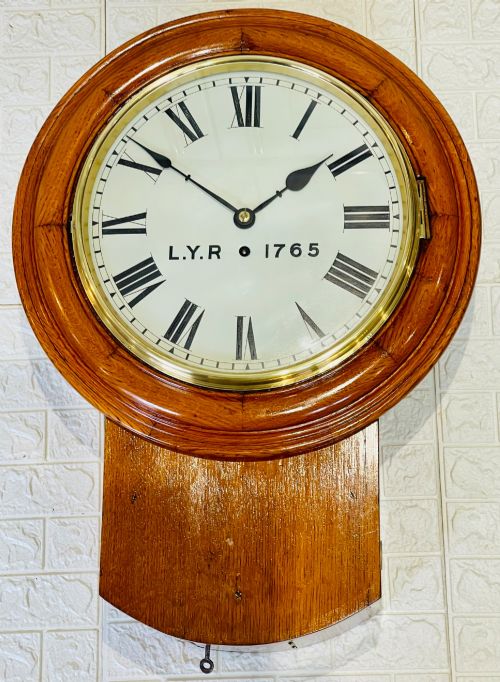
A brass fusee wall clock is a timepiece designed to be hung on a wall, most commonly encountered in round dial formats originating from the Georgian, Regency, and Victorian periods. These pieces include robust railway timepieces commissioned by networks such as the Great Western Railway and the London, Midland and Scottish Railway, as well as domestic and provincial examples.
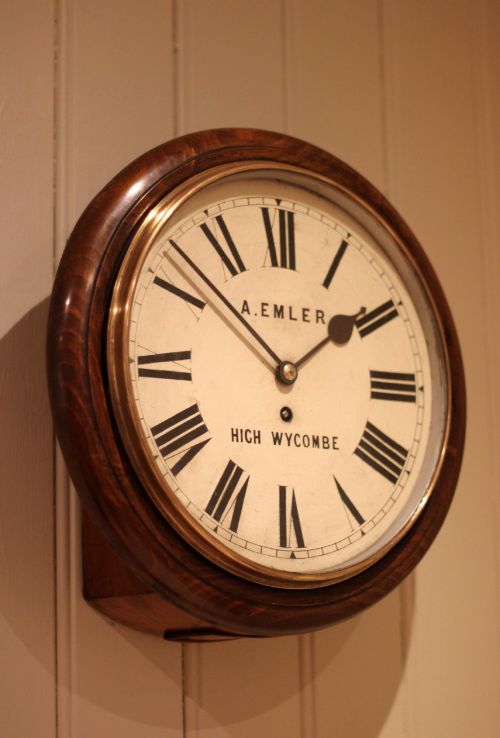
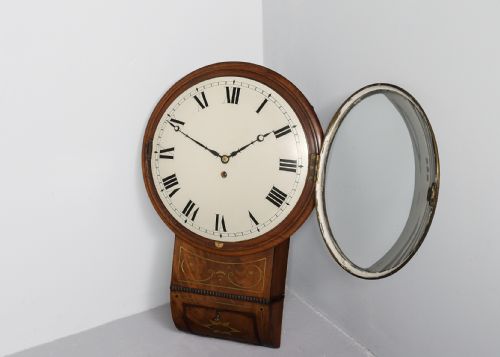
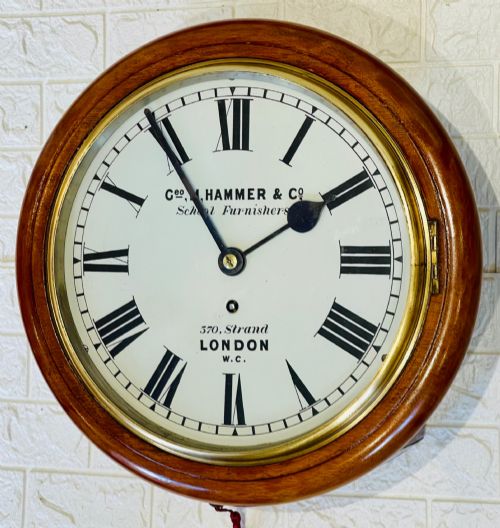
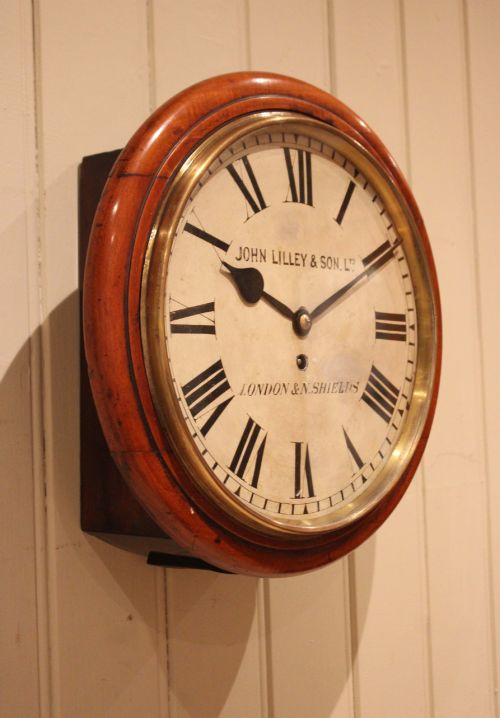
The selection ranges from simple oak or mahogany dial clocks to drop-dial variants and brass-inlaid rosewood cases. Provincial makers signed the timber or metal faces, placing their names alongside towns like Taunton, Bridgwater, and Hereford.
Railway and postal authorities utilised these clocks for operational punctuality, resulting in sturdy utilitarian housings alongside more decorative domestic iterations featuring mother-of-pearl or brass inlay.
Materials and construction
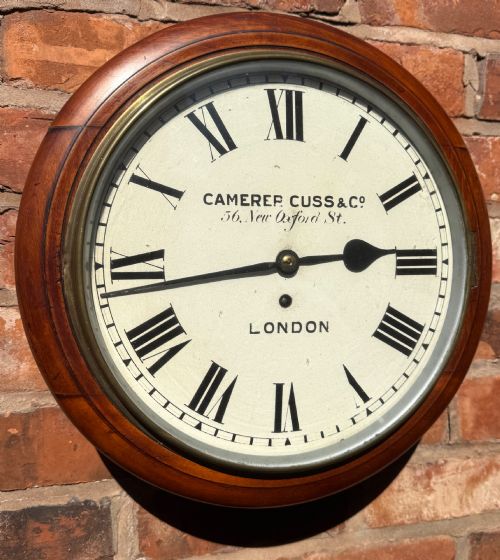
Cabinetmakers housed these movements in sturdy timbers including mahogany, oak, beech, and rosewood, frequently shaping the housings into round or drop-dial silhouettes. Glass protected the painted metal or wooden dials, held securely within heavy cast brass bezels that hinged for daily winding.
The defining mechanical feature is the fusee, a conical pulley that equalises the pull of the mainspring as it unwinds to maintain consistent tension on the gear train. Chains or cords connected the spring barrel to this grooved cone, driving the escapement with steady force.
The inventory spans the Georgian, Regency, and Victorian periods, utilising mahogany, oak, brass, and painted metal.
Assessing quality and execution
Quality rests in the crispness of the timber cabinetry and the precision of the brass work within the movement. Finer examples display carefully figured mahogany or rosewood veneers, intricate brass inlay, and robust cast bezels with clean hinge fittings.
Maker reputation alters the standing of individual pieces, with signed dials from notable London or provincial watchmakers commanding greater attention than unsigned municipal or railway issue clocks. The legibility of the painted dial numerals and the original patination of the timber case further distinguish higher-tier examples.
Richard Jones of Hereford·Camerer Cuss and Co London·Henry Harris of Monytusloyn·Thomas Lindey of Bristol·Parkinson and Bouts
The Brass Fusee Wall Clock Glossary
- Fusee
- A conical pulley used in mechanical clocks to equalise the decreasing power of the mainspring as it runs down. This device ensures uniform force is delivered to the movement throughout the running period.
- Bezel
- The metal rim that holds the glass protecting the clock dial. On these wall pieces, the brass bezel is typically hinged to allow access for winding and hand adjustment.
- Drop Dial
- A clock case featuring a circular dial section above an extended lower box body, which often houses a pendulum window. This configuration was particularly popular during the Regency and Victorian eras.
- Dial
- The face of the clock upon which the hours and minutes are marked. These surfaces are executed in painted metal, enamel, or wood.
- Verge
- An early type of escapement mechanism controlling the release of the wheel train. It works in conjunction with a balance or pendulum to regulate time.
Brass Fusee Wall Clock: Frequently Asked Questions
How do I wind a fusee wall clock?
You insert the winding key into the aperture on the dial and turn it gently until resistance indicates the spring is fully tensioned.
Care must be taken not to overwind the mechanism, ensuring the chain remains correctly seated on the conical fusee.
Where were these clocks originally used?
Many were manufactured for railway platforms, offices, and administrative buildings operated by companies such as the Great Western Railway. Others served in provincial homes, coaching inns, and institutional buildings across Britain.
What timber cases are most common?
Mahogany and oak appear frequently across domestic and railway examples from the nineteenth century. Rosewood and beech are also represented in specific regional and decorative pieces.
How do I distinguish a railway clock?
Railway clocks often bear company initials such as GWR, LNER, or LMS painted directly onto the dial or stamped into the wooden case. They were built for durability in high-traffic transportation hubs.