


Antique Welsh Coffer
An antique welsh coffer is a robust domestic storage chest built by country makers, prized for deep patination and honest regional character.

Antique Welsh Coffer
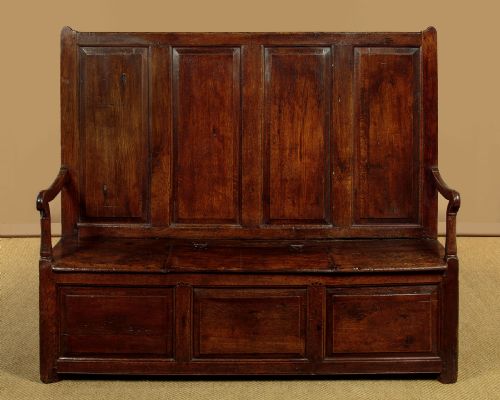
Regional variants like the Carmarthen coffer or Gower peninsula examples appear frequently, alongside box settles and grain arks. Oak dominates the selection, though elm, pine, and fruitwood inlay surface regularly among country vernacular forms.
How they were made
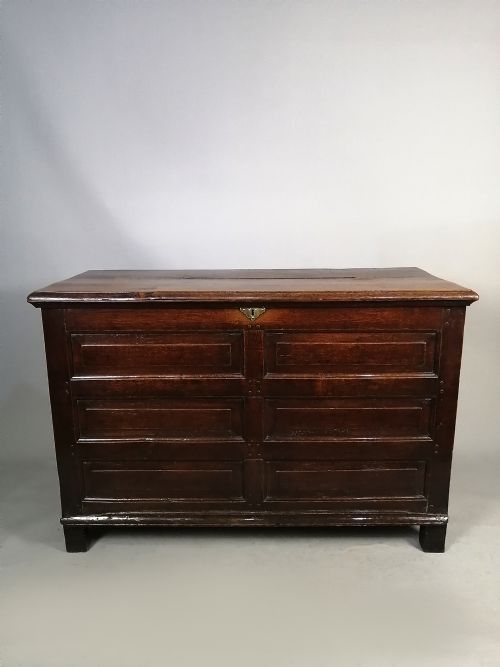
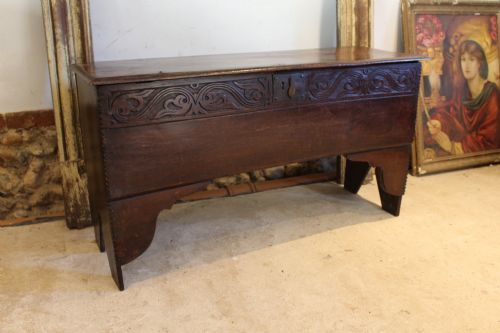
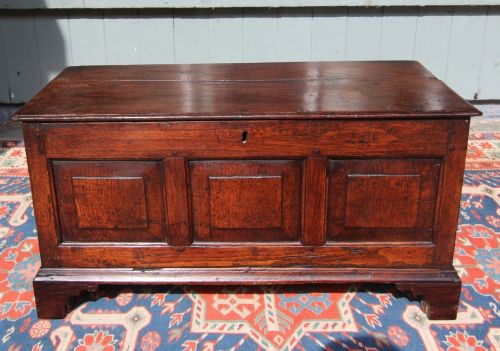
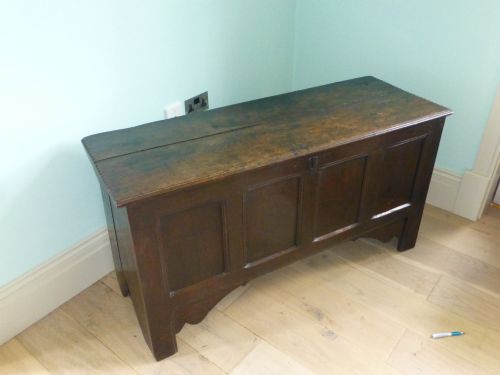
Local joiners constructed these chests predominantly from solid native oak, utilising pegged frame and panel techniques, though early examples rely on simple six plank board construction. Wrought iron hinges, brass escutcheons, and turned feet complete the functional assembly of the body.
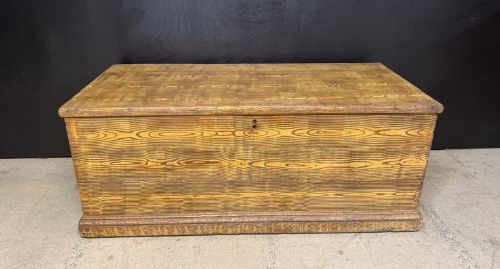
Surfaces frequently display evidence of hand planing and deep patination accumulated through centuries of domestic use, occasionally accented with carved fronts, painted finishes, or subtle fruitwood inlay details.
Some miniature coffers were built by apprentices proving their joinery skills before joining the guild.
What varies in quality
Quality rests in the integrity of the timber selection, the crispness of regional hand carving, and the survival of original board bottoms and feet. Simpler board chests contrast with sophisticated joined framework demonstrating superior vernacular joinery.
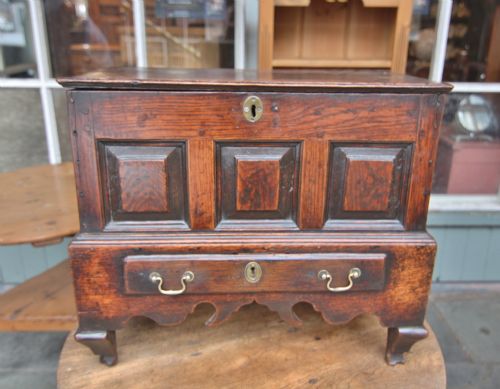
Proportion and scale dictate desirability, particularly in miniature coffer bach forms where delicate turning and balanced dimensions separate provincial utility work from master regional output.
The Antique Welsh Coffer Glossary
- Coffer bach
- A small Welsh miniature chest used traditionally for holding valuables, letters, or family records. These diminutive boxes often sit on turned feet and mirror the construction of larger blanket chests.
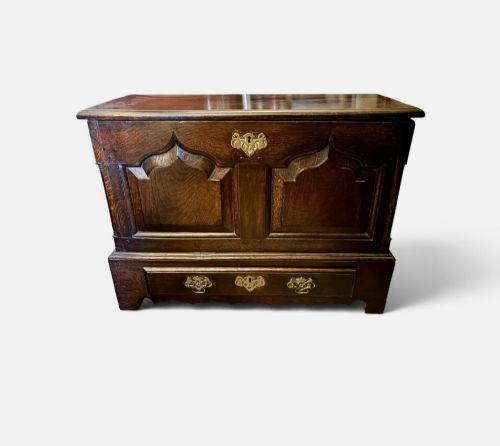
- Mule chest
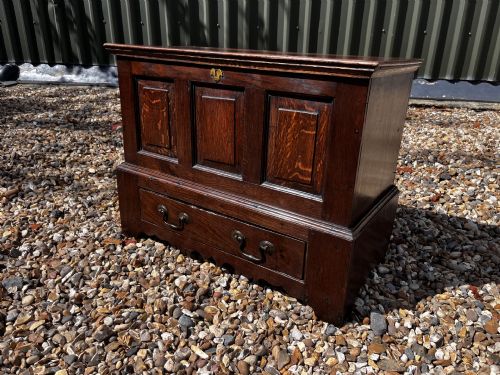
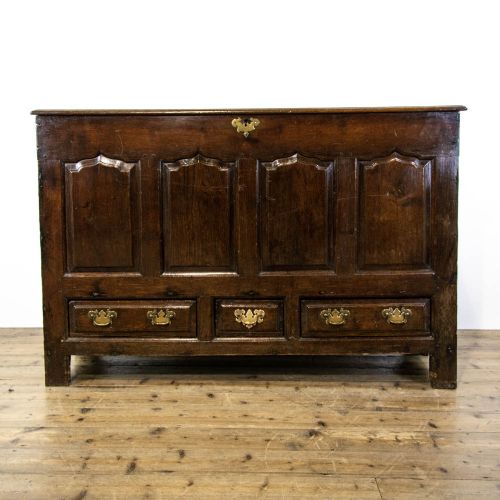
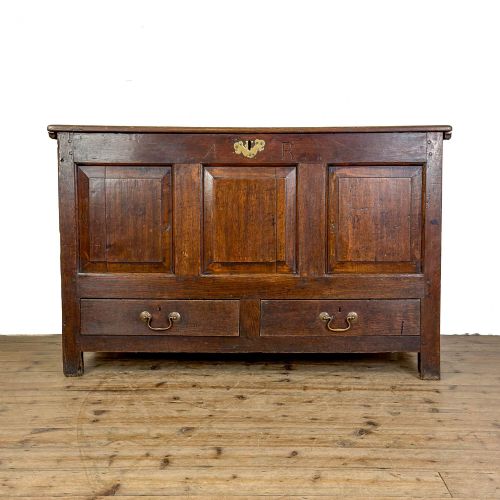
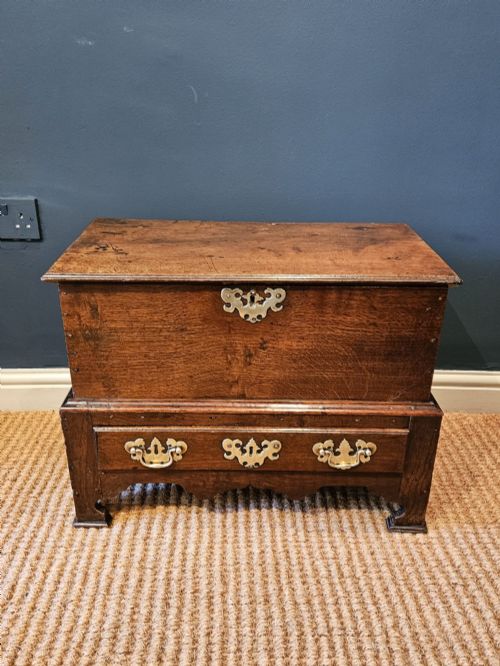
- A storage chest featuring one or more drawers built into the base beneath the primary compartment. This form bridges the traditional coffer and the modern chest of drawers.
- Box settle
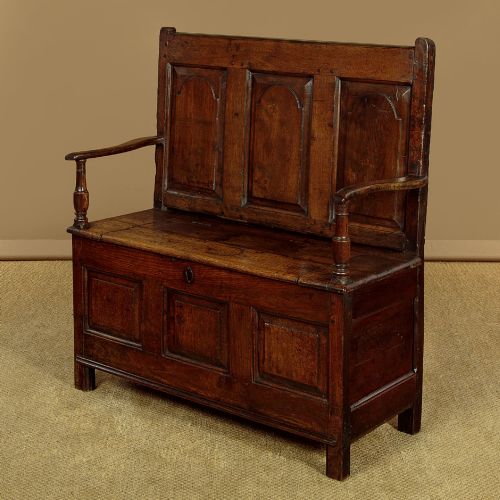
- A high backed wooden bench incorporating a hidden storage compartment beneath the seat. They served practical seating and storage functions in rural kitchens.
- Vernacular
- Architecture and furniture built by local craftsmen using traditional regional methods and native materials rather than academic architectural styles. These pieces reflect the specific customs of areas like Snowdonia or South Wales.
- Grain ark
- A specialised agricultural storage chest designed for keeping grain dry and secure within rural farmhouses. They display heavy timber construction suited to robust utility.
Antique Welsh Coffer: Frequently Asked Questions
What is a coffer bach?
A coffer bach is a miniature Welsh chest built to hold small personal valuables, documents, or textiles. These scaled down pieces mirror the joinery and panel design of full sized domestic coffers.
They appear frequently in eighteenth century vernacular workshops across Wales, often resting on small turned feet or bracket supports.
How do I date an oak coffer?
Dating relies on observing construction methods, timber prep marks, and regional hardware styles. Six plank board construction typically points to seventeenth century or earlier origins, while panelled frames and added base drawers suggest eighteenth century Georgian vernacular work.
Hand tool marks, such as pit saw striations and adze work on interior boards, provide further clues to the period of manufacture.
Where were these chests made?
These chests were produced by local country joiners and vernacular craftsmen operating throughout rural Welsh counties and coastal regions. Specific styles connect pieces to areas like Carmarthenshire, Snowdonia, and the Gower Peninsula.
Makers utilised native hardwoods available locally, predominantly selecting slow grown British oak alongside regional elm and pine.
What is a mule chest?
A mule chest is a hybrid storage piece that combines a traditional top opening coffer compartment with one or more lower pull out drawers. This layout evolved to offer easier access to stored linens without requiring users to lift items from the deep upper well.
They became popular additions to farmhouse interiors during the Georgian period.