


Dark Oak Storage Box
A dark oak storage box offers enduring utility, housing everything from documents to linens in dense, characterful timber spanning multiple centuries.
Dark Oak Storage Box
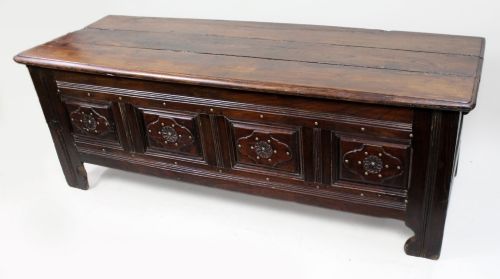
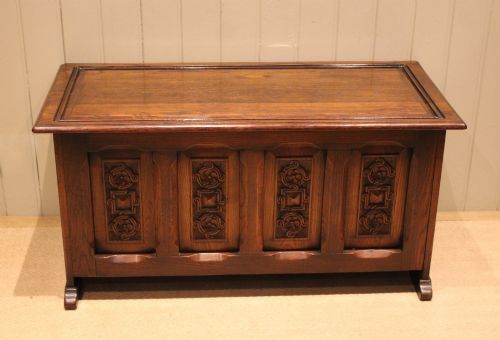
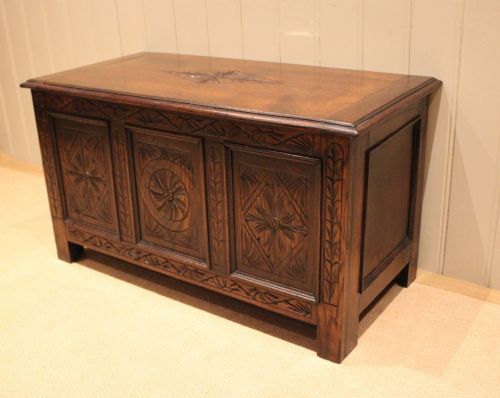
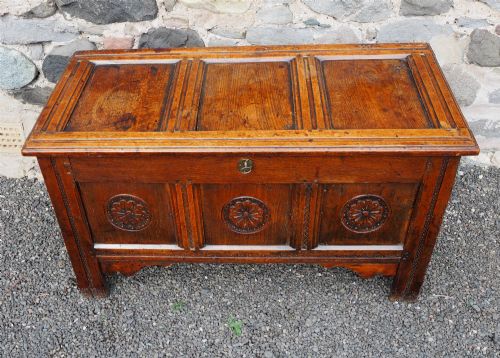
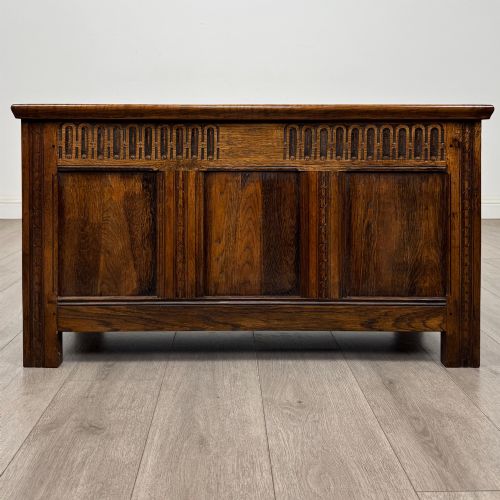
A dark oak storage box encompasses robust utilitarian forms built to hold household goods, textiles, and valuables across generations. When searching for a dark oak storage box, buyers typically encounter sturdy coffers, blanket chests, and panelled boxes dating from the sixteenth century through the Georgian period and into later revivals.
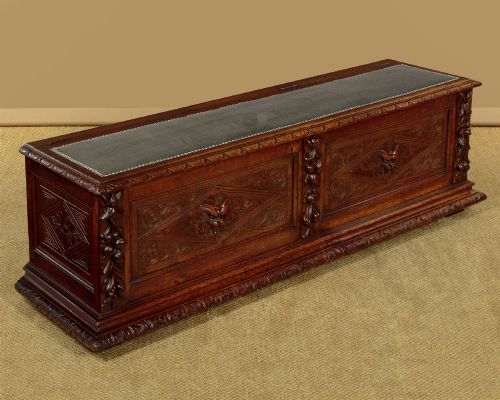
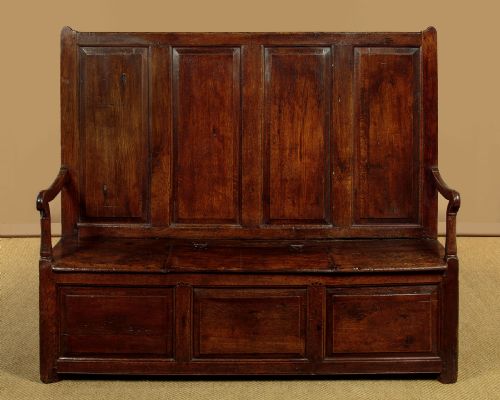
The selection ranges from small wall-hanging candle boxes and document cases to substantial country house coffers and high-back box settles. Regional variations, such as Welsh vernacular examples and Flemish imports, sit alongside later twentieth-century interpretations.
These vessels served essential domestic functions in domestic interiors, evolving from simple receptacles for linen and dry goods into decorative furnishings. The surviving examples demonstrate how utilitarian timber boxes remained central to household organisation over hundreds of years.
What varies in quality
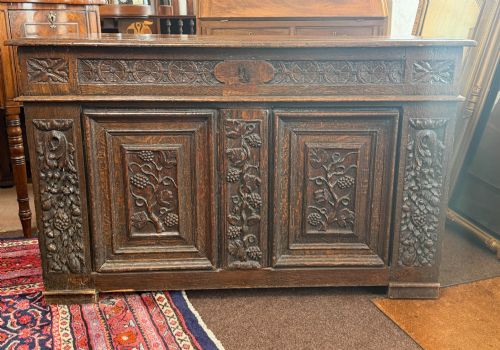
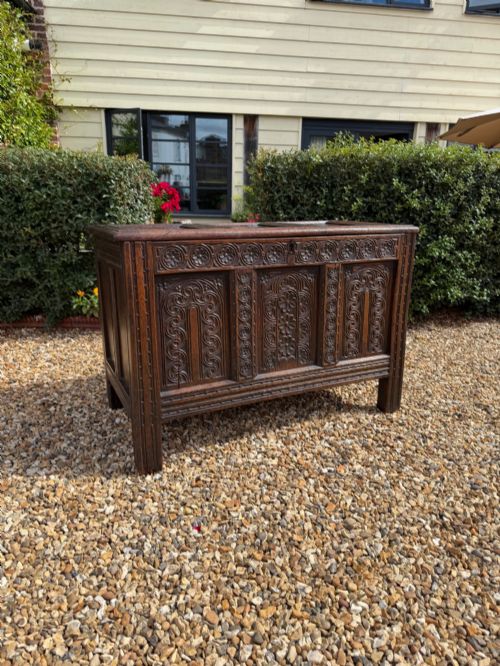
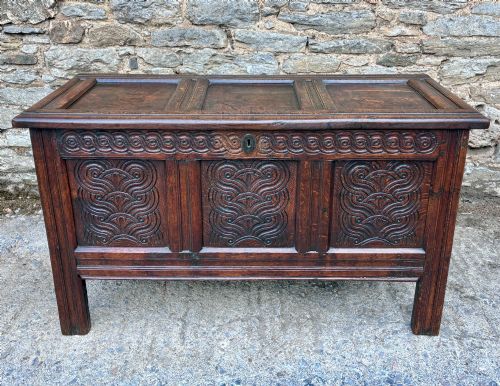
The degree of hand carving and the crispness of surviving detail distinguish simpler utilitarian boxes from high-status commissions. Finer items exhibit precise joinery, well-balanced proportions, and integrated timber panels that remain stable within their original frames.
Surface preservation significantly influences the character of a piece, particularly where original patination, ironwork, and fixings survive intact. Alterations, replaced hinges, or heavily sanded surfaces reduce the historical integrity of the construction.
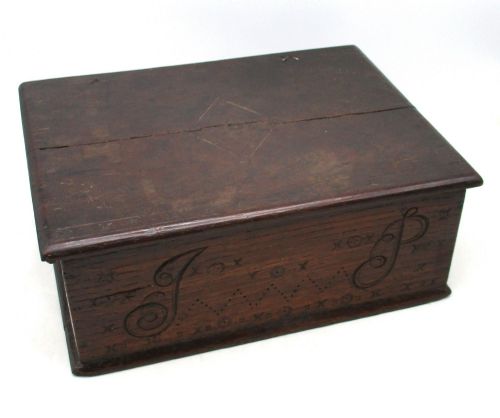
Some seventeenth-century boxes still retain the original owners' initials carved clumsily into the lid, perhaps to settle household ownership disputes.
The Dark Oak Storage Box Glossary
- Coffer
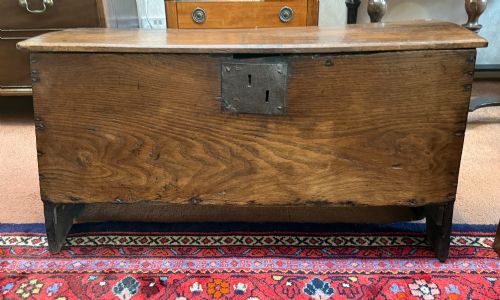
- A large wooden chest used for storing valuables, linen, or documents, usually fitted with a hinged lid. Early versions often feature heavy panel construction and robust iron lockplates.
- Box settle
- A dual-purpose seat featuring a high back and a box base with a lift-up lid for storage. These items combined seating with practical containment in domestic halls.
- Marquetry
- The art of applying decorative veneer pieces in various woods to form geometric or pictorial patterns. This technique appears on select seventeenth-century and later storage pieces.
- Vernacular
- Objects made by regional craftsmen using local traditions and materials rather than following formal metropolitan styles. Welsh vernacular pieces often display distinct local carving characteristics.
- Panelling
- A method of constructing box walls using framed wooden inserts that prevent the timber from warping. Panel joints absorb seasonal movement in unheated historic interiors.
Dark Oak Storage Box: Frequently Asked Questions
What were dark oak storage boxes used for?
These boxes primarily stored textiles, household linen, documents, and dry foodstuffs in homes before fitted closets became common. Their robust construction and lockable lids also made them suitable for safeguarding valuables and family heirlooms.
In larger formats, such as coffers and box settles, they doubled as benches or tables within the main living quarters. Their versatility meant they moved easily between rooms as household needs changed.
How do I date an antique oak coffer?
Dating relies on examining the construction methods, tool marks, and style of the carving. Sixteenth and seventeenth-century pieces typically feature hand-rived oak boards, pegged mortise and tenon joints, and wrought iron hardware.
Later revival pieces from the nineteenth and twentieth centuries often display mechanical saw marks, standardised screws, and looser timber movement. Comparing the joinery style against known period examples helps clarify the age of the item.
How do I care for antique oak furniture?
Maintain these pieces by keeping them away from direct heat sources and sudden humidity changes, which cause oak to split. Regular applications of beeswax nourish the timber and preserve the historic surface finish.
Avoid using modern silicone polishes, as they build up residue and attract dust. Gentle cleaning with a soft, dry cloth protects the natural patina developed over centuries.