



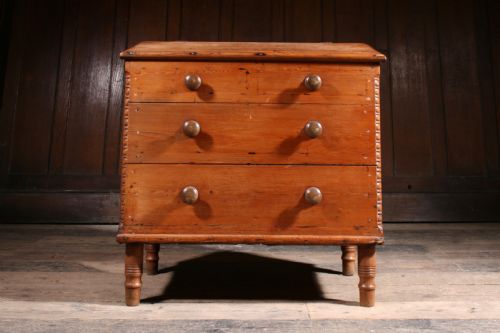
Georgian Carved Coffer
A georgian carved coffer offers enduring storage and heavy timber construction, grounding a room with centuries of domestic history.
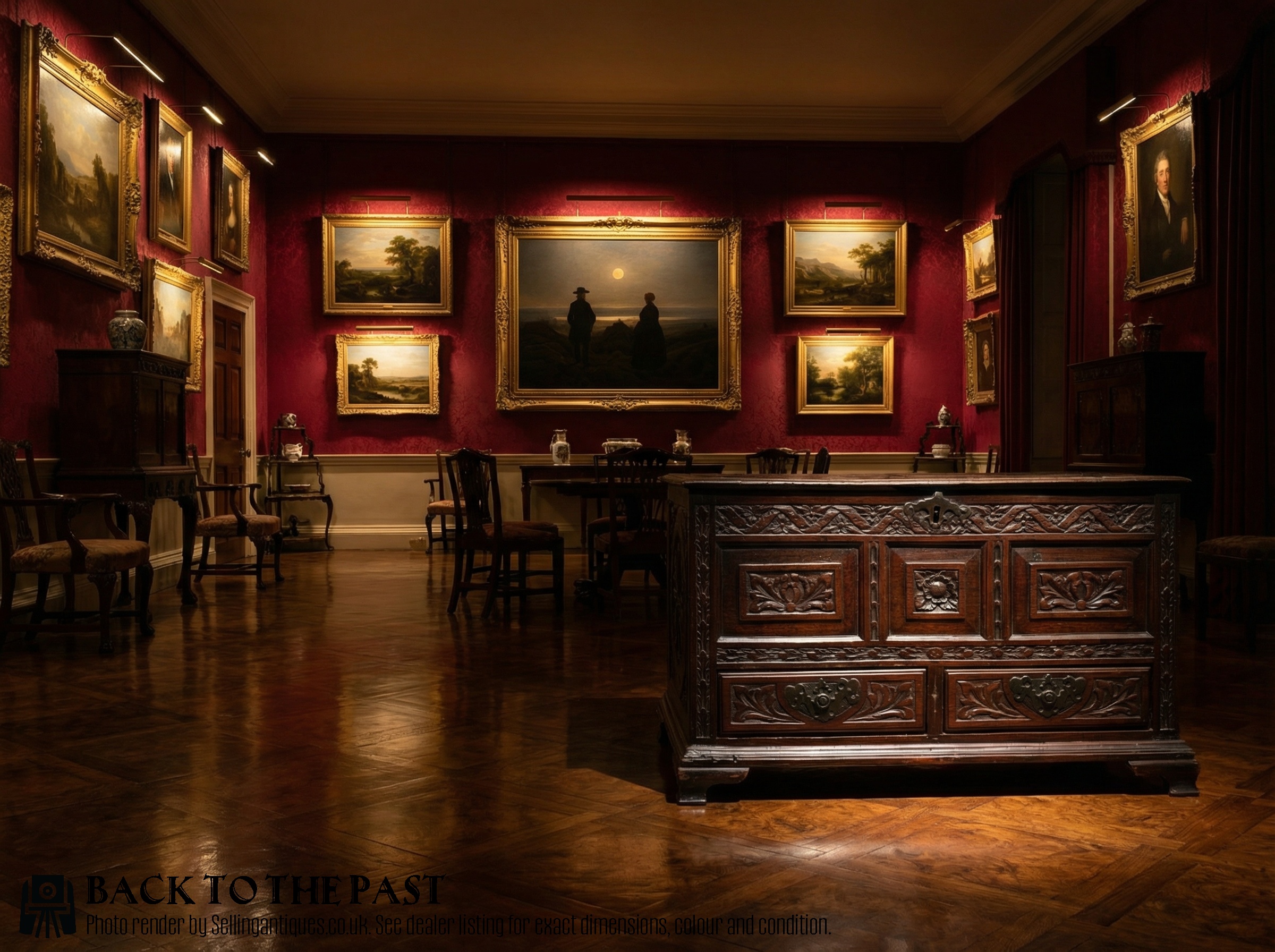
Georgian Carved Coffer
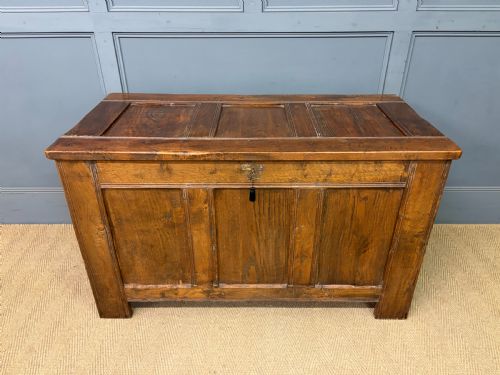
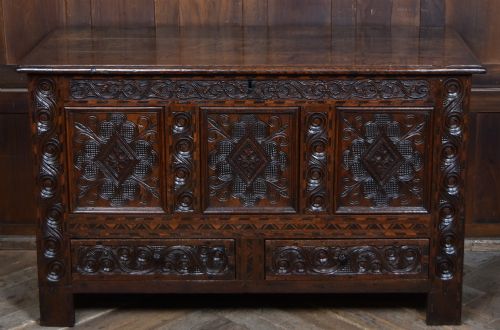
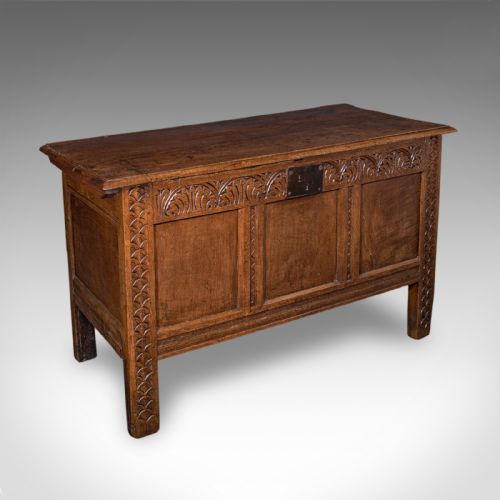
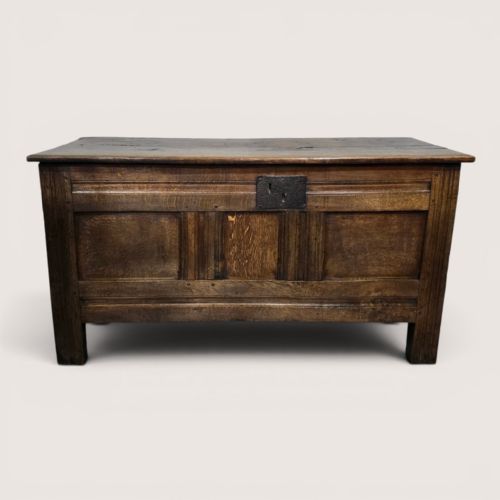
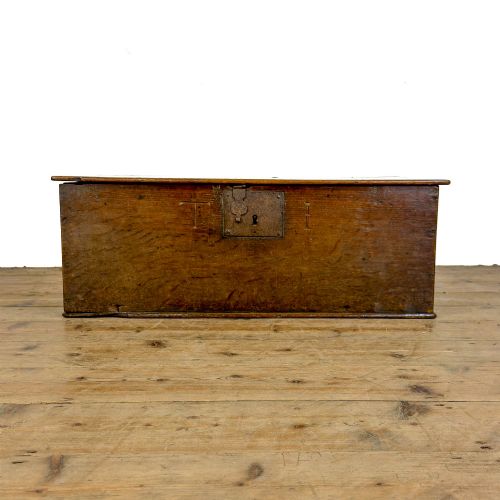
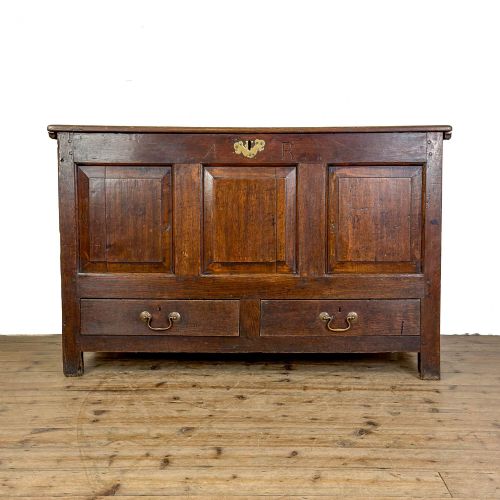
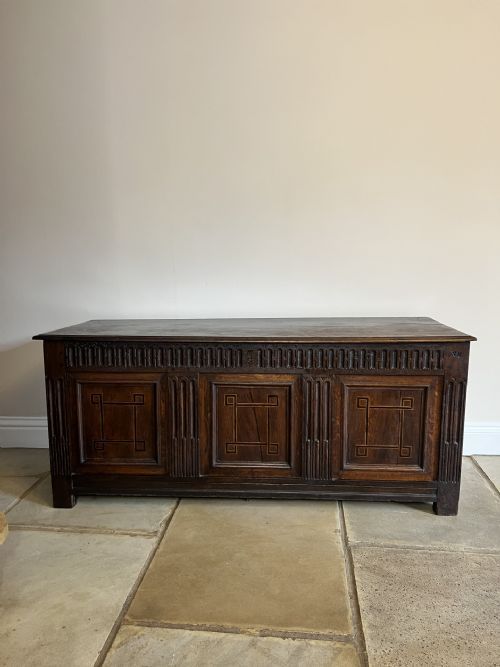
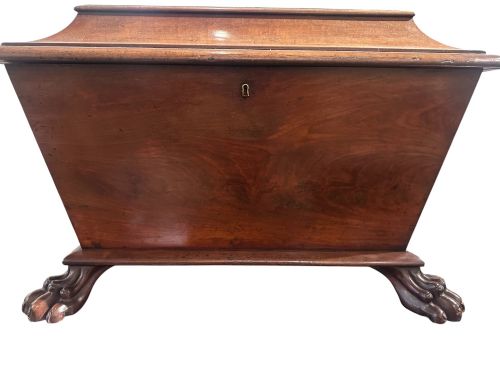
A georgian carved coffer is a heavy wooden storage chest built to hold blankets, linen, and household valuables, often functioning as a bench or window seat within domestic interiors. These pieces emerge predominantly in sturdy oak, frequently featuring carved panels on the front facade that reflect regional vernacular traditions across England and Wales.
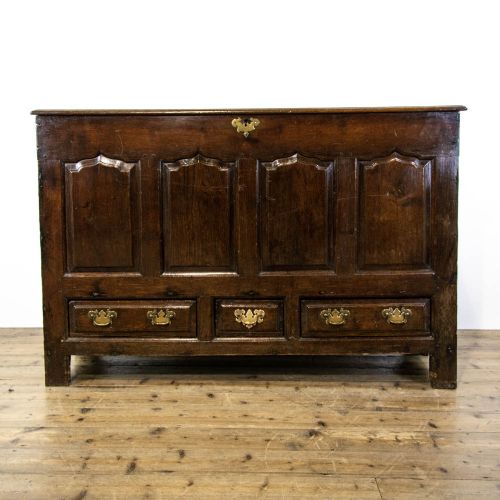
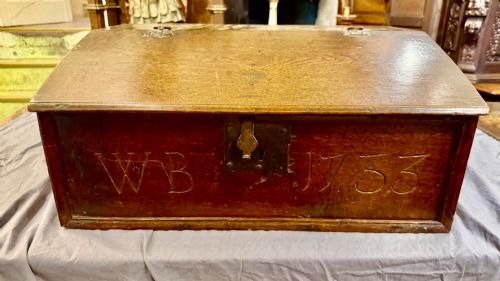
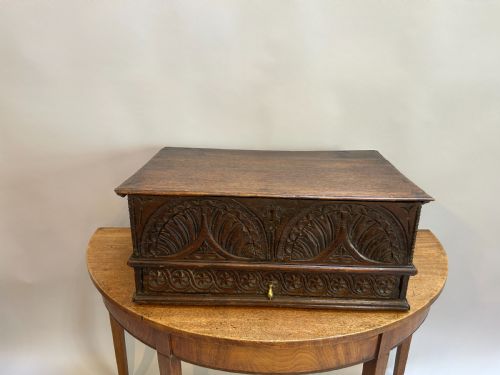
The versions most commonly encountered on this page date from the eighteenth century, spanning early periods with simpler plank construction through to George III examples displaying elaborate geometric or floral carving. Alongside standard blanket boxes, variations include mule chests fitted with lower drawers, smaller coffer bach formats, and bible boxes meant for desktop use.
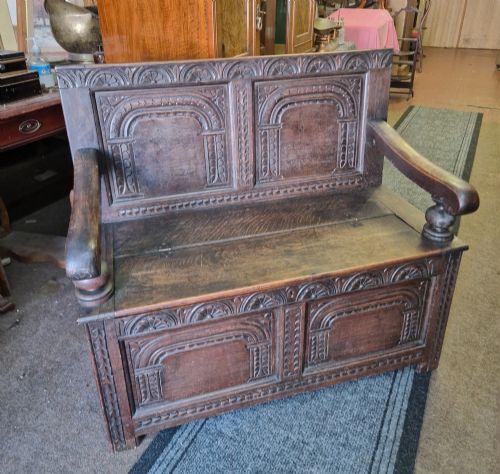
Regional workshops also produced related forms such as settle coffers, which combine a high wooden back with a storage base to seat residents near the hearth. Whether plain or richly adorned, these furniture pieces demonstrate the robust joinery and functional adaptability demanded by country households.

How They Were Made
Joiners relied on frame-and-panel construction using solid oak to prevent warping as the timber expanded and contracted with seasonal humidity. Panels were slotted into grooved stiles and rails without modern adhesives, allowing the wood to move naturally while maintaining structural rigidity.
Carving was executed directly onto the solid wood using gouges and chisels, producing shallow relief patterns of scrolling foliage, lunettes, or geometric strapwork. Iron and brass hardware, including strap hinges and locking mechanisms with original keys, secured the heavy lids.
Secondary timbers such as pine or cedar appear occasionally in internal partitions, while decorative highlights sometimes incorporate wood inlay or burr elm panels to create visual contrast against the primary oak framework.
Some mule chests include hidden internal candle boxes for midnight illumination during long winter evenings.
What Varies in Quality
Quality rests upon the crispness of the hand carving and the integrity of the original timber rather than excessive ornamentation. Pieces displaying deep, well-defined chisel work and thick, uncompromised oak boards sit at the upper end of the scale.
The degree of original survival heavily influences desirability, particularly the retention of original lids, feet, and iron locking mechanisms that have not undergone extensive modern replacement. Elements like internal candle boxes and stable base structures indicate superior domestic craft.
The Georgian Carved Coffer Glossary
- Coffer
- A large wooden chest used historically for storing valuables, linen, and personal belongings. These sturdy boxes frequently doubled as seating benches in early domestic spaces.
- Mule Chest
- A storage chest featuring one or more drawers built into the base beneath the main compartment. This form bridges the gap between the traditional coffer and the chest of drawers.
- Settle Coffer
- A wooden bench featuring a high back and arms, with a storage chest incorporated beneath the seat. They were designed to keep occupants clear of cold drafts near the fireplace.
- Stile
- A vertical framing member in panel construction that holds the central floating panel in place. Together with horizontal rails, stiles form the structural skeleton of the chest.
Georgian Carved Coffer: Frequently Asked Questions
What is a georgian carved coffer?
A georgian carved coffer is a heavy wooden storage chest built during the eighteenth century, typically constructed from solid oak with decorative panel carving on the front.
These versatile pieces were used in domestic interiors to hold household linens, blankets, and valuables while often doubling as hallway seating or window benches.
How do I use a coffer today?
These chests function effectively as living room coffee tables, hallway blanket boxes, or bedroom storage trunks that accommodate bulky items out of sight.
Placing them away from direct heat sources and radiators protects the aged oak timber from drying out and splitting over time.
What is a mule chest?
A mule chest is a variation of the standard storage chest that includes one or more functional drawers built directly into the base beneath the main compartment.
This hybrid design allowed household members to access smaller items without having to lift the heavy lid of the upper box.
How do I identify a cfteer from this period?
Authentic eighteenth-century examples display traditional frame-and-panel construction held together with pegged joints rather than modern metal screws.
Examining the underside, interior board thickness, and hand-cut tool marks helps distinguish genuine vernacular period pieces from later nineteenth-century revival work.