


Antique Wedgwood Jasperware
Antique Wedgwood jasperware brings together classic stoneware bodies and crisp white relief figures, prized for its distinctive colours and Neoclassical detail.
Antique Wedgwood Jasperware
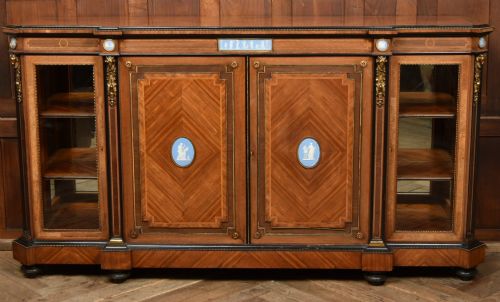
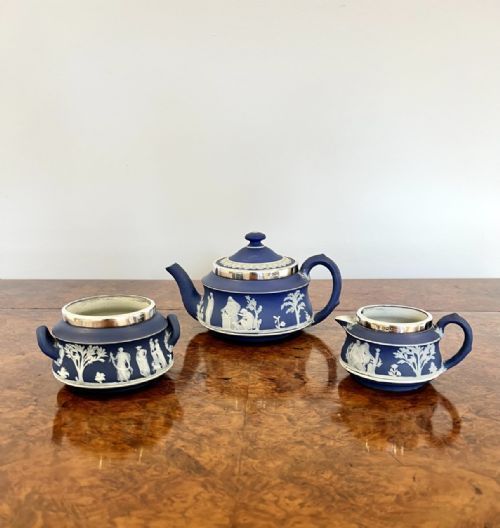
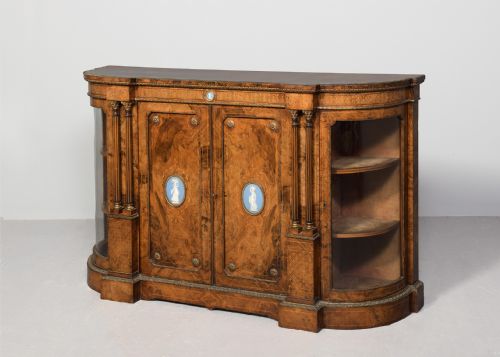
When you search for antique wedgwood jasperware, you encounter a distinct ceramic tradition spanning the nineteenth and twentieth centuries. These pieces appear in forms ranging from tea sets and biscuit barrels to candlesticks, patch boxes and decorative plaques.
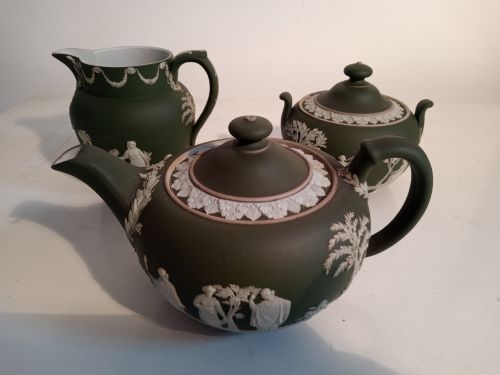
The objects on this page largely originate from the Victorian period, including specific dates across the 1880s and 1890s, alongside later twentieth-century examples. Blue remains the most common body colour, accompanied by olive green, yellow and multi-colour variations.
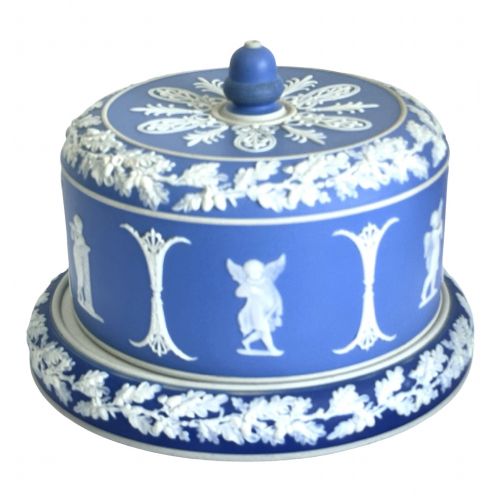
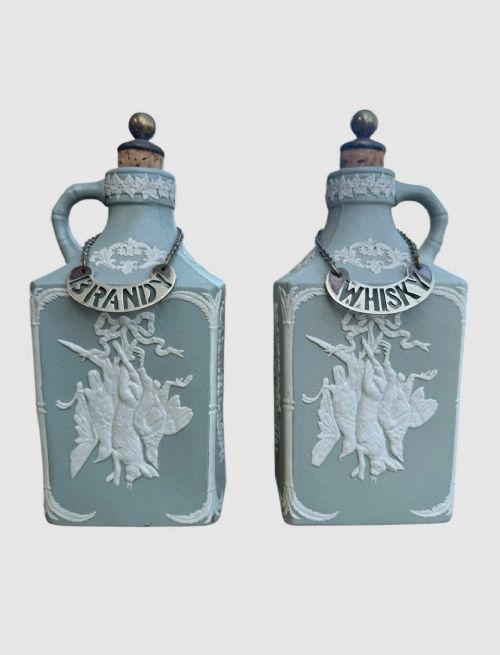
Domestic and decorative items predominate, such as cheese domes, flagons, urns and tea pots. Many incorporate metal mounts in silver plate, brass or sterling silver to complete functional vessels.
Materials and construction
These items rely on fine-grained stoneware developed to take body colour throughout the clay or as a surface dip. Artisans applied moulded white ceramic bas-relief figures, sprigged by hand onto the coloured ground.
Functional pieces frequently integrate additional materials like silver-plated collars, brass mountings and fitted wooden or glass elements. The precision of the Neoclassical sprigged ornaments defines the technical accomplishment of the potter.
Materials span ceramic jasperware and stoneware, paired with silver, silver plate, brass and glass.
Assessing quality and execution
Quality rests upon the crispness of the white relief figures against the coloured body and the delicacy of the modelling. Sharply defined details in the classical motifs distinguish superior items from softer pressings.
The complexity of the colour palette also influences standing, with multi-colour examples and unusual shades such as olive green or yellow demanding closer attention. Original metal mounts, where present, add to the integrity of the piece.
Wedgwood
The Antique Wedgwood Jasperware Glossary
- Jasperware
- A fine unglazed stoneware developed by Josiah Wedgwood, characterised by a matte surface and contrasting applied relief decoration.
- Sprigging
- The technique of moulding small clay reliefs separately and applying them to the main body of the vessel before firing.
- Dip
- A method where a white stoneware body receives a surface coating of coloured clay to achieve the desired exterior shade.
- Bas-relief
- Low-relief sculptural decoration that projects slightly from the flat background plane.
- Campana urn
- A bell-shaped vessel form inspired by classical antiquity, frequently utilised for decorative vases and urns.
Antique Wedgwood Jasperware: Frequently Asked Questions
How do I clean antique jasperware safely?
Use a soft brush to remove dust from the matte surface and crevices of the relief work. Avoid harsh chemical cleaners that can damage the unglazed stoneware.
Keep water exposure to a minimum, particularly on pieces with metal mounts or applied collars. Pat the surface dry gently with a lint-free cloth if washing becomes necessary.
What colours did Wedgwood produce?
Blue is the most prevalent body colour encountered, appearing in various light and dark tones. Olive green, yellow and multi-colour combinations also occur.
The white relief figures remain consistent across these different coloured grounds, creating a strong visual contrast.
How can I date my piece?
Examine the base for impressed factory marks, which often include three-letter date codes used from the nineteenth century onwards. Style indicators such as Victorian metal mounts or specific aesthetic movement designs help narrow the timeline.
Comparing the sharpness of the sprigged reliefs and the specific shade of the stoneware body against documented periods provides further context.
Were these items meant for daily use?
Many forms like tea sets, biscuit barrels and cheese domes served practical functions in Victorian dining rooms. Others, such as framed cameos, portrait medallions and plaques, were purely ornamental.
The inclusion of silver-plated and brass collars indicates pieces designed for regular domestic hospitality.