




Vintage Jewellery Dish
A vintage jewellery dish keeps rings and small ornaments close at hand, combining utility with decorative charm across various historical periods.
Vintage Jewellery Dish
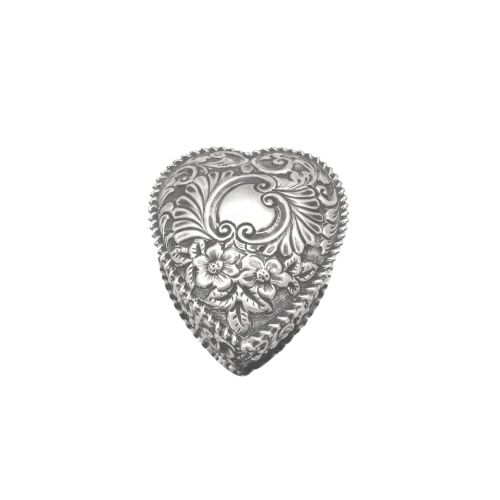
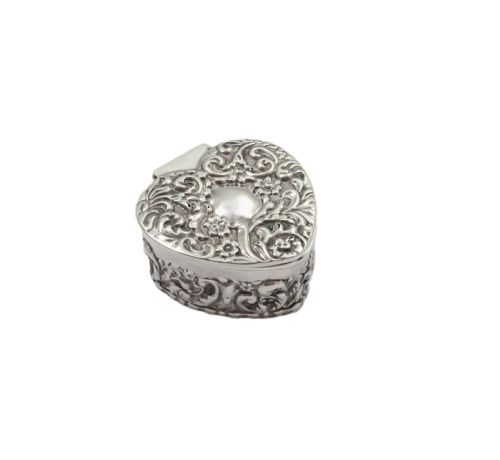
A vintage jewellery dish encompasses small containers, trinket boxes, caskets, ring holders, and powder jars designed for dressing tables and vanity surfaces. These pieces emerge from the Victorian, Edwardian, and Art Deco eras, carrying the aesthetic preferences of their respective decades.
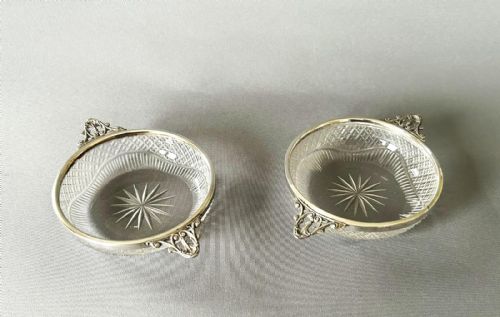
The most frequent examples encountered on this page are silver and cut glass trinket boxes alongside ceramic and enamel pieces. Forms range from simple heart-shaped glass dishes to elaborate hinged caskets mounted in gilt bronze or ormolu.
Materials and Techniques
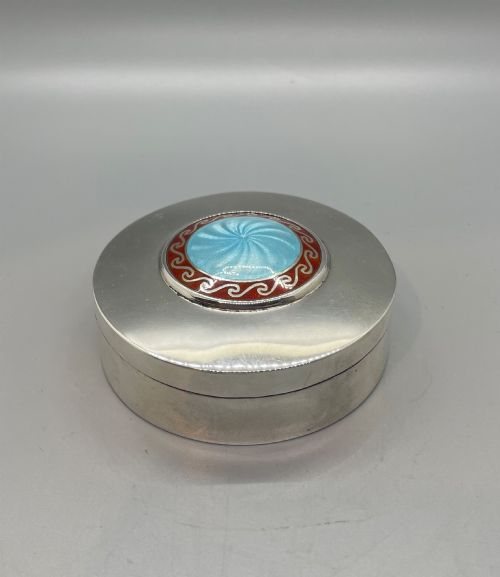
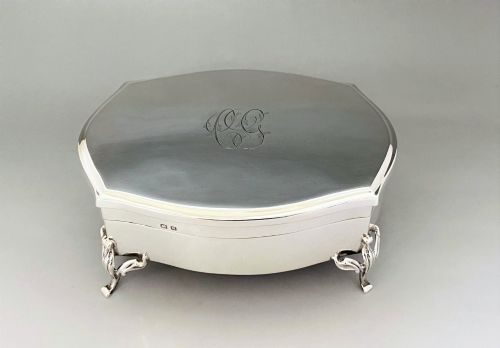
Silversmiths shaped sterling silver and silver plate into boxes, often employing repoussé work, hallmarking, and guilloche enamel decoration. Cut glass and crystal form the bodies of many containers, fitted with silver lids or mounted in gilt bronze and ormolu.
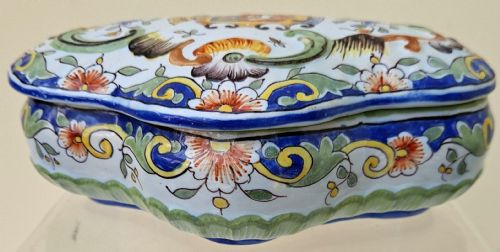
Ceramic examples utilise earthenware and tin-glazed French faience, alongside dark blue Wedgwood and porcelain. Makers incorporated tortoiseshell, onyx, lapis lazuli, and porcelain panels into metal frames to create contrasting textures.
Object forms range from traditional trinket boxes and jewellery caskets to ring trees, powder jars, and pot pourri containers.
Distinctions in Quality
Quality rests in the crispness of metal chasing, the weight of the silver or bronze, and the precision of the glass cutting. Pieces bearing clear assay office hallmarks and identified makers display superior workshop standards.
The condition of delicate elements such as guilloche enamel, tortoiseshell panels, and hinges separates standard production items from finer presentation pieces. Hand-painted ceramic details and well-fitted covers indicate higher craftsmanship.
Posen of Frankfurt and Berlin·William Neale And Sons·Henry Williamson Ltd
The Vintage Jewellery Dish Glossary
- Guilloche enamel
- A decorative technique where an intricate mechanical pattern is engraved beneath transparent enamel. It appears frequently on Edwardian silver boxes.
- Ormolu
- Gilt bronze mounted on decorative objects, popular in French and English caskets. The technique involves applying a gold amalgam to bronze.
- Faience
- Tin-glazed earthenware originating from European centres such as Desvres and Rouen. This material provides a pale ground for painted designs.
- Ring tree
- A vertical stem mounted on a small dish designed specifically to hold rings. They appear in Edwardian silver.
- Trinket box
- A small lidded container meant for holding rings, pins, and small ornaments. These pieces sit on dressing tables.
Vintage Jewellery Dish: Frequently Asked Questions
What is a vintage jewellery dish used for?
These pieces serve as desktop or dressing table receptacles for rings, brooches, pins, and small keepsakes. They keep everyday accessories organised and protected from dust.
Historically, they sat upon vanity surfaces as both functional storage and decorative ornaments reflecting the tastes of the period.
How do I date a silver trinket box?
Dating relies heavily upon hallmarks stamped into the metal, which indicate the assay office, the year of manufacture, and the silversmith. Stylistic clues such as Art Deco geometric lines or Edwardian guilloche enamel also narrow the timeframe.
Reference marks against official registers to confirm the exact year of production.
What materials are common in these boxes?
Sterling silver, silver plate, cut glass, and crystal form the backbone of these items. Makers also utilised earthenware, porcelain, tin glaze, onyx, and lapis lazuli.
Many examples combine metal mounts with glass bodies or incorporate tortoiseshell and enamel panels.
How should I care for silver and enamel?
Clean silver gently with a specialist cloth, avoiding abrasive pastes that might damage thin plating or engravings. Keep enamel and tortoiseshell away from harsh chemical solvents and direct sunlight.
Handle hinged lids carefully to preserve the original pins and mountings.