
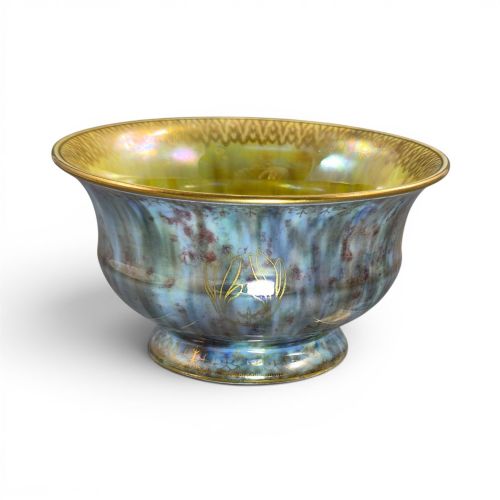


Edwardian Wedgwood Dish
These edwardian wedgwood dish examples bring intricate lustre glazes and hand-painted motifs to a table, combining utility with vibrant ceramic artistry.
Edwardian Wedgwood Dish
An edwardian wedgwood dish typically manifests as a decorative bowl or shaped dish originating from the early twentieth century, spanning periods around nineteen hundred to nineteen twenty. These pieces often showcase distinct forms, including octagonal bowls, miniature bowls, lantern bowls, and traditional decorative dishes.
The aesthetic vocabulary bridges the Edwardian era into Art Nouveau and Art Deco movements, drawing the eye with richly imagined themes. Dragons, butterflies, and celestial motifs dominate the surface design, transforming domestic ceramics into miniature canvases.
Most items you encounter bear the creative signature of prominent designers associated with the pottery during this active period of production. Collectors seek these items for their intense visual character and the high standard of early twentieth-century ceramic manufacturing.
Materials and Techniques
Potters utilised fine bone china and porcelain as the foundational canvas for these decorative items, ensuring a smooth and durable body. Skilled hands then applied detailed enamel colours alongside elaborate gilding and gold leaf highlights.
The distinct visual depth relies heavily on lustre glaze techniques, which create an iridescent, shimmering surface finish. Artisans combined these lustres with meticulous hand-painted details to achieve the complex dragon and butterfly imagery seen across the pieces.
Celestial dragons coil around tiny ceramic bowls, proving that Edwardian mantelpieces knew how to throw a proper mythical party.
Distinctions in Quality
Quality rests upon the complexity of the design and the richness of the lustre glaze applied across the porcelain body. Pieces featuring detailed pictorial themes like Fairyland dragons display a higher degree of artistic ambition than simpler mottled finishes.
The precision of the hand-painted enamel work and the crisp application of gold leaf or gilding determine the visual refinement. Stronger definition in the motifs and a more luminous, even sheen separate the finest examples from standard production items.
Daisy Makeig Jones·James Hodgkiss
The Edwardian Wedgwood Dish Glossary
- Lustre Glaze
- A type of ceramic glaze containing metallic oxides that produce an iridescent, pearl-like sheen upon firing. This finish is central to the visual appeal of many early twentieth-century decorative wares.
- Bone China
- A type of soft-paste porcelain containing bone ash, known for high strength, chip resistance, and a translucent white body. It provides a smooth base for intricate hand-painted enamels.
- Gilding
- The application of gold leaf or gold powder to the surface of ceramic pieces for decorative accentuation. It highlights rims, handles, and specific design elements with metallic brilliance.
- Art Nouveau
- An international style of art and architecture characterised by intricate linear designs and flowing organic motifs inspired by natural forms. This aesthetic heavily influences the curved lines of early century bowls.
- Art Deco
- A design style characterised by sleek geometric shapes, streamlined forms, and vibrant colours that emerged during the early decades of the twentieth century. It represents a shift towards modernism in decorative arts.
Edwardian Wedgwood Dish: Frequently Asked Questions
What periods do these dishes cover?
The available selection primarily spans the early twentieth century, specifically clustering around nineteen ten to nineteen twenty, alongside pieces attributed broadly to the Edwardian era and nineteen hundred.
These dates reflect a prolific window of ceramic design at the pottery, capturing stylistic shifts from Edwardian tastes into Art Nouveau and Art Deco movements.
How were these decorative dishes used?
Historically, these items served as ornamental bowls and shaped dishes designed to display artistic ceramic work within a refined interior setting rather than for heavy domestic utility.
Their intricate lustre finishes and hand-painted dragon or butterfly motifs made them prized centerpieces for drawing rooms and display cabinets.
What materials make up an Edwardian Wedgwood dish?
Makers relied on fine porcelain and bone china as the primary ceramic bodies, providing a stable white foundation for subsequent decoration.
Artisans then enhanced these surfaces using specialised lustre glazes, vibrant enamels, gold leaf, and traditional gilding techniques.
How do I identify a Fairyland lustre piece?
Fairyland lustre pieces are distinguished by fantastical, highly detailed pictorial scenes involving mythical creatures like celestial dragons, executed with deep iridescent glaze layers.
These designs often carry specific pattern numbers and bear the distinct artistic vision of designers such as Daisy Makeig-Jones.