




Cobalt Blue Jasperware
Cobalt blue jasperware brings distinct classical relief decoration and striking colour to Victorian and Edwardian interiors through durable stoneware and earthenware forms.
Cobalt Blue Jasperware
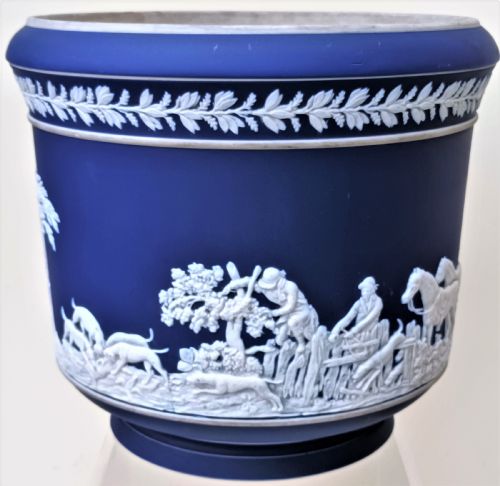
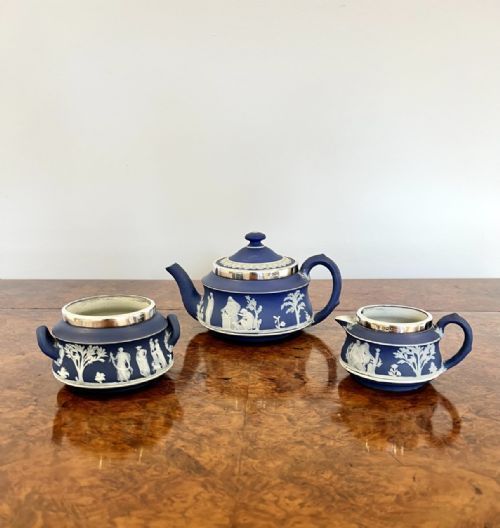
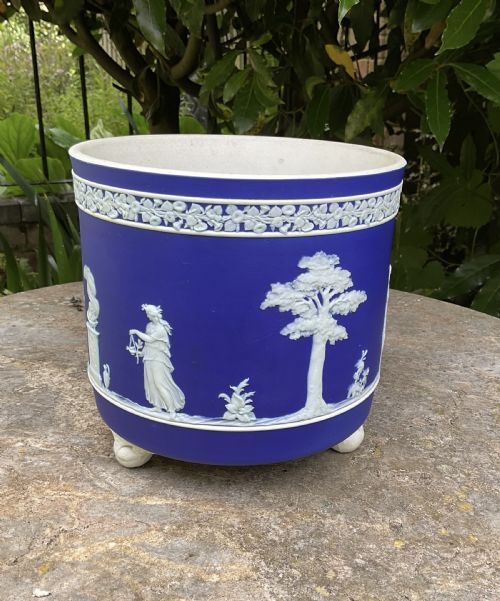
When you search for cobalt blue jasperware, you encounter a specialised range of nineteenth and early twentieth-century decorative items and tableware. The inventory spans functional containers and ornamental vessels, predominantly comprising jardinieres, biscuit barrels, tea sets, teapots, decorative vases, trinket boxes, and patch boxes. These items typically date from the Victorian period through to the nineteen twenties.
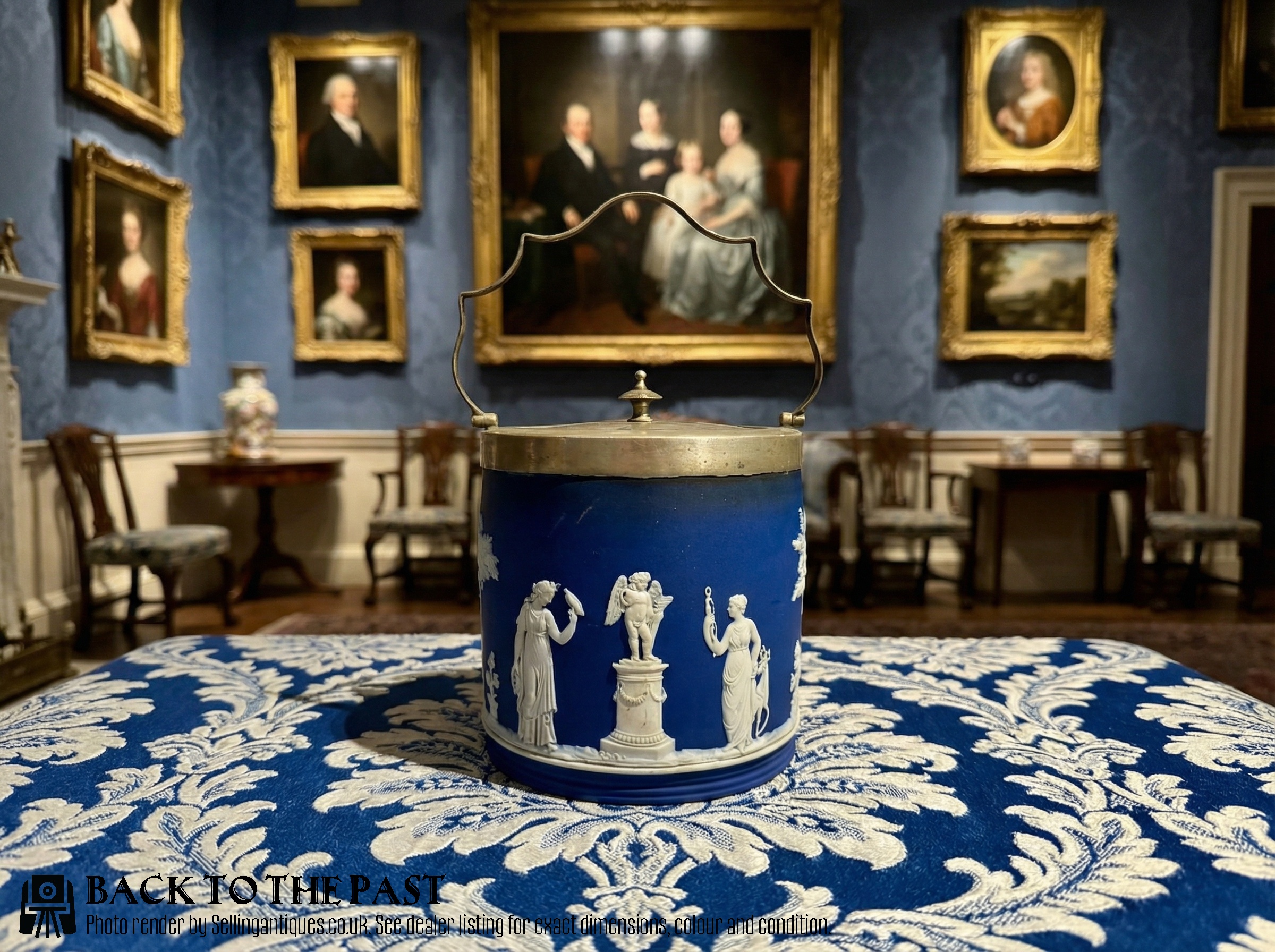
The objects most frequently met on this page are biscuit barrels and jardinieres produced during the late Victorian era, particularly around eighteen eighty. Pieces from this decade often feature characteristic white classical reliefs contrasting against the deep blue stoneware body. Alongside these larger vessels, smaller trinket boxes and tea sets appear regularly to represent the domestic ceramic output of the time.
How they were made
Makers utilised fine-grained stoneware, earthenware, and clay bodies to form the matte foundation of each vessel. Artisans then applied moulded white ceramic reliefs by hand onto the blue ground before firing, creating the signature contrasting surface texture.
Metal mounts in silver plate and silver frequently furnish the rims, lids, and swing handles of biscuit barrels and tea wares. These fitted metal elements were expertly joined to the ceramic bodies to provide structural support and functional utility.
What varies in quality
The crispness and depth of the applied white classical reliefs separate superior pieces from simpler productions. Sharply defined modelling and clean adhesion to the blue stoneware body indicate higher execution standards by the potter.
The integration and preservation of silver-plated or silver mounts influence the overall standard of functional items like biscuit barrels and tea sets. Original metal fittings that remain secure and well-balanced enhance the integrity of the piece.
William Adams And Sons·Copeland Spode·Wedgwood
The Cobalt Blue Jasperware Glossary
- Jasperware
- A fine-grained, unglazed stoneware developed in the eighteenth century and continued through the Victorian period. It is distinguished by its matte finish and suitability for contrasting white relief ornamentation.
- Jardinerie
- A large ornamental pot or container designed to hold a plant or floral arrangement. These pieces often feature prominent classical relief scenes encircling the body.
- Biscuit Barrel
- A covered ceramic container used for storing dry biscuits or crackers at the dining table. They frequently incorporate silver plated rims, lids, and hinged handles.
- Neoclassical
- An artistic style drawing inspiration from the classical art and culture of ancient Greece and Rome. This aesthetic governs the architectural motifs and figural reliefs seen on these ceramics.
Cobalt Blue Jasperware: Frequently Asked Questions
What is cobalt blue jasperware?
Cobalt blue jasperware is a type of fine-grained stoneware or earthenware featuring a deep blue matte body decorated with contrasting white classical reliefs. It encompasses a variety of domestic and decorative forms produced mainly during the nineteenth century.
Potters created these items by combining unglazed ceramic bodies with hand-applied moulded figures, scenes, and botanical motifs. The resulting pieces range from small trinket boxes to large jardinieres and tea sets.
How were biscuit barrels used?
Biscuit barrels served as decorative containers placed on the dining table or sideboard during tea and after-dinner hospitality. Their fitted lids helped keep dry biscuits fresh within the ceramic body.
Metal swing handles and silver plated mounts allowed hosts to transport and open the containers easily during social gatherings. They combined practical storage with formal table presentation.
How do I date a piece?
Dating relies on identifying period styles, manufacturing marks, and associated metal mounts recorded in the listings. Victorian pieces from around eighteen eighty often display distinct classical relief patterns and maker stamps.
Changes in ceramic bodies and silver-plated hardware across the nineteenth and early twentieth centuries provide further clues for narrowing down the production era. Comparing the form to documented archival types confirms the timeline.
How should I clean them?
Careful dusting with a soft, dry brush preserves the matte texture of the unglazed stoneware body. Moisture and harsh cleaning agents can damage the porous ceramic surface and any applied reliefs.
Silver-plated mounts require appropriate metal care to prevent tarnish while ensuring polish does not touch the surrounding blue clay. Gentle handling maintains the integrity of both the ceramic and its metal fittings.