


Wedgwood Blue Stoneware
Wedgwood blue stoneware pieces combine classical relief ornament with durable ceramic bodies, offering collectors timeless tablewares and decorative objects.
Wedgwood Blue Stoneware
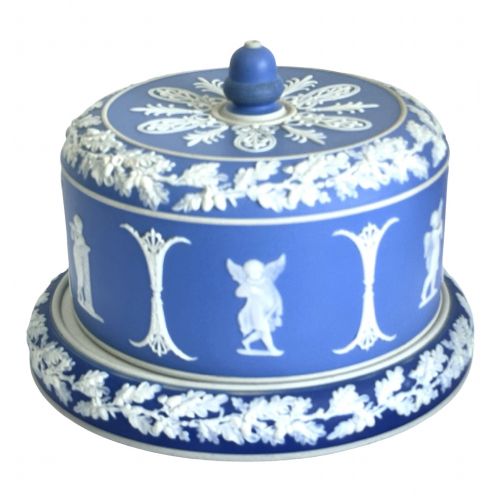
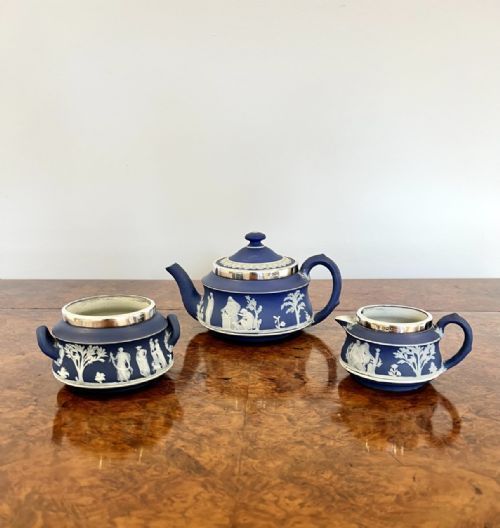
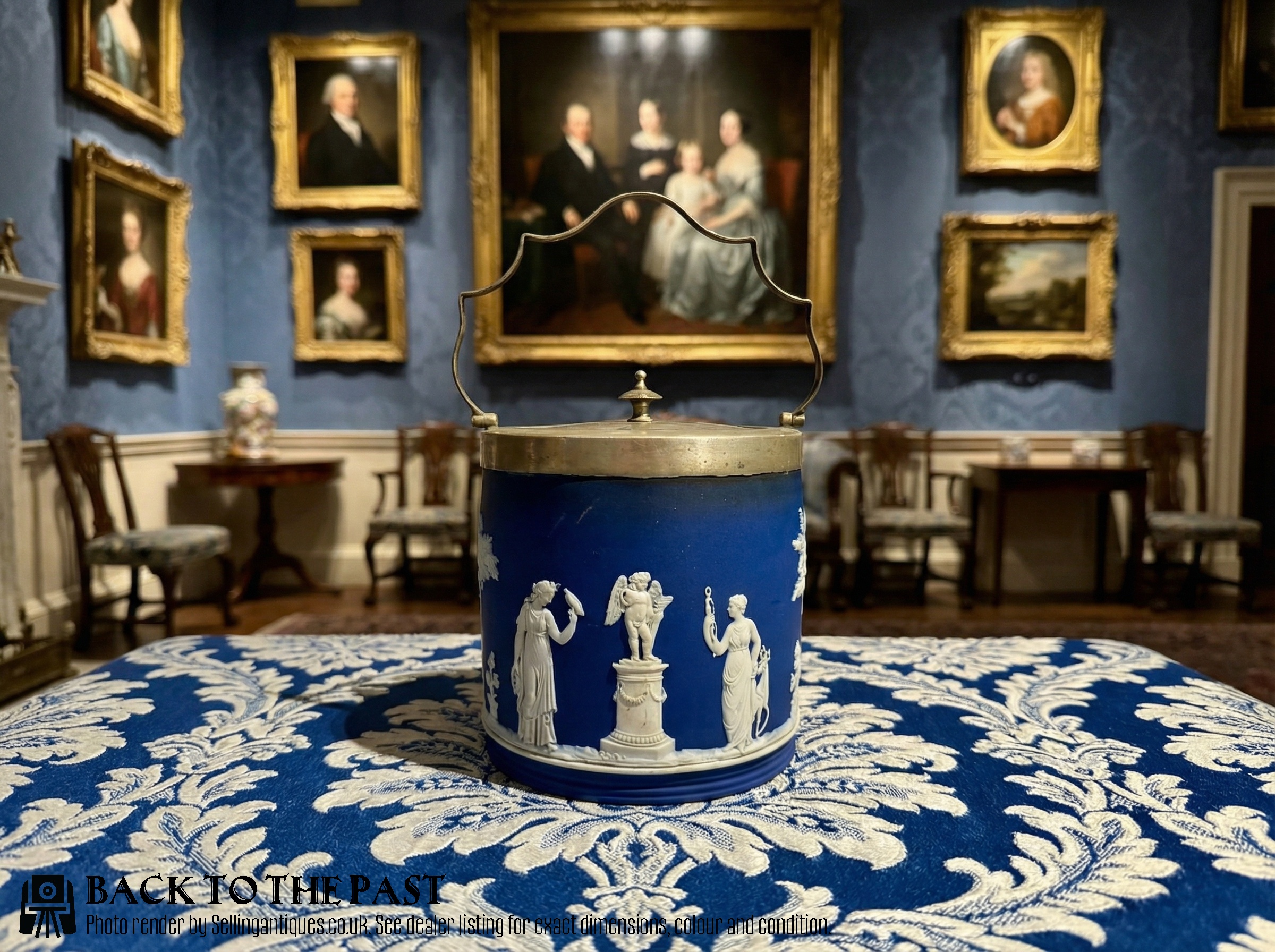
When you search for wedgwood blue stoneware, you encounter distinctive ceramic wares defined by their pale or dark blue bodies and contrasting white bas-relief ornament. These items span various functional and decorative forms, including tea sets, biscuit barrels, cheese dishes, urns, vases, trinket boxes, and portrait medallions.
The selections on this page predominantly date from the nineteenth century, including specific years like 1870, 1871, 1880, 1886, 1890, and 1895, alongside later twentieth-century examples from 1920, 1928, and 1960. Victorian Neoclassical and Neoclassical styles dominate the aesthetic, drawing heavily on classical antiquity for their decorative motifs.
Buyers frequently find domestic serveware and small decorative items, such as miniature teapots, patch boxes, candlesticks, and campana urns. Many nineteenth-century examples incorporate precious mounts, featuring silver, silver plate, brass, wood, and velvet elements to complement the ceramic body.
Materials and construction
The fundamental material is fine stoneware and jasperware, a type of fine-grained, unglazed ceramic developed to take colour evenly throughout the body or as a surface dip. Artisans applied moulded white clay reliefs, known as sprigs, by hand onto the blue stoneware backgrounds to create the characteristic contrasting ornamentation.
Mounts and hardware utilise materials such as silver, silver plate, brass, wood, and velvet to finish utilitarian forms like biscuit barrels, cheese dishes, and teapots. These structural additions secure hinged lids, collars, and handles, combining practical metalwork and cabinetry with the ceramic bodies.
Listings feature periods spanning the nineteenth and twentieth centuries, predominantly showcasing Victorian Neoclassical styles in stoneware, jasperware, ceramic, silver, and brass.
Evaluating craftsmanship
Quality rests in the crispness and undercut detail of the white bas-reliefs applied to the blue stoneware surface. Superior pieces exhibit sharp botanical and classical motifs where every leaf and figure remains distinct and firmly adhered without excess slip visible around the edges.
The integration of secondary materials dictates overall refinement, particularly in pieces featuring silver collars, mounts, or fitted wooden bases. Harmonious proportions between the ceramic body and the metal hardware distinguish finer production standards from standard domestic wares.
Wedgwood
The Wedgwood Blue Stoneware Glossary
- Bas-relief
- Low-relief sculptural decoration where the ornament projects only slightly from the flat background. In these pieces, white clay figures stand out against the blue stoneware body.
- Campana urn
- A bell-shaped vessel with a footed base and flared rim, frequently produced in ceramic forms during the nineteenth century. These derive their outline from ancient Roman metal and marble vessels.
- Jasper dip
- A production method where a white or pale ceramic body is coated with a thin layer of coloured jasper clay. This technique conserves costly oxides while delivering a saturated exterior colour.
- Sprigging
- The technique of pressing wet clay into a small mould to form a relief ornament, then lifting it out and applying it by hand to the vessel. This method creates the classical figures seen on these ceramics.
Wedgwood Blue Stoneware: Frequently Asked Questions
What is wedgwood blue stoneware?
These pieces are fine ceramic items produced with a matte blue body and contrasting white classical ornamentation.
They encompass a range of functional and decorative domestic objects from the nineteenth and twentieth centuries.
How were biscuit barrels used?
Victorian households utilised these covered ceramic containers to keep dry biscuits and baked goods fresh on the dining table.
Many examples feature fitted silver or silver-plated mounts and hinged lids for regular domestic service.
How do I date these items?
Dating relies on recorded production marks, stylistic shifts, and incorporated materials such as silver mounts or velvet linings.
Nineteenth-century pieces often display neoclassical motifs, whereas mid-century examples reflect later twentieth-century manufacturing standards.
Are metal mounts original?
Many nineteenth-century tea sets, cheese dishes, and biscuit barrels were manufactured with integral silver, silver plate, or brass collars.
These metal components were designed to reinforce functional edges and provide secure closures for lids and handles.
How do I care for jasperware?
Maintain the matte ceramic surface by dusting gently with a soft, dry brush to prevent dirt accumulation.
Avoid immersing pieces with metal mounts or velvet elements in water to protect the structural integrity of the hardware.