


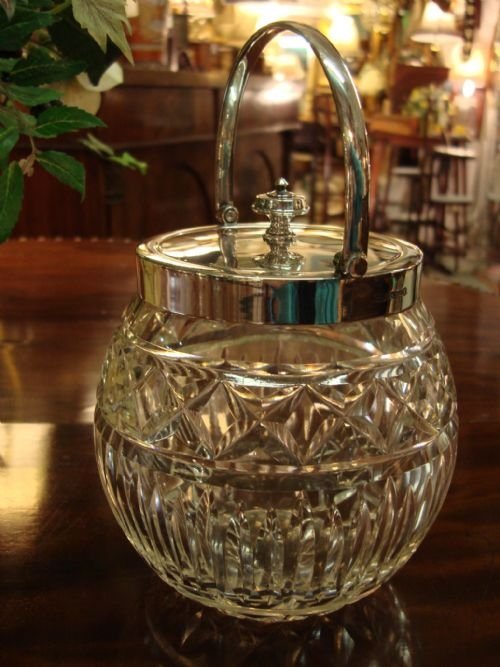
Silver Top Biscuit Barrel
A silver top biscuit barrel brings elegant hospitality to the dining table, combining practical storage with handsome period materials.
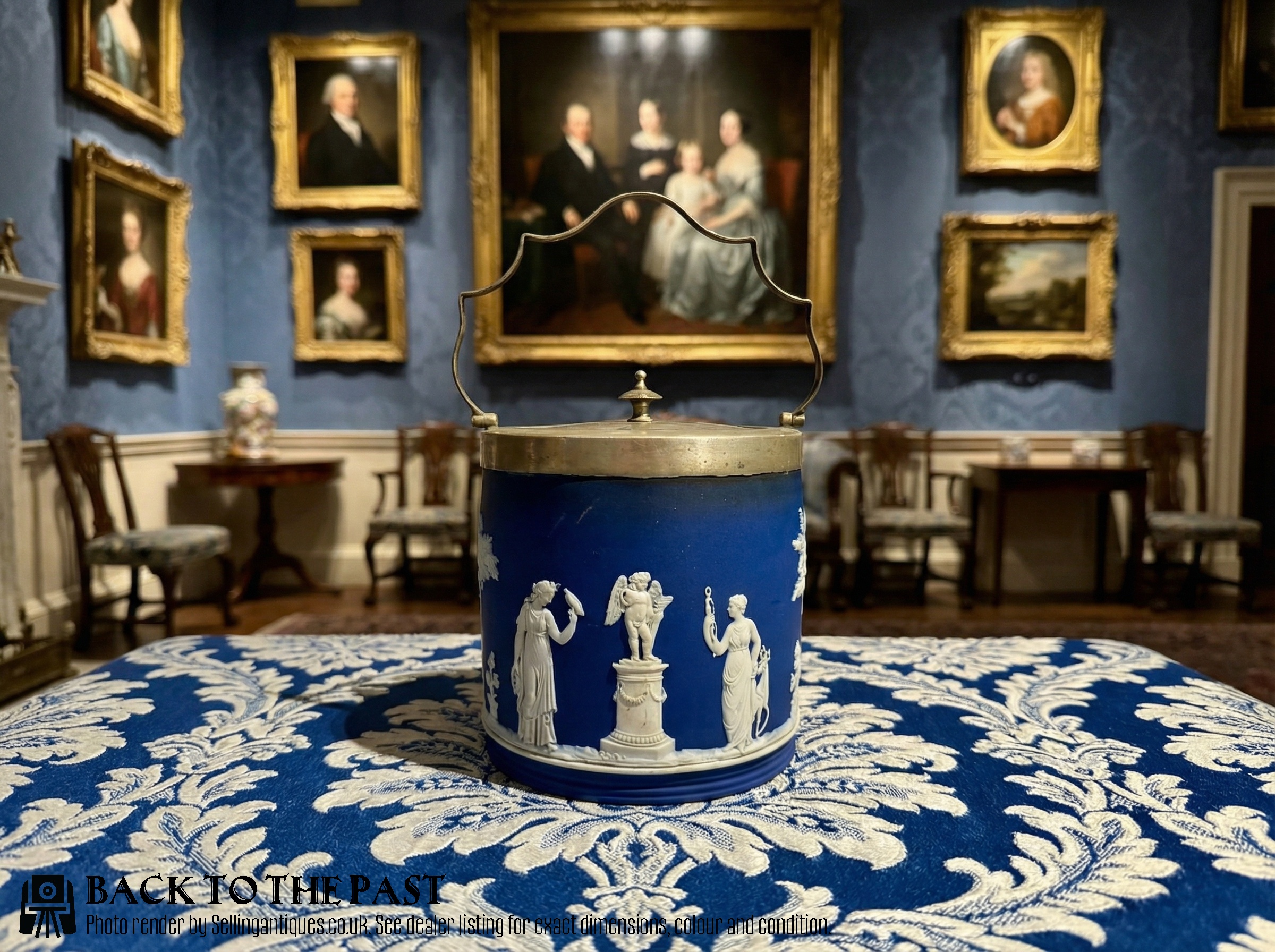
Silver Top Biscuit Barrel
A silver top biscuit barrel is a covered vessel designed for serving biscuits and dry goods during formal or informal gatherings. These containers bridge the gap between utility and display, sitting comfortably on sideboard or table.
Most examples encountered here combine a fitted metal lid and mount with a substantial body of glass, ceramic, or wood. The form spans several decades of domestic design, reflecting changing tastes from the Victorian era into the twentieth century.
Victorian and Edwardian iterations dominate the selection, alongside pieces from the George V period and the early twentieth century. Common configurations pair cut glass or pressed glass with silver plate, though ceramic and stoneware variants also appear.
Materials and construction methods
Makers utilised silver plate or sterling silver for the hinged mounts, lids, and swing handles that define the top of each barrel. These metal elements were often cast, chased, or hallmarked to indicate quality and origin.
Bodies were formed from heavy cut glass, faceted glass, or moulded cranberry glass, while ceramic alternatives employed jasperware, earthenware, and stoneware. Oak timber also provided a sturdy drum-form body for selected iterations.
Metal collars secure the upper rim of the vessel, anchoring the lid mechanism firmly to the glass or ceramic base. Skilled assembly ensured a tight fit between the components to keep contents fresh.
Listings feature periods spanning the Victorian era through to the 1930s, utilising silver plate, sterling silver, cut glass, cranberry glass, jasperware, stoneware, and oak.
Distinctions in craftsmanship and design
Quality rests in the weight and clarity of the glass, the depth of the cutting, and the substance of the silver plating or solid silver mounts. Thicker glass bodies and crisp, detailed mouldings on ceramics distinguish finer examples.
The sophistication of the metalwork mechanisms, such as smooth-action hinges and well-balanced swing handles, marks out superior workshops. Maker attribution also plays a role, with established firms delivering refined finishing touches.
Design complexity varies from simple cylindrical glass jars to faceted bodies, twisted three-handled forms, and drum-form oak containers fitted with careful metal banding.
Walker and Hall·Crown Devon·Wedgwood·James Dixon and Sons
The Silver Top Biscuit Barrel Glossary
- Jasperware
- A fine-grained, unglazed stoneware developed in the eighteenth century, typically featuring white raised reliefs against a coloured background.
- Silver Plate
- A base metal coated with a thin layer of silver, widely utilised for domestic hollowware and mounts.
- Cranberry Glass
- A rich red glass coloured with gold chloride, popular for decorative tablewares during the Victorian period.
- Hallmark
- An official stamp applied to precious metals indicating purity, maker, and assay office.
- Cut Glass
- Glass shaped and patterned by abrasive wheels, creating deep facets that catch the light.
Silver Top Biscuit Barrel: Frequently Asked Questions
What is a silver top biscuit barrel?
A silver top biscuit barrel is a covered container traditionally used in British homes to keep biscuits crisp and serve them at the table. It combines a decorative metal lid and mount with a glass, ceramic, or wooden body.
These pieces were staples of nineteenth and early twentieth-century dining, combining functional kitchen storage with decorative table presentation.
How were these barrels used?
They sat on sideboards, dining tables, or drawing rooms, ready to offer biscuits to guests during tea or after dinner. The fitted lid helped protect the contents from moisture.
Servants would fill them from bulk tins before bringing them into the room for formal afternoon tea or evening hospitality.
How do I date a biscuit barrel?
Dating relies on a combination of material styles, manufacturing techniques, and any metal hallmarks present on the silver components. Victorian examples often feature heavy cut glass and ornate plating, while later Edwardian and George V pieces show shifts towards simpler lines or Art Deco influences.
Comparing the form, ceramic type, and glass cutting against documented periods helps narrow down the decade of manufacture.
Can I use these for food today?
Many people continue to use them for their original purpose of storing biscuits or dry goods on the dining table. The materials are durable enough for modern domestic use.
Care should be taken with older silver plate and delicate glass bodies during cleaning to preserve their surface finish.