

Antique Powder Box
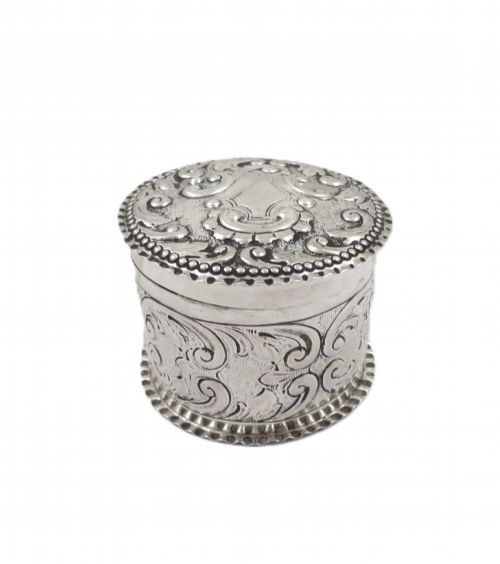
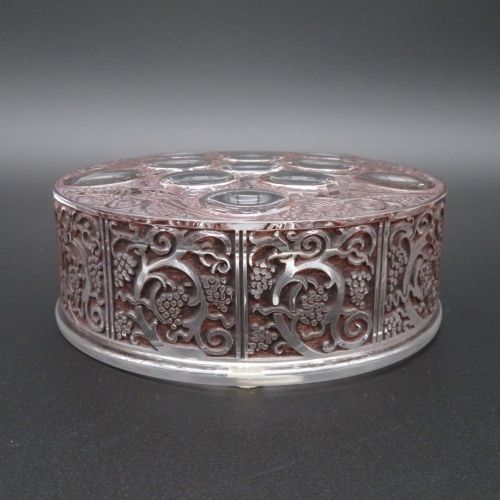
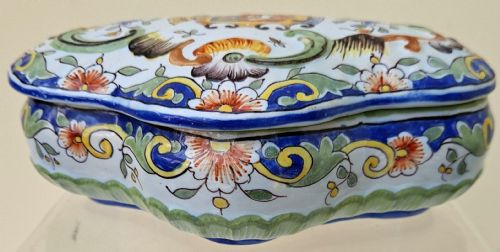
An antique powder box holds the powders and cosmetics of past dressing tables, combining glass, silver, and enamel for daily dressing rituals.
Antique Powder Box
When you search for an antique powder box, you encounter vanity jars, dressing table pots, and compacts that stored loose cosmetic powder and toiletries. These pieces appear in periods spanning the Georgian era, through Victorian and Edwardian decades, up to Art Deco designs of the 1920s and 1930s.
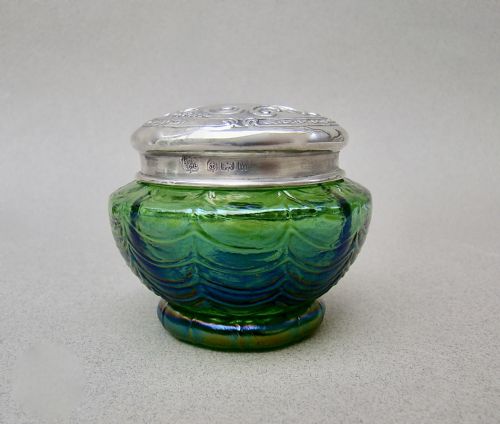
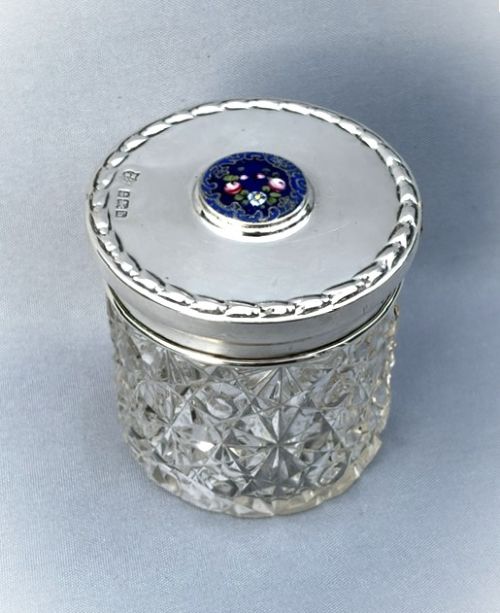
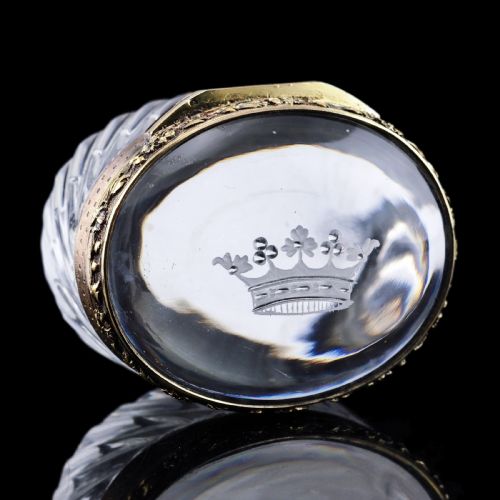
The versions most common on this page combine silver lids with glass or crystal bases, alongside standalone porcelain and enamel containers. Formats range from heavy cut glass jars to delicate circular boxes intended for boudoir use.
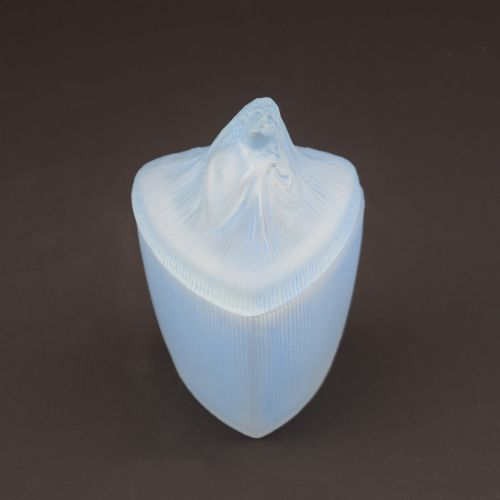
Makers and manufacturers across Britain, France, and wider regions produced these containers in diverse shapes, adapting them for dressing tables, travel, and personal vanity sets.
How they were made
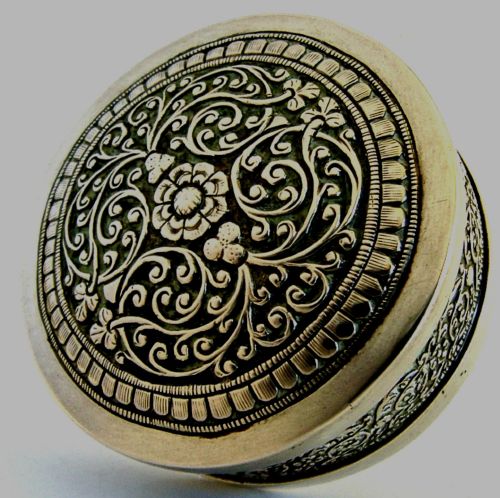
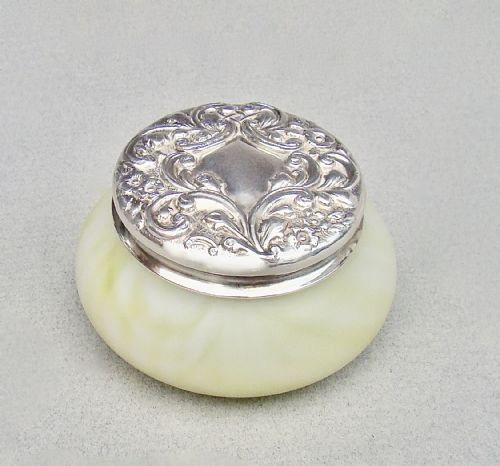
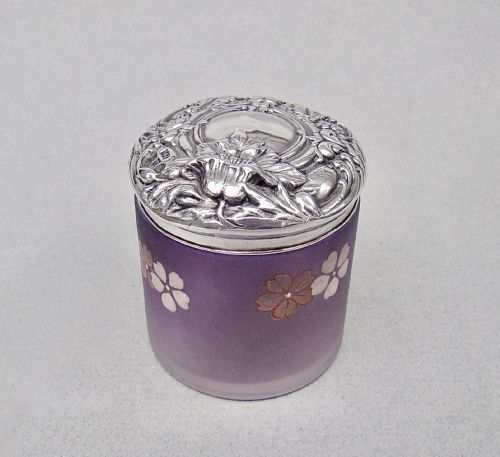
Silversmiths hammered, pierced, and repousse decorated precious metal mounts, frequently adding hallmarks for towns such as Birmingham, Chester, and London. Glass bases were blown, moulded, cut, or frosted to create textured and light-catching vessels.
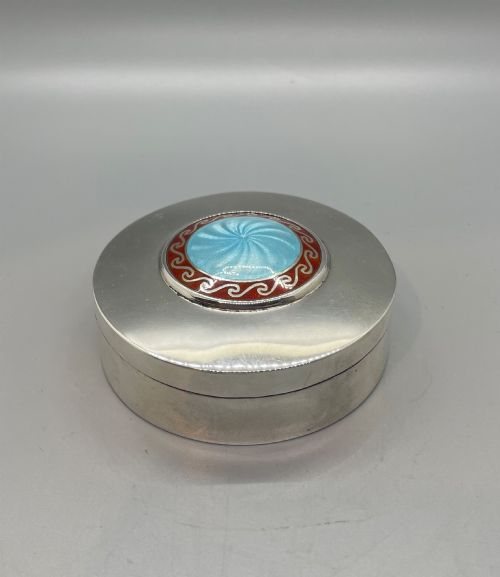
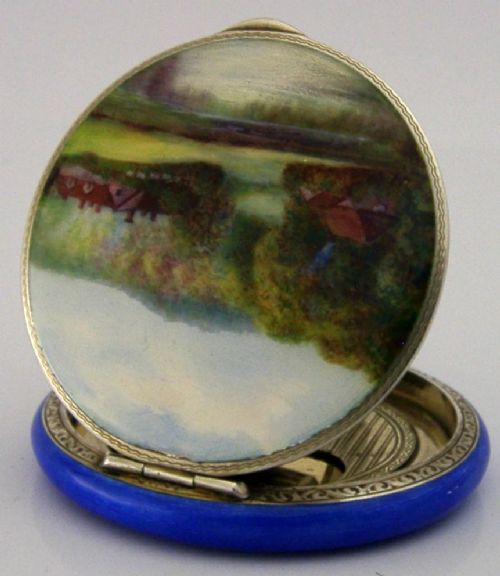
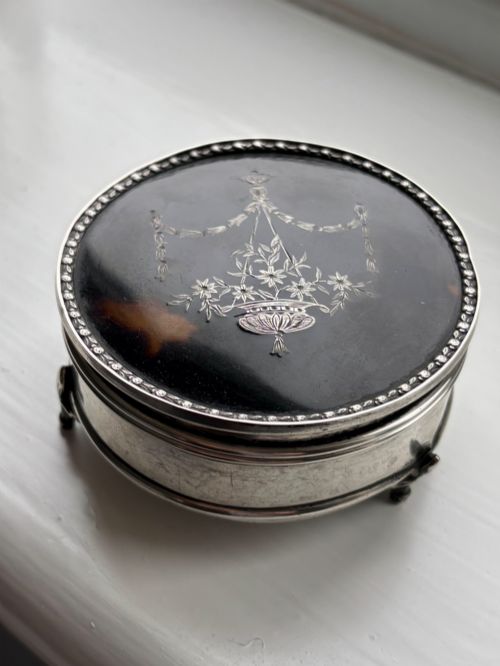
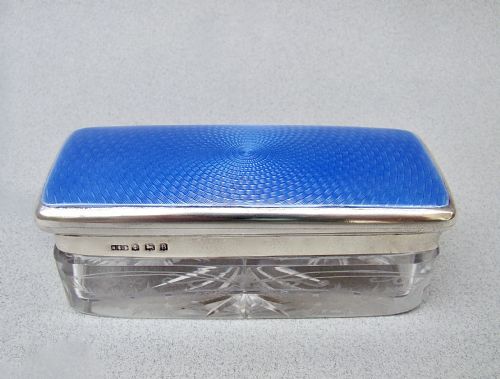
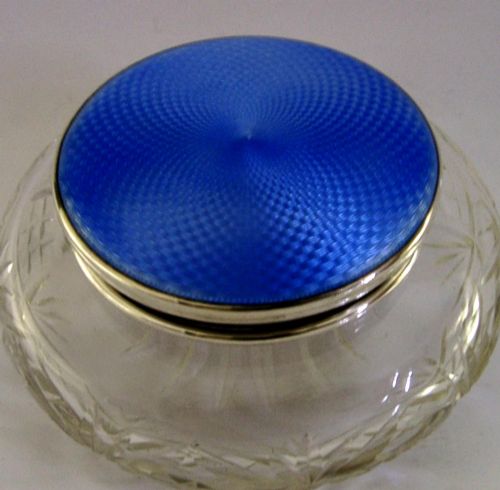
Enamelling techniques, including guilloche work and hand-painted miniature decoration, provided colourful surfaces on lids and compact tops. Artisans also integrated organic materials like tortoiseshell, mother of pearl, and pique work into silver frames.
Listings feature periods from the Georgian era through Victorian, Edwardian, and Art Deco decades.
What varies in quality
The weight of the metal and the clarity of the glass establish the foundational standard of a piece, with thicker crystal and solid sterling silver mounts marking superior production. The intricacy of hand-applied enamel, whether engine-turned guilloche or detailed miniature painting, separates standard utilitarian wares from fine boudoir items.
Maker attribution further differentiates examples, as work originating from established silversmiths or renowned glass houses carries distinct craftsmanship. Preservation of fragile components, such as intact enamel without chipping and tightly fitting silver lids, governs the desirability of surviving items.
A. J. Pepper & Co·Goldsmiths and Silversmiths Company·A. Bromet & Co·Ollivant & Botsford·Henry Clifford Davis·Paul Storr·Rene Lalique·Asprey & Co·Henry Matthews·Elkington & Co
The Antique Powder Box Glossary
- Guilloche
- An ornamental engraving technique where a precise repeating pattern is mechanically etched into a metal surface beneath translucent enamel.
- Repousse
- A metalworking method where the artisan hammers the design from the reverse side to form raised relief work on the front.
- Silver Gilt
- Silver that has been coated with a thin layer of gold on its surface, sometimes called vermeil.
- Pique work
- The delicate inlay of tiny gold or silver pins and strips into tortoiseshell or ivory surfaces.
- Treen
- Small handmade wooden objects created by turning on a lathe or through manual carving.
Antique Powder Box: Frequently Asked Questions
How do I date an antique powder box?
Dating an antique powder box relies primarily on metal hallmarks stamped onto silver mounts, which indicate the assay office and year of manufacture. Stylistic markers such as Art Nouveau curves or geometric Art Deco lines also point to specific decades.
Material choices and maker signatures further help narrow down the period of origin. Comparing the form against documented historical examples provides additional chronological context.
How were dressing table jars used?
Dressing table jars were kept on vanity surfaces to hold powders, creams, pins, and trinkets used in daily grooming routines. Lidded containers kept cosmetics protected from dust while displaying decorative materials like cut glass and coloured enamel.
Smaller compact versions were designed for travel or evening retouches away from home. These pieces formed part of coordinated dressing table sets.
What materials are common in antique powder boxes?
Sterling silver and cut glass represent the most frequent combinations found in these vanity items. Makers also utilised frosted glass, porcelain, tortoiseshell, and brass to construct the bodies and lids.
Enamel finishes in shades of blue, pink, and white frequently decorate the metallic surfaces. Organic materials like treen and coquilla nut appear in earlier nineteenth-century examples.